

17 Retro Kitchen Items That Should Still Have A Place In Every Home
We may receive a commission on purchases made from links.
Once upon a time, all we needed to dice up some fries, slice an avocado, or hull a punnet of strawberries was a sharp and trusty knife. And if we wanted to poach an egg? Well, we'd have had precisely zero qualms with bringing a pan of water to the boil. Today, we have arsenals of electric and battery-operated options to save on time and up convenience.
It's hard to argue against, say, the benefits of induction cooking versus a traditional gas hob, and we'll even admit that a smart refrigerator that tracks your groceries could be fun. But not everything in the kitchen should come with the need for a monthly software update, and nor does every task require a specific, single-use tool. Many old-fashioned kitchen implements are just as functional today as they were 60, or (in the case of mortars and pestles) thousands of years ago.
"New" doesn't always mean "improved," and sometimes, the most functional piece of equipment is the one with the least moving parts. Sure, some of them might be heavy, but they're also virtually indestructible. And yes, in most cases, they're manual instead of electric, but that usually means you have more control, don't have to worry about cables, batteries, or excess noise — and cleaning might be easier. Here are some of the retro, old-school kitchen items that can still be pretty useful in modern homes.
Cast iron skillets remain unmatched in terms of heat retention and longevity
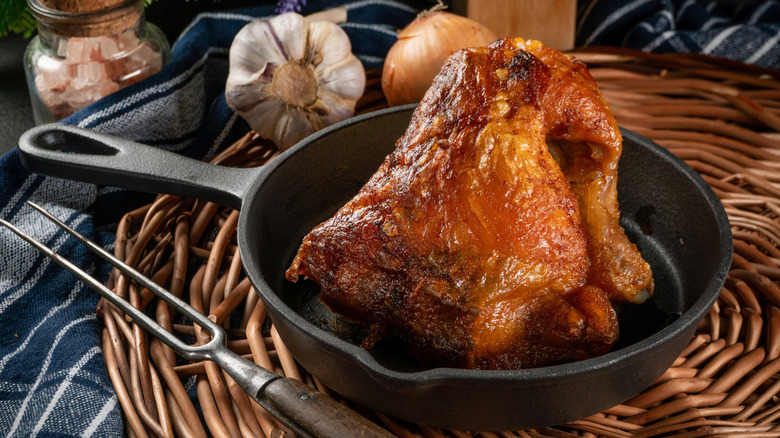
Used for searing, frying, baking, and roasting, cast iron skillets remain as versatile and reliable for home cooks as they've ever been. And yet they've seen somewhat of a decline in recent years with the advent of non-stick options. Cast-iron skillets are incredibly robust and hard to break. In fact, if looked after properly, they can last for generations. And if you're serious about cooking, then cast iron is unmatched in terms of conductivity and heat retention.
Cast iron pans sometimes get a bad rap for being hard to care for, but this couldn't be further from the truth. True, you don't want to dump them in the dishwasher, but a quick wipe with paper towel or a gentle scrub with hot water is typically all you need to do. Unlike non-stick pans that inevitably scratch and need to get tossed at some point, cast iron skillets can also be reseasoned indefinitely. So if you do accidentally scrub away the protective layer of seasoning, simply coat the area very lightly with oil and heat the pan to reseason it.
A mortar and pestle extracts more flavor and simply looks better than a blender
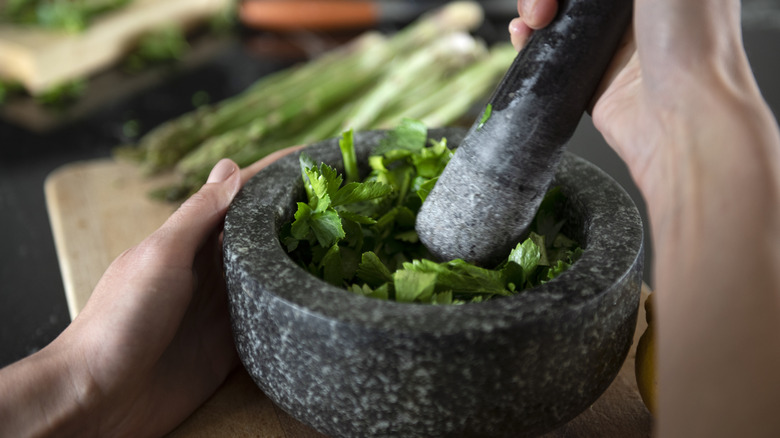
This ancient kitchen tool is as useful for skinning garlic and crushing spices as it is for crushing nuts and whipping up a tasty aioli. And while it's less convenient than a modern food processor (and, admittedly, more of a workout to use), it's nevertheless much better at the job. By crushing ingredients — instead of chopping them up at high speeds — a mortar and pestle releases much more of the ingredients' natural flavors.
The other reason to consider keeping a mortar and pestle around? They look great on the kitchen counter! They can be bought in various sizes to suit your needs (bigger and heavier designs usually work best) and you can choose between wood, ceramic, natural stone, and even metal options. However, you're almost always better off springing for granite. Not only does it look beautiful, but the abrasive stone surface offers some important grip so that seeds and spices don't go sliding around under the pestle — and the non-porous nature of granite means it's less likely to hold onto flavors.
A manual can opener is immune to power failures and eats up zero counter space
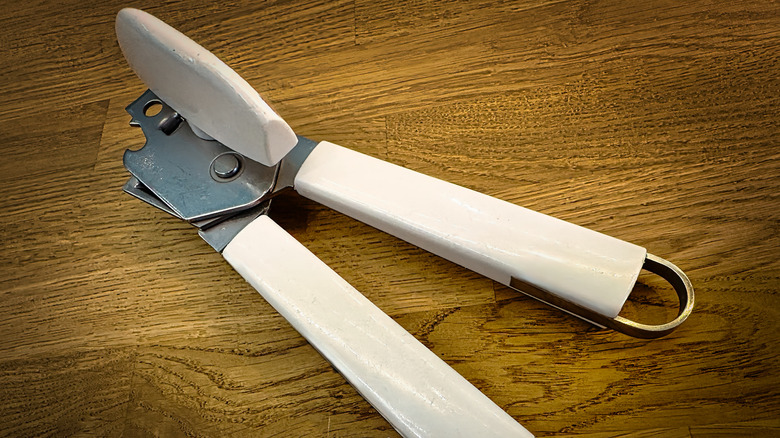
While it's tempting to invest an electric can-opener, take it from us — these popular kitchen gadgets are generally not worth buying. For starters, you need space on your counters to keep it, which is likely to get annoying in smaller kitchens. You need a way to power it, too, which comes with its own unique set of problems.
With mains-powered openers, for example, you're limited to where you can place them, and depending on the number of outlets available, you may need to unplug other important appliances in order to use them. Alternatively, you could buy a battery-powered device, but what happens if the batteries die when you most need to open a can of beans? Sure, with a manual can opener, you'll need to do the heavy lifting. But it'll always be there when you need it, and easy to keep out of the way when you don't.
Rolling pins are unlikely to be ousted by machines any time soon
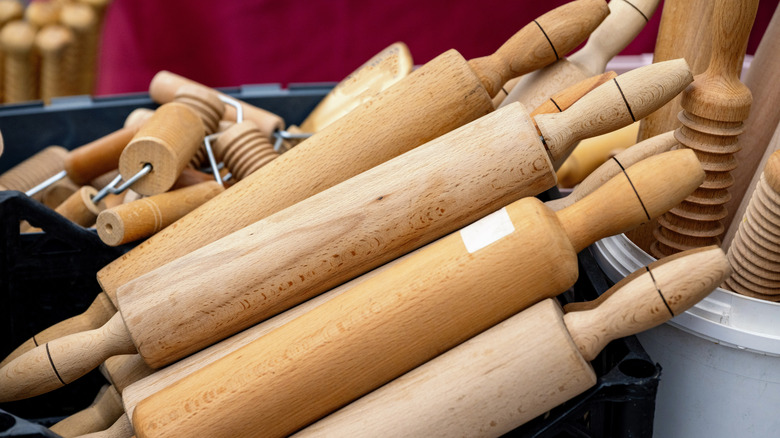
While there's no denying the convenience pasta machines and pastry sheeters bring to the kitchen for busy bakers, it's hard to beat the versatility or space-saving qualities of a good old-fashioned rolling pin. Electrical appliances are more expensive than rolling pins, and they usually require much more space for storage. A rolling pin, meanwhile, is about as simple and cheap as it gets.
Rolling pins might require a bit more hands-on labor to use, but they're far more versatile. They work with all manner of dough types, and you can even use them as an ad-hoc ice/spice/cookie crusher. And lastly, rolling pins are pretty decorative, and having one on display simply oozes culinary charm.
A Dutch oven remains a versatile ally in the kitchen
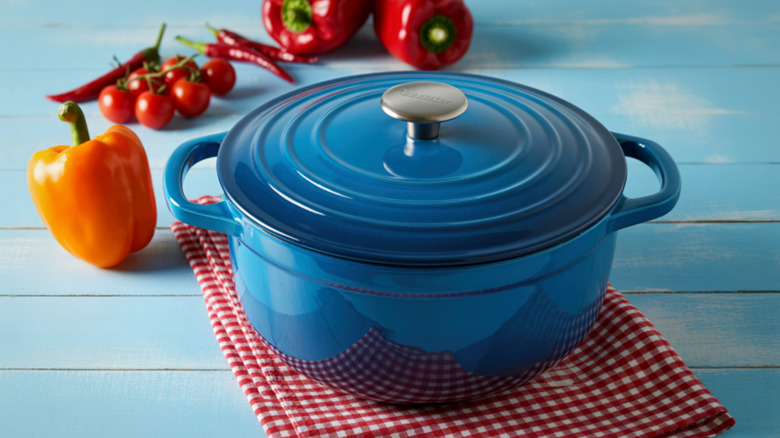
Able to braise, sear, and even bake, Dutch ovens remain hard to beat for those who are serious about cooking, even with technological alternatives like slow cookers and Instant Pots now dominating the modern market. These old-school pots can be used both on the stovetop (induction ranges included) and in the oven. This is a big tick in their favor, especially in smaller kitchens where cookware has to work hard to earn its keep. And if you avoid these common Dutch oven cleaning mistakes, like using abrasive, metal cleaning pads, then you can expect a Dutch oven to last for years.
If you're not yet ready to spring for a shiny new La Creuset, don't worry. You don't necessarily have to blow your entire cooking budget on one. Instead, keep an eye out at your local thrift store, and make sure you swing by any local garage sales happening in your neighborhood. Provided that it's not chipped, or equipped with plastic handles (which can melt in the oven), there's absolutely nothing wrong with a secondhand Dutch oven.
Box graters remain a valuable multitool in any kitchen
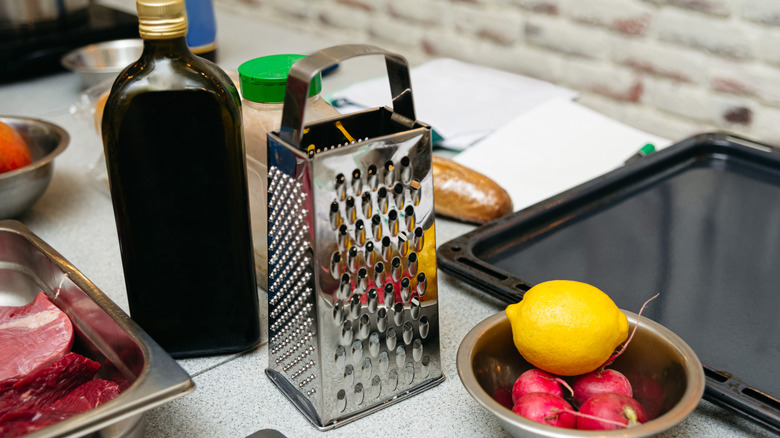
Another tool that works hard to earn the space it takes up in your cupboard: Box graters serve several key purposes. Grating and slicing cheese are the obvious tasks they're suited to, however, they can also be used for slicing veggies and zesting fruit. Of course, whether you need a tool to do all of this depends on how serious you are about cooking. And you could argue that, if you really need to perform all these tasks on a regular basis, then surely it'd be worth buying a dedicated food processor. Well, it could be.
Then again, if you're really serious about cooking, you'll find that manual box graters offer far more control. They're also more convenient in instances when you just need to grate a small amount of produce. Perhaps you're whipping up some tzatziki for one, or you need just a sprinkling of cheese to flesh out the paltry portion that came with your frozen pizza. In either case, why set up a large, bulky appliance (and then have to clean it) when you could just as easily handle it with a handheld box grater?
Hand whisks ensure you don't overmix your batter and dough
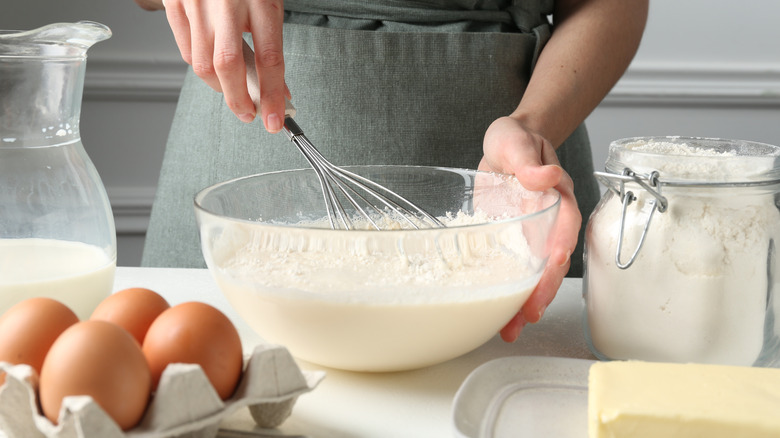
Whether or not you can get away with a simple hand whisk depends on your day to day cooking needs. It also depends on how much control you need. If you're whipping up amounts of cake batter and meringue that border on the commercial, then a hand whisk is unlikely to cut it. But if you're only mixing the occasional batch of pancakes, then you could be better off saving yourself the money and kitchen space and sticking to a handheld version. You'll also find that hand whisks offer more control, and are far gentler on your bowls and other bakeware.
Now, we're not saying that you shouldn't necessarily have an electric whisk or stand mixer. If you already have one — and you're comfortable with the space it takes up in your cupboards — then really, what's the harm? All we're saying is that it doesn't hurt to keep a retro handheld whisk in a drawer as well. It's much easier to grab one of these when you need to make an omelette or scramble some eggs, than it is to set up your stand mixer for less than 20 seconds of whisk work.
Manual citrus juicers are handy for cooking and smaller juicing applications
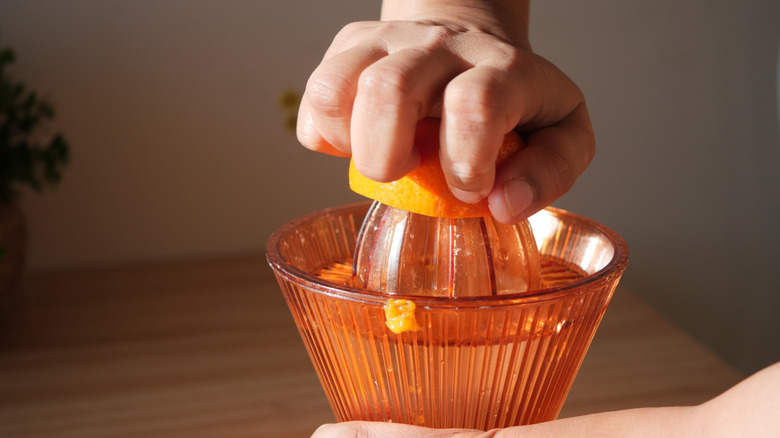
If it's just the occasional few tablespoons of juice that you need now and then to supplement your cooking, then ask yourself, do you really need an electric juicer? These appliances almost always end up cluttering the kitchen counter, so unless you have a regular need to juice a bushel of oranges, then honestly, it's probably worth sticking to something more manual like a citrus press or reamer.
The big bonus of manual citrus juicers is that they're easier to clean, and some are even dishwasher safe. And since they're manual (with no electrical parts), these options promise to last practically indefinitely. Sure, you'll have to work a little harder, but the simplicity of a manual model can actually be more convenient than having to plug in an electric version just to juice up a couple of lemons or oranges.
Stovetop pressure cookers cook faster than their electrical counterparts
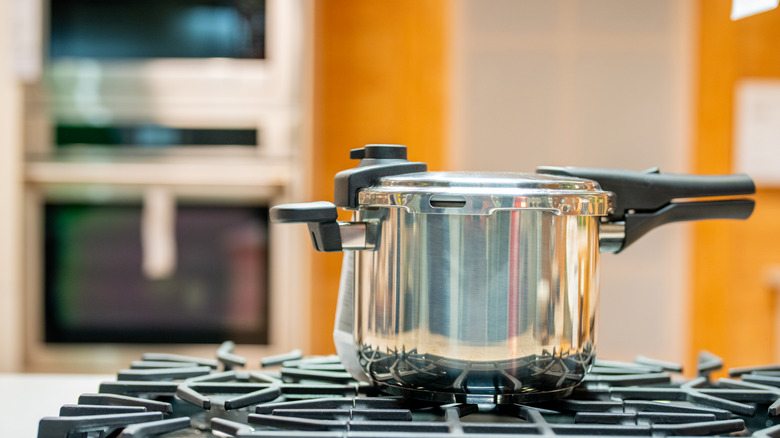
There are certain older gadgets that continue to make life at home more convenient, and the stovetop pressure cooker is a fine example. In recent years, with home cooks favoring appliances like slow cookers and Instant Pots, they've fallen somewhat out of favor. And yet they remain a superior choice for cooks who are tight on time, delivering higher pressure and therefore faster cooking times than even the most expensive alternative appliances.
Since they're manual rather than electronic, there's less to go wrong. They're also better at braising, and slightly less bulky and cumbersome to store. Oh, and because they sit on the stove, you not only get a better appliance, but you also claw back valuable countertop space versus an electrical alternative.
Manual coffee grinders help to keep the peace during the morning grind
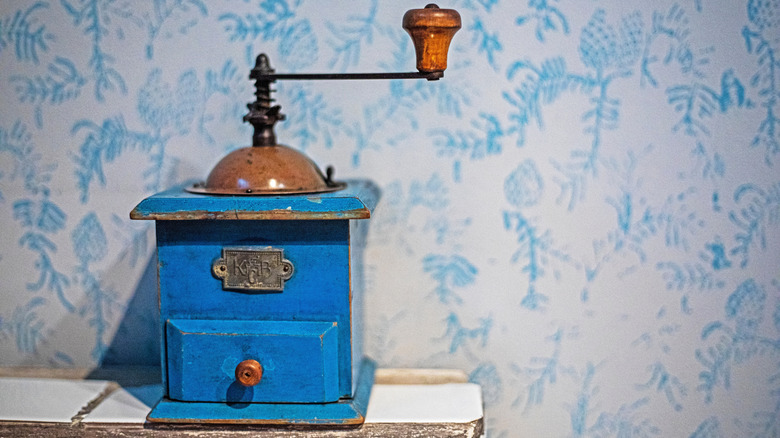
On the face of it, electric coffee grinders can seem like a great purchase, especially for those who want to bring a taste of their favorite coffee house home. And sure, they can help you to make a good morning brew. But the larger models are fairly greedy on space, and since they need to be plugged in, there are only so many places on your counter you can keep them. They're pretty noisy, too, which isn't ideal on early mornings, and if you hope to retain control over the grind of your beans, you'll need to spring for a burr-type grinder, which tend to be much pricier than those equipped with blades.
With hand-cranked grinders, while you have to work a little harder, you can enjoy great coffee, but without any of these annoying drawbacks. Manual burr grinders can get you that extra level of control over the grind of your beans (that a bladed grinder can't), without the steep price tag of a burred electrical grinder. They're easy to clean, highly portable, and can be stowed in the drawer whenever they're not in use.
Little can go wrong with a stovetop coffee maker
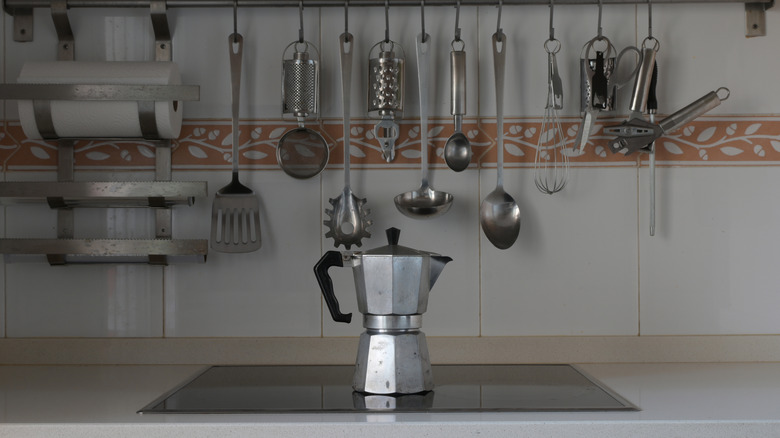
If you're going back to basics with your grinder, then consider doing the same with your coffee maker. Like stovetop pressure cookers, stovetop coffee pots take up zero space on the countertop, since they're designed to be used on the stove. Additionally, they are designed to be able to produce espresso-style coffee without an expensive home espresso machine.
The thing we love most, however, is that since moka pots feature very few moving parts, there's not a whole lot that can go wrong with them. They can also be easily stored when not in use, instead of gobbling up counter space like a modern coffee machine. Finally, while you could easily buy one new, it's likely that you'll find this vintage kitchen item adorning the shelves of your local thrift store.
Stovetop kettles promise to keep working with gas stoves
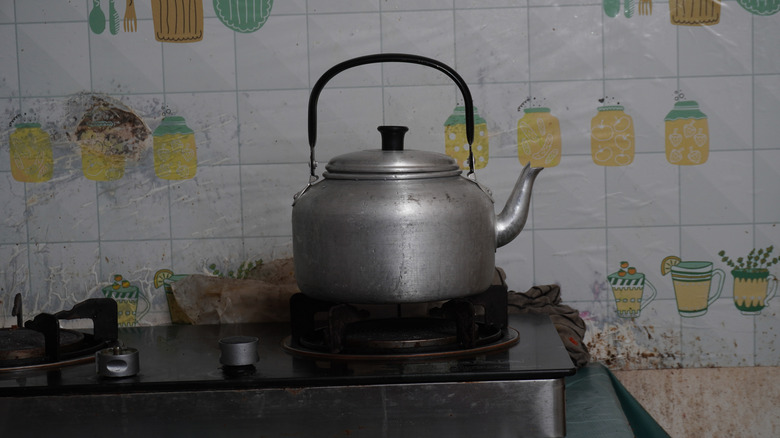
We're not trying to suggest that electric kettles are unreliable — far from it. However, since they're loaded with electrical components, they are inherently less long-lasting than their old-school stovetop counterparts. They also rely on your home having power, which, depending on where you live and the severity of your winter storms, has the potential to become a seriously annoying downside.
Old-school stovetop kettles — an item you can easily pick up from the thrift store — also tend to look a little more cosy and stylish than electric versions. You can, again, save some counter space, and free up an outlet. Stovetop kettles tend to be much quieter than their electrical counterparts, which is another tick in their favor (especially on early mornings), and since they contain no electrical parts, they're much easier and less risky to clean.
A large colander will always come in handy
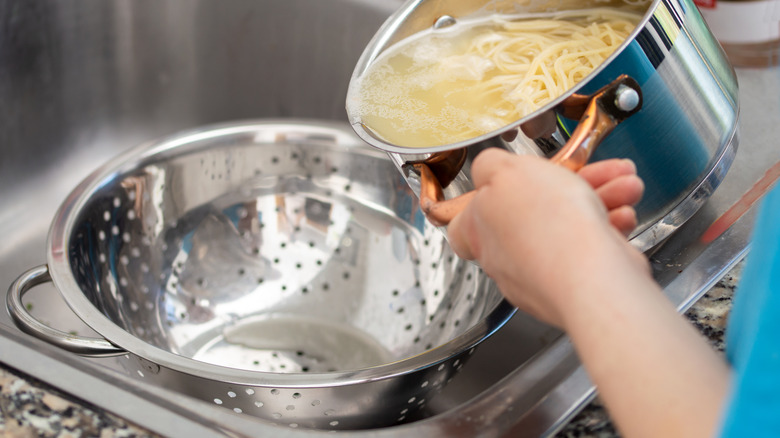
This timeless kitchenware item is as old as the kitchen itself. And while it has a knack for taking up quite a bit of space in the pan drawer, a big colander is a versatile ally that's always worth having in your corner. Yes, you may question the need for a larger colander when all you're washing is a few home-grown herbs or some berries from your garden. But when you need to prepare a mountain of produce, like on Thanksgiving, or you have a panful of pasta to strain and you want to avoid spilling it all in the sink, you'll almost certainly be glad you went big.
Really need to keep the amount of space it soaks up to a minimum? Consider buying a collapsible version, like the GIR Silicone colander. Alternatively, if you want something that can drain pasta for a crowd or hold pounds of freshly-picked tomatoes — opt for something like this roomy 16-quart FolksField Aluminum Colander
Wooden spoons are safe to use on all classic and modern cookware
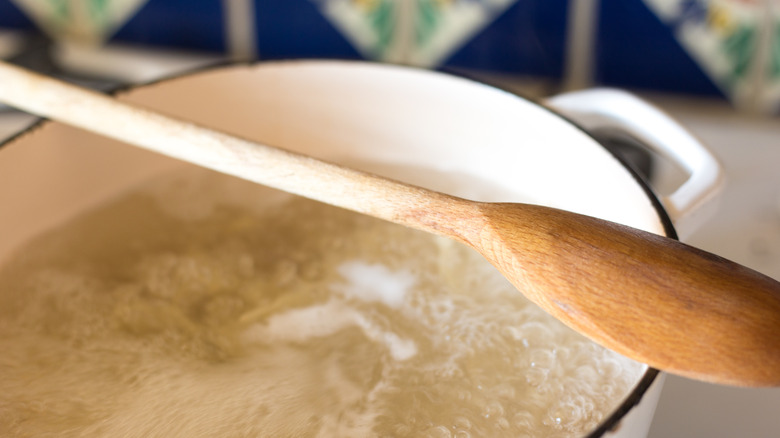
Wooden spoons are an age-old kitchen tool, and for good reason. They're gentle on all cooking surfaces, including both non-stick and enamel. They don't conduct heat like metal spoons, and they run zero risk of melting or warping like some plastic spoons.
Wooden spoons also have natural anti-microbial properties, which is reassuring in the kitchen. Additionally, they're more sustainable than plastic or silicone, and look a lot more decorative. And provided that you know how to clean and care for your wooden kitchen utensils, there's no reason why they won't last for years.
Rotary egg beaters give you ultimate control
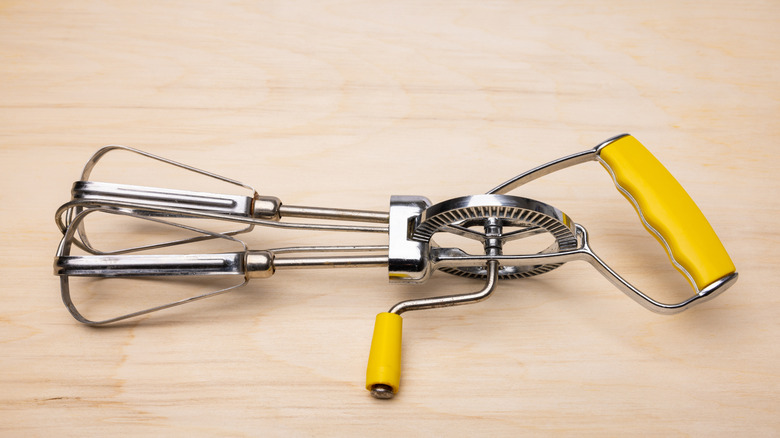
If you have a vintage rotary egg beater laying around, that you keep meaning to take to Goodwill, pause, and hear us out. Hand-crank egg beaters are one of those old-school kitchen items that few people use, and yet can still have a place in the kitchen. Yes they're old-fashioned, but they're also compact, and easy to whip out if you want to quickly beat a few eggs or a small amount of cream.
Hand-cranked egg beaters cost nothing to run. Unlike electric mixers, they aren't super loud, meaning they won't interfere with your favorite cooking podcast. And when you don't need them, they tuck neatly away into your drawers without the annoying clutter of cables that comes with electric whisks and mixers.
Mason jars bring decorative and practical storage to kitchens of all sizes
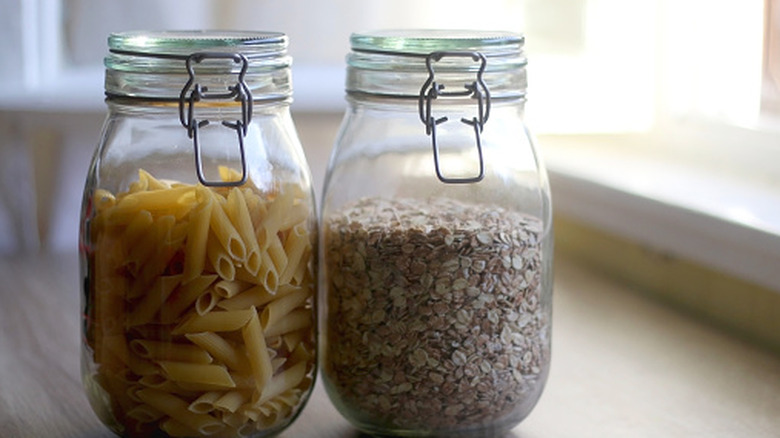
Vintage mason jars still have lots to offer modern homemakers. They're excellent for food storage and have a decidedly "retro" look that looks great in any kitchen. They're easy to clean and sterilize, and can also last for decades, provided that they're properly looked after (and that you replace the seals and lids when needed). This makes them far more cost-effective in the long-run than more disposable food storage solutions.
Another perk is that you can buy mason jars in various sizes. Use larger jars in your pantry to store things like cereals, and reserve smaller ones for daily use — perhaps for mixing your overnight oats or for refrigerating your morning smoothies. Even if you find yourself with some that you don't use, there are lots of ways to turn old mason jars into vintage home decor, which means they're never likely to go to waste.
Retro-style scales will keep working without any need for batteries
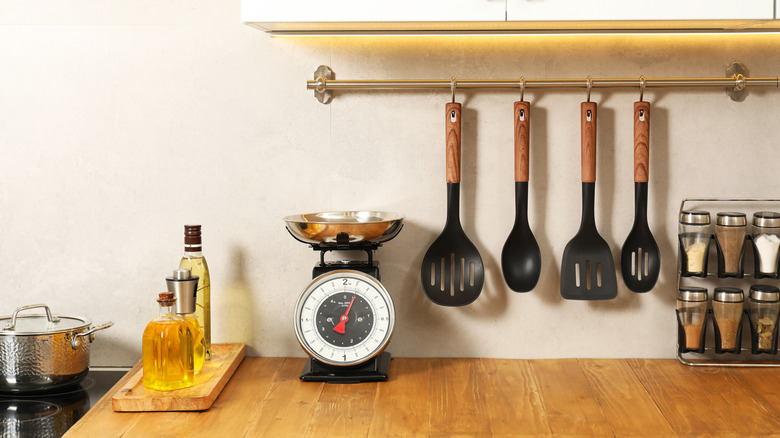
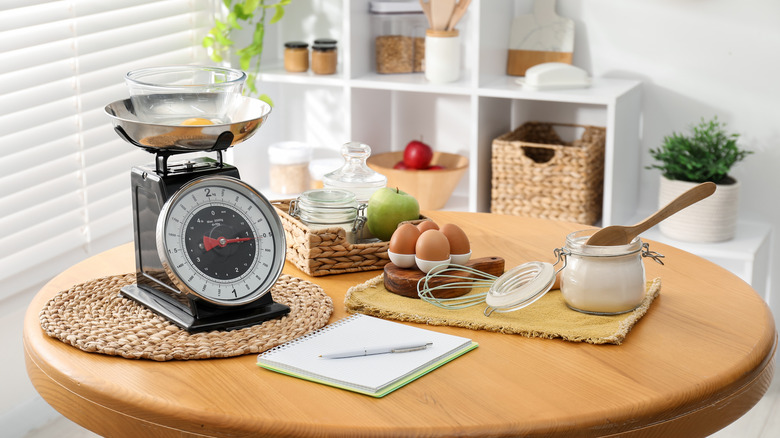
Available in an array of colors and styles, vintage accessories like this are making a comeback, and it's no wonder. Retro-style scales require no batteries, and since they're often built from robust, quality materials, they're unlikely to let you down after even years of use. In fact, if well looked after, they have the potential to last for generations. They're also easier to keep clean, have handy bowls for holding loose ingredients, and often come with both metric and imperial measurement guides, making them easy to use without fiddling with annoying digital displays and awkward buttons.
Of course, the downside is that retro scales can eat up more counter space than more modern, digital appliances. And since they're quite bulky, they're a pain to store in small kitchens without permanent counter space to house them. But if you have room, they bring a dose of charming design that makes them a standout permanent feature in retro and rustic kitchens.