

How To Season A Carbon Steel Pan Like An Absolute Pro
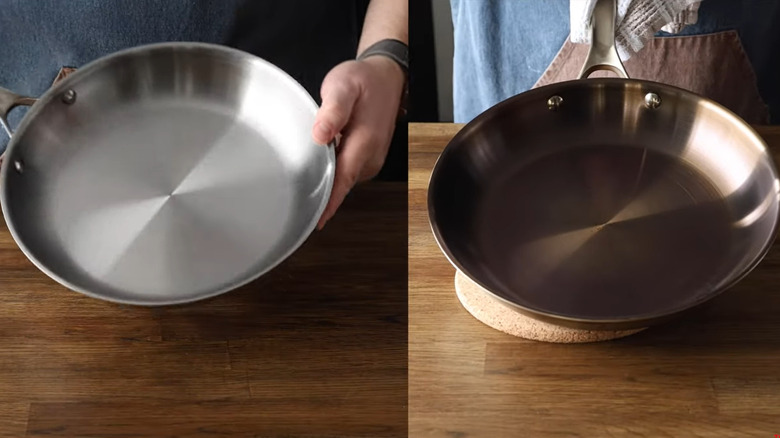
So, you have ditched your Teflon cookware and have ordered a swanky new carbon steel pan. How do you turn its shiny silvery surface to the much-coveted alternative to nonstick pans? Well, you season it. This is essentially the process of using oil and high heat to form a dark coating on a pan's surface, which makes it naturally nonstick while also protecting it from rust. How this happens is the oil seeps into your carbon steel pan's tiny pores and polymerizes as it's heated, forming a smooth, hard surface.
Before you start the seasoning process, the preliminary step is to wash away the protective anti-rust coating on your new pans' surface. We recommend you follow the manufacturer's instructions to remove this coating. Remember this is one of the types of pans that should always be hand-washed and never go in the dishwasher. So generally, hot water, dish soap, and a sponge to rub off the coating should do the trick. After that, wipe your pan immediately with a towel and place it on your stovetop at low heat for a few minutes to ensure thorough drying.
For the actual seasoning process you can either follow the stovetop method or the oven method. But first, gather your supplies. You'll need some paper towels and neutral, high-smoke-point cooking oil like grapeseed, canola, or vegetable oil. Avoid olive oil, flaxseed oil, butter, or animal fats since they have sediments, which may tamper with your seasoning process. Then, since you'll be heating oil to its smoking point, open your windows and turn on your vent hood for maximum ventilation. Also, get a pair of oven mitts to avoid burns.
Seasoning your carbon steel pan on the stovetop
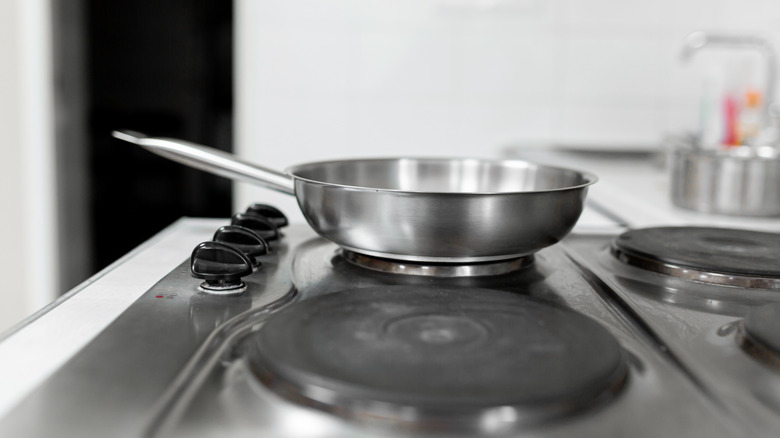
To begin the stovetop seasoning process after washing and drying your pan (as aforementioned), place the dry pan on the stove burner and allow it to heat for two to three minutes. Then take the pan off the stove and fold a few paper towels into a thick wad and scoop about a teaspoon of oil onto it. Why so little oil, you ask? Well, excess oil during the seasoning process could form an uneven sticky mess. Now rub the oil into your pan's interior and exterior surfaces. Use a fresh paper towel to buff the surface till all the drips or runs are gone. The pans surface should look dry before the next step.
Then, place your oiled pan on your burner at its highest heat setting. Move your pan around to ensure equal seasoning on all sides of the pan. When the oil reaches its smoking point, it will start forming a brownish layer on your cookware. After a few minutes, the smoke will fade, a signal that your seasoning process is complete. You can repeat this process a few more times for a more intense solid coating on your pan.
Oven seasoning your carbon steel pan
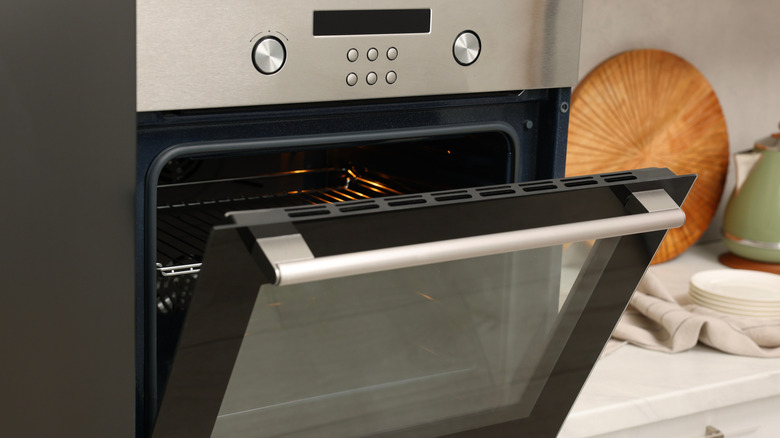
Oven seasoning your carbon steel pan is a great alternative to stovetop seasoning and also happens to be the best way to season your cast iron skillet. However, this method is only applicable to a carbon steel pan if the pan is oven safe. You can check your owner's manual to make sure of this. Your biggest concern is the pans handle. If it's also made of carbon steel, then you're clear to apply the oven method. But if your pan has, say, a plastic or wooden handle, then stick to the stovetop method above.
Begin by preheating your oven to 450 degrees Fahrenheit. In the meantime, you can carry on with the preliminary step of washing your pan to remove that factory coating. Next, dry it thoroughly in the hot oven for a couple of minutes. Now sparingly apply the cooking oil on all the surfaces of your pan using paper towels. Finally, place the pan upside down on the middle rack in the heated oven and leave it to bake for about 30 minutes to one hour. Once your timer stops, leave the pan inside to cool completely before removing it.
Similar to the stovetop method, you can repeat this entire process a few more times to get more seasoning layers on your pan. After this initial seasoning for a new pan, go on and fry an egg to confirm that the seasoning process has worked. If the egg slides around in the pan without sticking, you're all set. That said, don't worry too much if there's a bit of sticking because the beauty of seasoning is that it improves with continued use.