

How To Grow A Date Palm Tree In Your Garden From A Leftover Pit
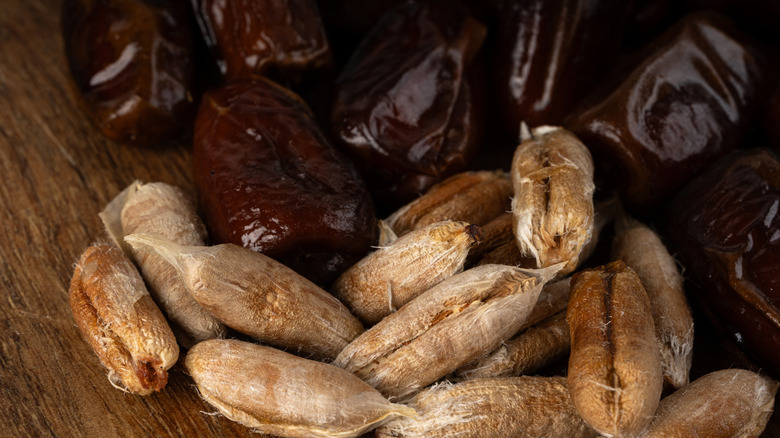
Imagine harvesting fresh dates to enjoy from a tree you planted yourself. Although such an idea may seem daunting, date palms are surprisingly easy to grow. And the best part? You can start your own date palm tree using a leftover pit, so long as you take the proper steps to support germination and growth.
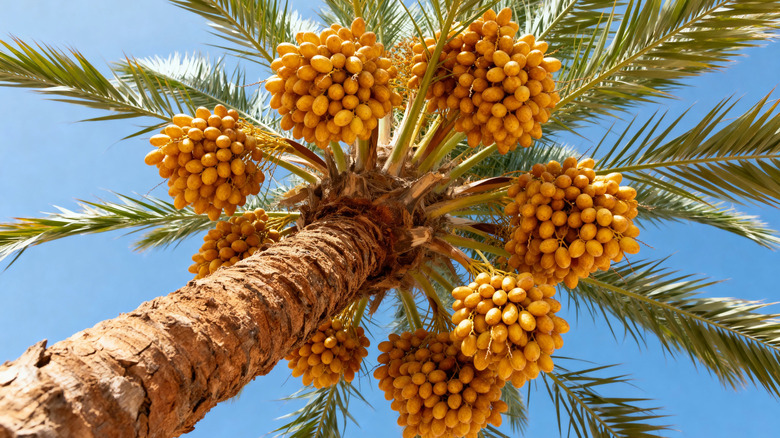
Date palms (Phoenix dactylifera) are a popular type of palm tree, both for their eye-catching appearance and delicious fruit. These trees have been cultivated for thousands of years, and, thanks to their durability, their fruit has become a staple crop in many harsh environments. Although it can take several years before you're able to enjoy your tree at full fruit production, growing a date palm yourself from a leftover pit can be a rewarding experience that puts your green thumb to the test.
Before taking the time to grow a date palm from seed, you may wish to ensure you have the right spot for this plant in your yard. When grown to their max size, date palms can reach heights of 80 feet, although they are slow-growing. As a result, if you're looking for an indoor tree, you may prefer to instead grow a pygmy date palm tree. They also need an environment similar to their native habitats, with frequent warm weather and ample exposure to sunlight. It's important to remember that there are several varieties of date palms, each with different uses and care needs.
Growing date palms from seed
Growing your own date palm tree from a leftover pit can be divided into three main steps: preparation, germination, and transplanting. Preparation begins with removing the pit by simply peeling away the surrounding fruit — no special tools needed. Afterwards, wash the pit thoroughly with water. This ensures there's no leftover fruit or residue clinging to the pit that could hinder germination. Once the pit is clean, soak it for two to three days to prepare it for the germination steps.
Germinating your date palm can be time consuming, taking up to eight weeks. However, it's a relatively hands-free process. All you need to do is use a simple garden paper towel hack by wrapping your clean date pits in a damp paper towel before sealing it in a plastic bag and storing it away from sunlight. During this time, it's important to check your pits occasionally to make sure no mold is starting to sprout. Replacing your paper towel every few days helps here. If you do notice any mold, don't panic — just go ahead and replace the paper towel.
After six to eight weeks, you should notice that your date pits have begun to sprout — congratulations. From here, your last major milestone is transplanting your seedling to an appropriate pot to continue growing. Date palms prefer smaller pots, well-draining soil, and a warm and sunny location to thrive. They're only hardy in zones 9 through 11, so you may choose to keep your new date palm indoors during the colder months.