

Martha Stewart Shares Her Best Tips For Planting Bareroot Roses So These Flowers Thrive
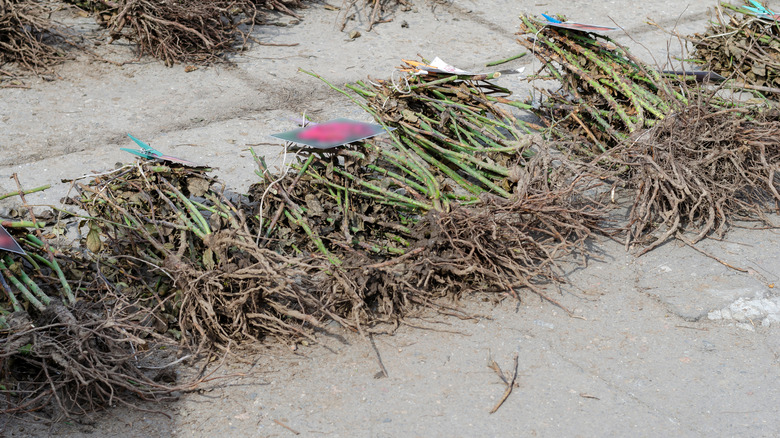
If you've never bought bare-root plants before, be prepared for the flurry of questions that pop into your head as you open the package after it arrives at your doorstep. The first question may be: Is there some mistake? Have I been sold some dead, mangled roots better suited for the compost bin? Once you realize that bare-root plants don't come in a pot or even soil, your next question might involve wondering what you do with them now.
Leave it to Martha Stewart to offer some sensible, handy advice about how to plant bare-root roses so that you get the most out of them:. On the Martha Stewart blog, she recommended to soak them immediately upon arrival, pot them up, and fertilize them before you're ready to plant, and keep the plant labels on. As Martha Stewart advises, you can save money by ordering bare-root plants, since you've avoided paying for garden soil you may already have and a plastic pot that you're likely to throw away.
Bare-root plants are dug up by breeders in the fall or early spring. Soil is shaken from the roots, and then it is stored in a cooler if dug up in the fall, or packaged and directly shipped to your home in the spring, so that they arrive when they are ready to be planted in your growing zone. Buying bare-root plants also can give you a wider variety of species and cultivars than may be available at your local garden center — especially since new varieties of roses are being introduced every year by specialty breeders.
The best tips for bare-root rose care
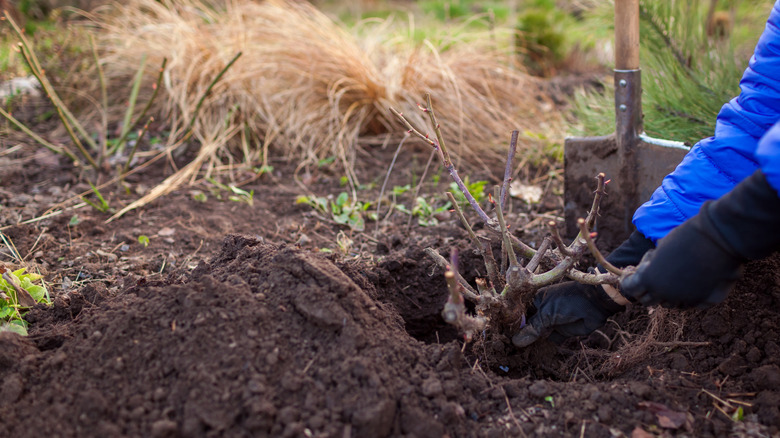
Bare-root plants need special care that's different from how you handle plants sold in pots. When your roses arrive, they will need to be planted as soon as possible. If your plants arrive too early for you to plant them outside, you have two options. One is to keep the bare roots in their original, moist packaging in a cool, dark place until you are ready to plant them. Alternatively, Martha suggests you soak them immediately after they arrive for several hours or overnight to activate their growth, then pot them up until it's time to plant them in your garden.
As Martha advises, don't crowd your roses into a too-small pot, as the roots will need room to grow. Martha's best tip at this stage: Be sure to keep the plant labels on your roses until they are in the ground. With no leaves or flowers on them, it's not easy to distinguish one species of roses from the next, and early spring care tips for roses differ for each type of rose.
Once your bare-root roses are planted or in pots, you can top-dress your plants with an organic compost or a soluble fertilizer like fish fertilizer, but Martha's garden team uses composted manure and a commercial crystal fertilizer mixed into the soil as her plants are being potted up. Roses require a solid, nutritious diet in the spring in order to produce the abundance of flowers for which they are famous. Just don't over-fertilize roses with nitrogen or phosphorus — one of the common gardening mistakes to avoid when growing roses. Keep them well watered both before and once they are in the ground.