

The Best Type Of Pot To Use For A Thriving Monstera Plant
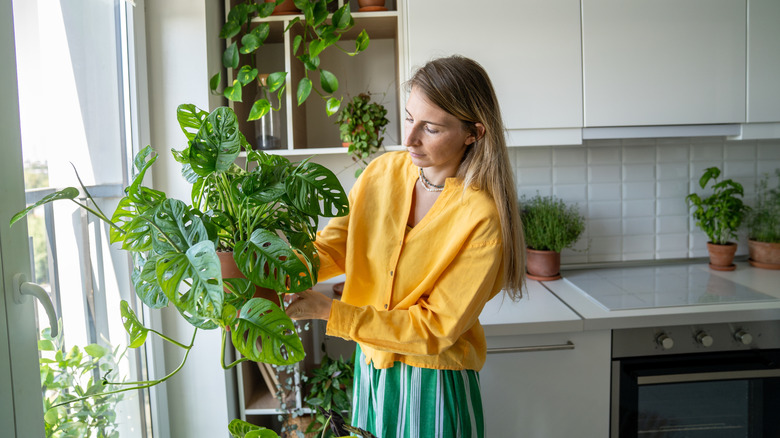
If you've finally caught on to the onstera (Monstera deliciosa) craze and brought one of these tropical beauties into your home, you may be wondering if you need to transplant it into a new container, and if so, what type of pot to use. Since this species, also known as a Swiss cheese plant, can typically grow to very large sizes of around 7 feet tall indoors, the best pot is one that's sturdy enough to support the weight of the houseplant's foliage, in addition to a few other characteristics.
When seeking out the container that looks perfect for your home, it's important to also consider the plant's needs. Part of maintaining any plant is making sure its roots have space to grow. If the roots circle the bottom of its current pot or begin growing out of the drainage hole, it may mean that your Monstera has outgrown its container. If so, choose a new pot that's just one size bigger. You'll also want to make sure your selection has drainage holes in the bottom. Never situate this species directly into a cache pot with no drainage holes, because this epiphyte's roots can rot. Also, be prepared to add a stake so that the plant grows straight and tall.
Choose a pot of the right size and weight for your houseplant
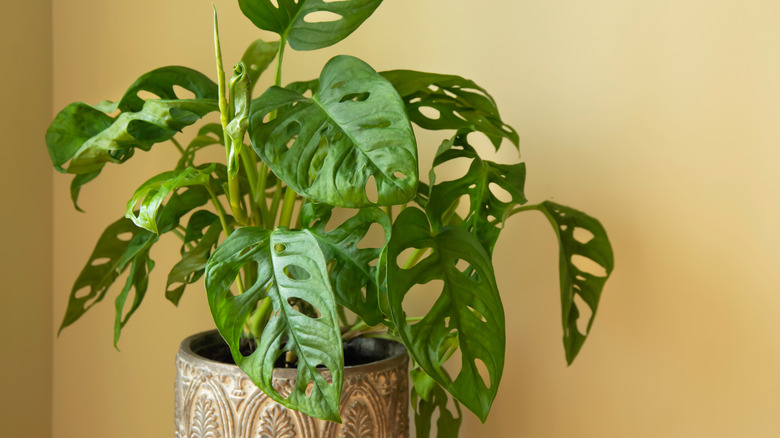
Once you are sure you're looking at possibilities that are the optimum size and have holes in the bottom, you should consider whether the container material is strong enough to support your Monstera. If conditions are right, it's possible for these climbers to reach 10 feet tall indoors. As the plant matures and produces lots of heavy foliage, a plastic nursery pot may not be able to keep it upright. Heavier types of materials, such as ceramic, terracotta, or concrete, will help balance out the weight of all that foliage. Without a solid foundation, so to speak, the houseplant is at risk of toppling over.
But before you repot your Monstera, you'll want to make sure it is actually time for an upgrade. It's recommended to repot every one to three years. Just keep an eye on whether the epiphyte is indeed sending signals that it does need moving to a new container, like the previously mentioned roots emerging through the pot's drainage holes, or that the soil dries out too quickly between waterings. Once you're sure the time is right, you can move on to selecting an appropriate planter to keep your Monstera deliciosa thriving.