

8 Bird Seed Storage Tips That Help It Last All Season Long
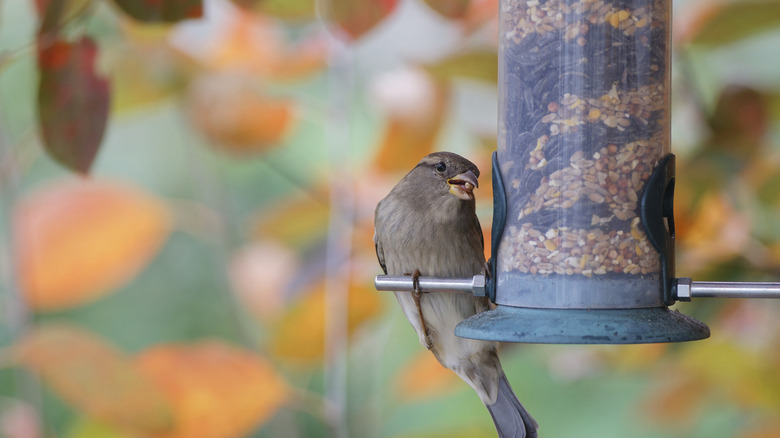
Creating a welcoming, bird-friendly yard means offering the seeds your local feathered friends love, but this food is perishable and needs to be stored safely. If you fill your feeders with spoiled bird seed, you might send birds away, or worse, make them sick. Knowing how to store bird seed to keep it fresh will let you keep feeding birds safely. This requires using the right container in an appropriate location, as well as regularly looking for signs of spoilage and protecting the seed from pests.
The precise shelf life varies by seed type, but most seeds last six months to two years when still unopened on the shelf. The clock starts ticking, however, once that package is open — you might only have a few weeks or up to six months. Poor seed storage can shorten that time and quickly ruin the freshness, resulting in birds visiting but not eating your seeds or just ignoring your feeder altogether in search of new food sources.
Bird seed that goes stale can harbor dangerous growth, such as mold. For example, seed mixes with peanuts or corn in humid conditions may develop the mold Aspergillus flavis, a toxic fungus that can be life-threatening or cause serious illness in birds. Even if your seed doesn't have mold, practicing proper storage will help keep your seed fresher for longer and reduce the chances of waste. You'll also keep the birds in your yard or garden happy, just by following these tips.
Use the right storage containers
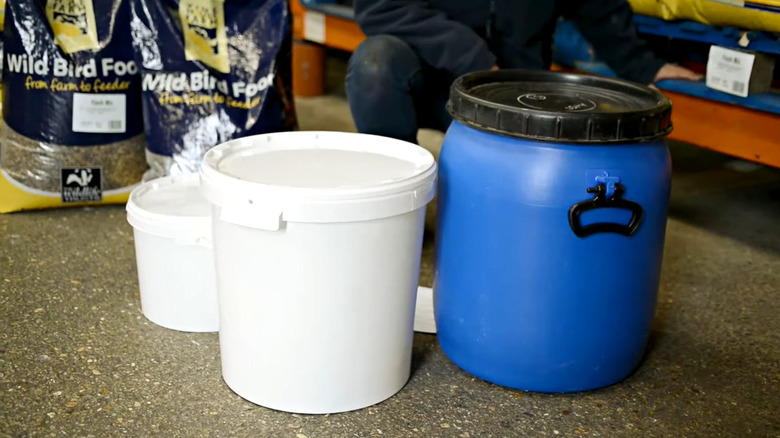
Storing your bird seed properly requires keeping it in an appropriate container, specifically a durable, airtight option that protects against moisture and pests. Galvanized metal containers are widely recommended, so rodents can't chew through the material, and heavy-duty plastic options also work as long as they have a tight seal. These containers will help keep the seed fresh and protect it from moisture, pests, and rodents. Not only can these critters and creepy crawlies eat the bird seed, causing a big mess, but they may also spread disease during the process.
Keep your bird seed outside if possible
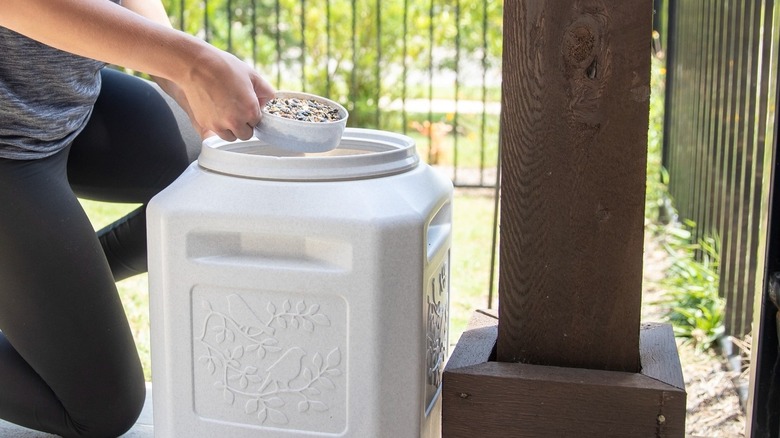
Always keep bird seed in a container in a cool and dry space, ideally outside. Bird seed, like other grains, is susceptible to moths and weevils that could spread to your pantry indoors. Storing bird seed in your backyard shed isn't ideal because sheds lack insulation and are damp, humid environments. Bird and wildlife experts recommend a garage or patio, as long as the seed is protected from high temperatures and moisture.
Don't keep a surplus of seed on hand
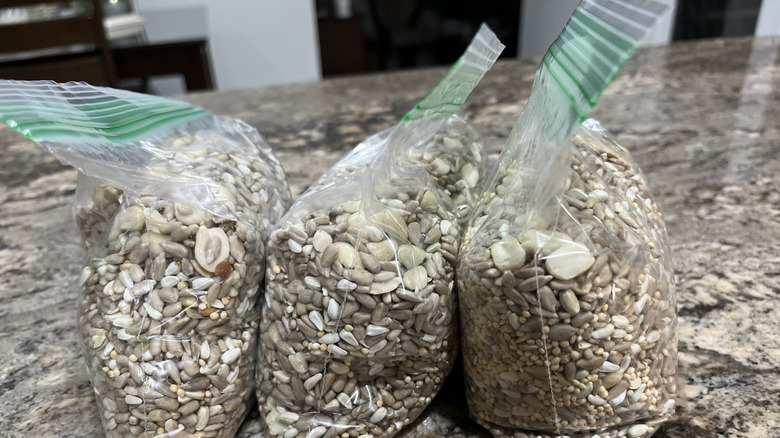
It might be tempting to buy several bags of bird seed at once, but avoid it. The longer you store the seed, the greater the chance of infestation from rodents or moths. And if you don't use your seed quickly enough, it may spoil and need to be discarded. Bird experts advise you only buy enough bird seed to last a few weeks, not months. In addition, avoid buying too much seed during the summer, as the risk of infestation is higher during warmer stretches.
Keep old seed separate from new
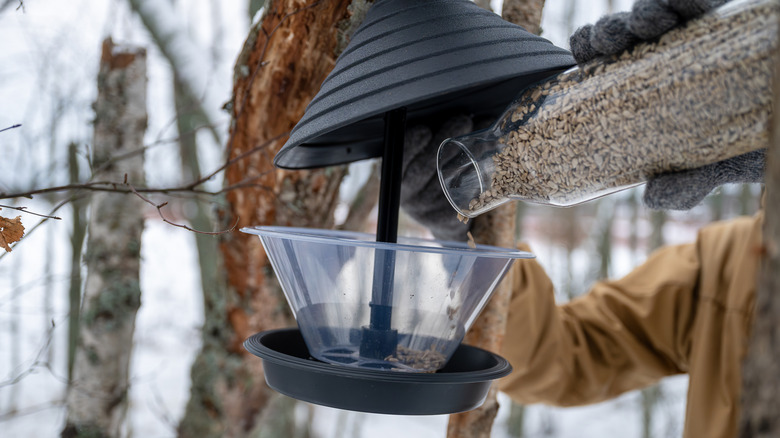
When buying new bird seed, don't mix it with the rest of the old seed — follow a "first in, first out" principle. This lets you focus on using the older seed first, then moving on to the newer supply. Mixing the old and new seed together may lead to pest infestation, or the lower level of seed could go stale faster. Combining seed at different levels of freshness also makes it harder to notice signs of spoilage. The same warning goes for dumping unused seed from the feeder back into the mix.
Freeze bird seed when storing indoors
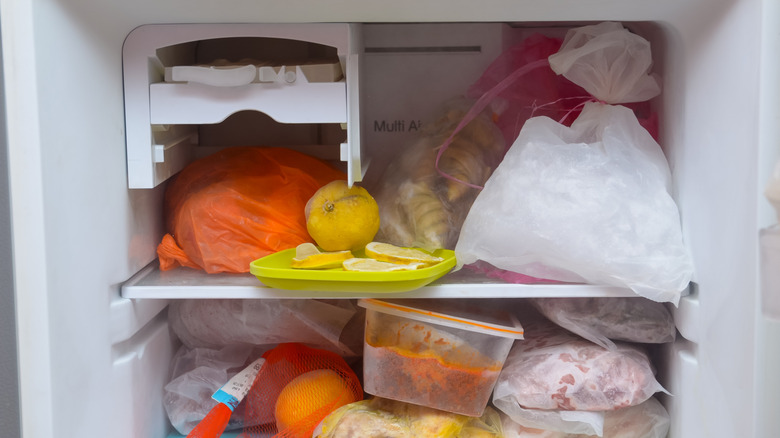
If you don't anticipate using all of your seed within a few weeks, or you can't feed the birds for any reason, you can freeze birdseed to keep it fresh for up to a year. Bird experts at Wild Birds Unlimited say that if you have birdseed inside your home at all, it should go in the freezer. This is especially crucial during warmer months, a prime time for infestations of various moths and bugs, as well as for climates that are too hot year-round for outdoor storage. Freezing your birdseed can help kill any insects or larvae that may target the supply.
Check your seed supply regularly
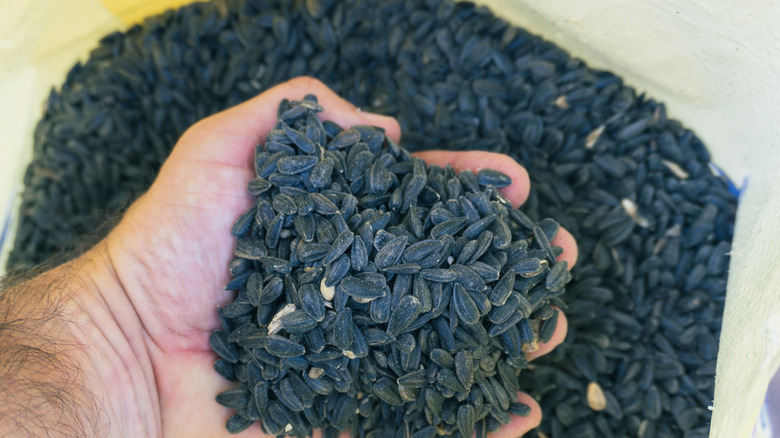
Don't just reach into your container of bird seed, grab a handful, and fill up your feeders without checking to see if it's still fresh. Look for signs of spoilage, such as an "off" or unpleasant smell, as well as mold or insects. Any changes in appearance, including sticking, clumping, discoloration, or a white powdery coating, indicate you need to dispose of your bird seed and buy a fresh supply.
Sanitize your seed containers
Providing birds with healthy, fresh seed includes keeping the storage container clean. Periodically sanitize your seed storage to remove any residues or traces of mold, bacteria, or insects. You can use a diluted bleach solution with 10 parts water to 1 part bleach. After you scrub the inside, rinse away all of the bleach residue, then let the container dry completely before you add seed. If you have any contaminated seed, dump all of the seed out, and immediately sanitize the container before using it again.
Label and date your bird seed
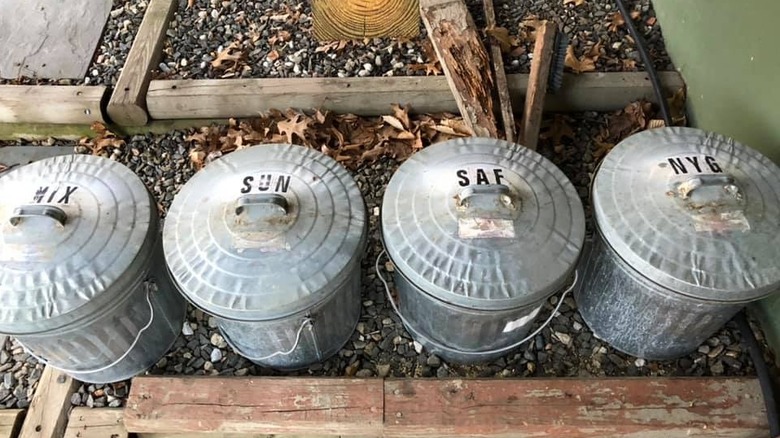
If you frequently buy a lot of bird seed for attracting a greater variety of birds to your yard and use multiple feeder types, make the refill process easier by keeping that stash organized with labels when you add it to your storage containers. Moreover, since bird seed can grow stale within a few weeks or months, depending on the type, labeling with the date of purchase can help ensure you're only feeding fresh seed. You can use a package of chalkboard labels and change the text as needed.