

Spray Or Brush: What's The Best Option For Applying Tile Grout Sealer?
We may receive a commission on purchases made from links.
You're tackling that bathroom renovation or backsplash replacement yourself, and have successfully mounted the tiles and applied the grout. Next up: sealing that grout for longevity. When it comes to sealing your tile grout, there are a few methods that work but they each have their quirks. Usually, you'll hear of two approaches — either brushing sealer directly onto your grout lines or spraying it over them. Both will get the lines sealed, but each method differs when it comes to how much coverage you get, how precise it is, and how easy it is to do yourself.
Regardless of which method you opt for, spraying or brushing, it is necessary to use a grout sealer because grout is naturally porous. That means it will suck up water, grease, and stains over time if left as-is and exposed to the indoor elements. Choosing the right application method will mean your grout is properly protected against these factors, especially in areas that see a lot of water, like kitchens, bathrooms, and laundry rooms. It is an essential step to keep your living spaces looking clean and, perhaps more importantly, reduce the chance of mold appearing.
How the two methods of grout sealing compare: pros and cons
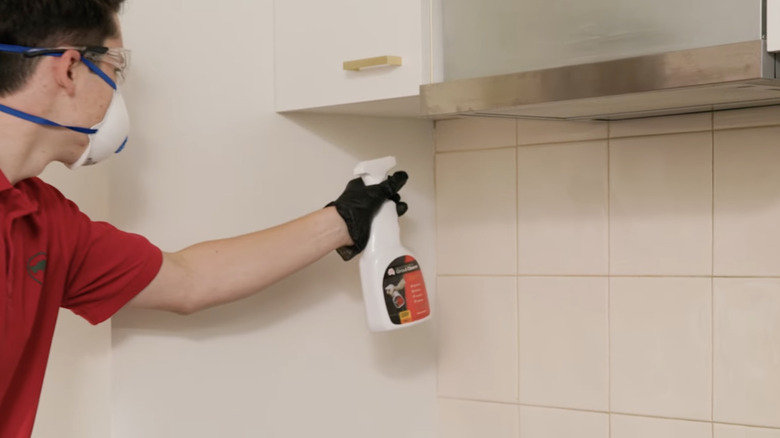
If you're in a rush to get the job completed, spray bottles or cans are the quicker choice. Sprays are often the go-to option for people renovating large areas in a hurry — think an expansive bathroom floor or the backsplash in a huge kitchen. Of course, the application method is not without downsides. Spray-on sealer can drift, which means the product could end up on nearby tiles, fixtures, or other surfaces. And that's far from ideal. You also risk overspraying sealer on your grout lines. In addition to being a waste, you'll have to spend time carefully wiping away extra sealer after spraying. Overall, this method is definitely quick, but it can lead to uneven or messy coverage.
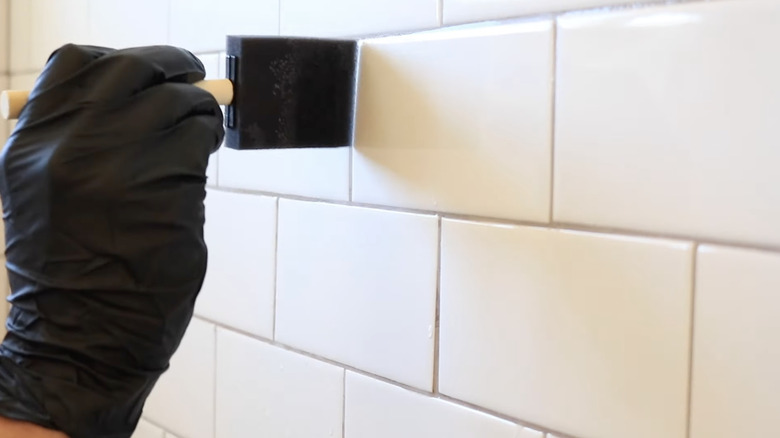
Brushing on grout sealer, on the other hand, is usually considered by pros as the best way of getting the job done. Brushes lend themselves to more precise application. You don't need to invest in fancy tools, like the Diversified Distribution Service Press-N-Go Tile Grout Sealer Applicator, either. Using a foam brush or even an old toothbrush can give you a lot of control over how much sealer you're applying to your grout lines and where it's going. Being precise is important when DIYing the application. Too much sealer builds up and is harder to remove down the line. Apply too little sealer, and your grout won't be effectively protected. Arguably the only real con of the brush method is that applying the product by hand is more time-consuming than spraying. Depending on the size of the job, you may even end up with aches and pains from the repetitive movements you have to make.
Why tile material and location matters when choosing a method
A good way of figuring out how to choose the right grout sealer for your tile — and, in particular, the correct application method — is to consider the type of tile you have. Natural stone tiles, like marble or travertine, can be damaged or darkened by a heavy application of sealer, so using a brush is the more controlled and therefore safer choice. Ceramic tiles are a lot more forgiving, which is why spray sealers can work better.
The scale of a tiled area and your patience level are also important considerations. If you're sealing grout in the tiled walls of a small bathroom, it won't take long to do by hand. You can use a brush and focus on precision. As mentioned, spraying makes more sense when dealing with large areas of tile.
Then there's the question of how often you should reseal grout. The application method you choose is important for a finish you won't regret. For yearly grout line touch-ups, spraying on the sealer often works just fine. Sealer applied to high-traffic areas, like shower floors, wears down faster, so reapplying it evenly with a brush may hold up better over time. In short, brushing is usually considered the more reliable method for long-term protection, but both approaches will get the job done in the right context.