

Easily Remove Soap Scum From Your Kitchen Sink With This Natural Solution
We may receive a commission on purchases made from links.
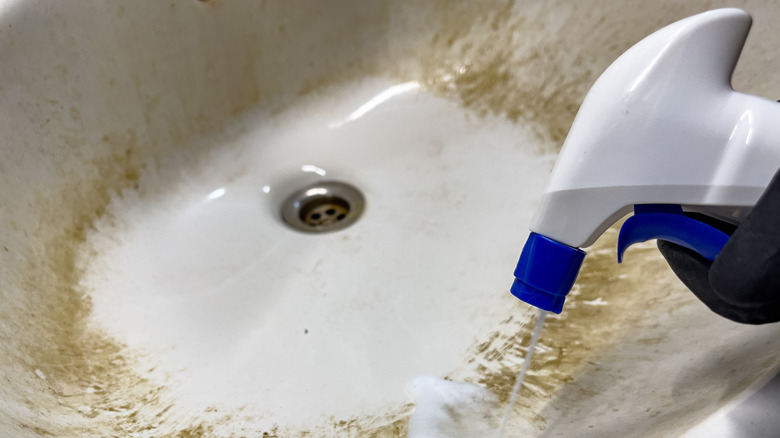
You may be familiar with dealing with soap scum in your bathtub or on your shower walls, but this stubborn layer of film can also affect your kitchen sink. It forms when fatty acids in soap react with minerals in water, such as calcium and magnesium. The result is a white, chalky, or cloudy layer left on the surface of the affected area, and it can be especially persistent in homes with hard water. Because mold and mildew also tend to grow on soap scum, addressing it ASAP is important. If you're looking for the best ways to get rid of soap scum and have already tried regular kitchen cleaners, don't worry, you don't need to pull out the harsh chemicals. Instead, depending on the material of your sink, you may just need a pumice stone.
Pumice stones are made of volcanic ash and offer a natural solution for removing stubborn soap scum. While you might be familiar with pumice stones designed to scrub dead skin off of feet, they're also available for cleaning. That said, those made for cleaning are often coarser than those manufactured for beauty treatments, and they can be too harsh for certain types of sinks.
How to remove soap scum from your kitchen sink using a pumice stone
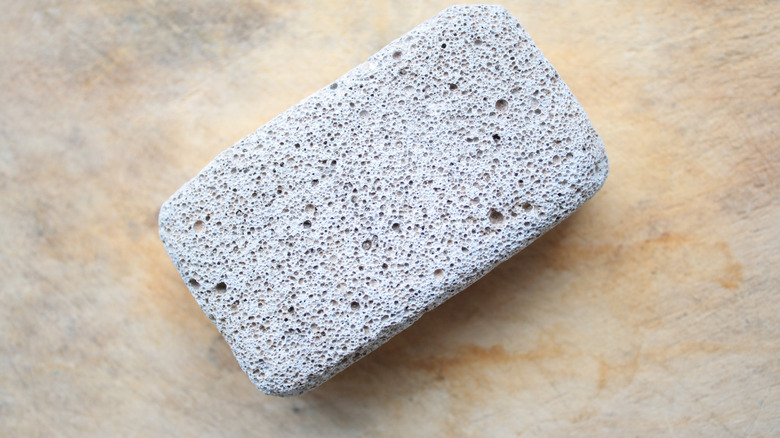
Pumice stones are generally safe for porcelain, ceramic, and other hardened surfaces; however, there are several spots you should never clean with a pumice stone, including metal and fiberglass sinks. Even if your sink is made of porcelain or ceramic, you'll still want to test out the pumice stone on an inconspicuous spot to ensure it doesn't cause damage. Pumice stones come in square or rectangular handheld blocks or with handles. Those with handles, like this inexpensive option from Amazon, are easier on the hands and may provide a more comfortable cleaning experience. To clean soap scum from your kitchen sink, wet the pumice stone and then lightly scrub the soap scum, rinsing often as you work your way around the sink.
Since minerals in hard water are a major cause of soap scum, installing a water softener can help combat this issue. If that's not in the cards, avoid the mistakes everyone makes with their kitchen sink and make sure you're washing yours often enough. Simply rinsing your sink with hot water after each use can help eliminate soap residue before it hardens. And if your soap scum problem comes back, you'll already have a pumice stone on hand for an easy and natural way to get your sink squeaky clean.