

Looking For An Indoor Plant That Thrives In Direct Sun? Turn To This Flower-Shaped Succulent
We may receive a commission on purchases made from links.
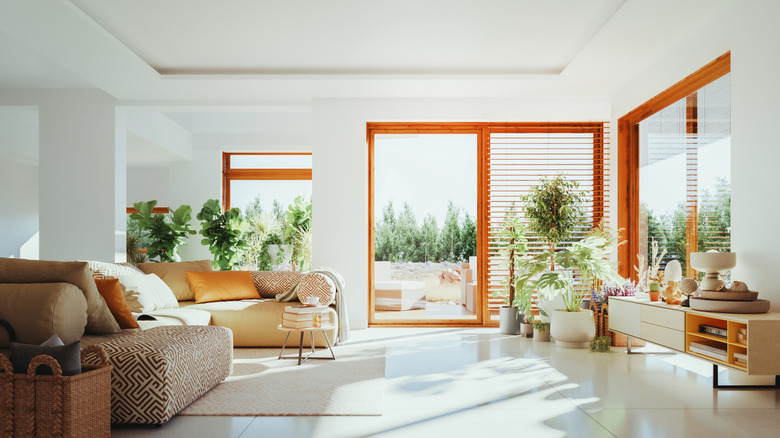
In many homes, too little sunlight is a significant limiting factor when it comes to successfully growing houseplants. Sometimes, however, you have the opposite problem: too much sunlight. This is especially true in rooms with large floor-to-ceiling windows — often the living room. The foliage of some delicate indoor plants can change color or scorch in direct sun. What's the fix? You need to grow houseplant species that thrive in direct sunlight. This is where echeverias (Echeveria spp.) come in. These succulents are native to American arid regions, so they love getting plenty of sun. In fact, the more sunlight the plant gets, the more vibrant its fleshy leaves become.
The Echeveria genus includes nearly 200 species (including lots of hybrids), many of which are commonly grown as houseplants. Despite their varied appearances, they all share one thing — when young, they form tight, symmetrical rosettes of puffy leaves close to the ground. As the stems grow taller, the leaves drop off, giving the plant a rather unique palm-tree–like look. Echeverias come in a range of colors and formations, so you are pretty much guaranteed to find the perfect plant for your style. Plus, they are really easy to propagate and care for. The best part? If you give them the right care, which includes providing them with the bright light they crave, they might even flower.
Get the lighting right to successfully grow echeveria indoors
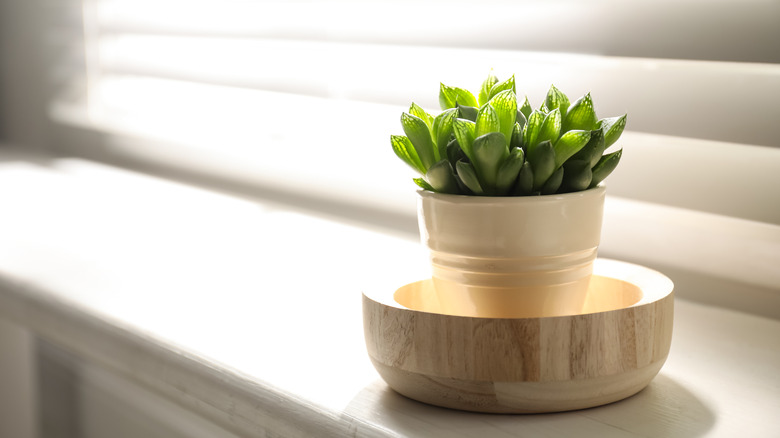
In the wild, echeverias grow in semi-desert environments with intense sunlight and long days year-round. Anyone who gardens regularly understands that plants do best when you mimic their natural growing conditions. For echeverias, this means providing the plant with at least six to twelve hours of bright light daily, depending on the season. If they don't get enough light, they will stretch and become leggy, a process called etiolation. The beautiful rosettes that make echeverias so charming start to lose their shape.
A spot near a south- or west-facing window works the best for meeting the lighting needs of echeverias. Don't crowd a south-facing window with garden plants: you risk creating too much shade. Position them at least a few feet away from the glass. Windows, especially in summer, act like a magnifying glass, creating light so intense that it can scorch your plants. Regularly check your echeverias' foliage for brown burn marks, yellowing, or fading and move them if necessary. If nowhere in your home is naturally bright enough for echeverias, you can install grow lights for your indoor plants. Bulbs with an intensity over 1000 footcandles work best. If the light comes from a single direction, rotate the pots at least once a week to avoid growing an asymmetrical plant.
Bright light isn't the only input indoor echeveria need to thrive
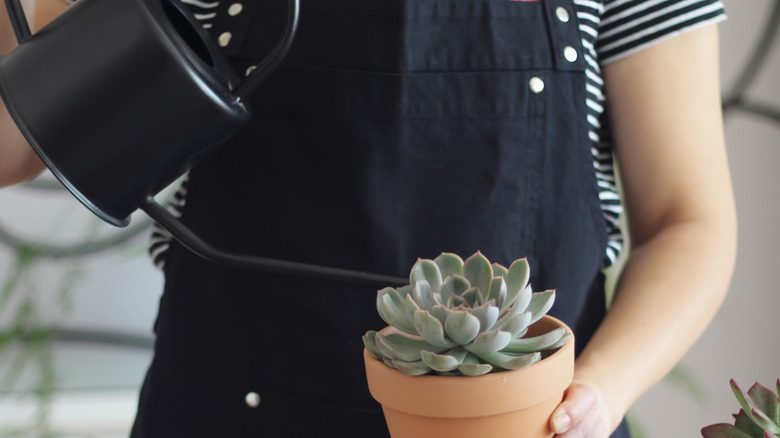
Overwatering is the biggest mistake you can make when caring for an echeveria. It not only makes the plant prone to root rot, but it can also encourage pests, such as mealybugs. Unless you want to spend your days getting rid of bugs on indoor plants, water echeverias only when the soil feels completely dry. Also, plant them in well-draining soil — specialist potting mixes like Agra Life Premium Succulent Soil Mix work especially well. Alternatively, you can DIY your own succulent soil for thriving plants.
Ideally, you want to mimic the humidity levels and temperature range of echeverias' natural habitat. Keep the indoor temperatures around 70 degrees Fahrenheit, and place succulents away from humid spots, like bathrooms, laundry rooms, and kitchens. Being desert natives, they like a dry environment. Can you use tap water on these houseplants? No — fluoride can damage your echeveria's leaves.
Give your rosette-like succulent a quarter-strength liquid fertilizer once a month from May to the end of August. If you can, use a cactus formula. Never overfertilize — it can be just as harmful as underfertilization. Lastly, echeverias are slow growers. You only need to prune them if they look leggy and repot them if they have outgrown their planter.