

The Pollinator-Friendly Herb That Thrives From Being Pruned In Late Winter
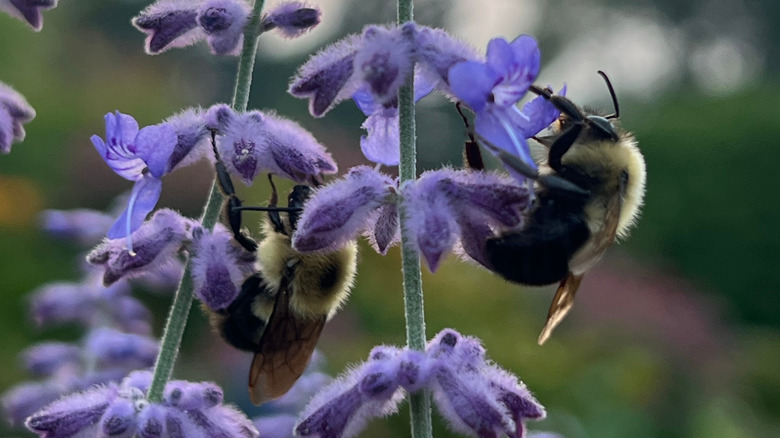
Every garden needs pollinators, and there's no better way to invite them than by planting Russian sage (Salvia yangii). This drought-tolerant garden favorite attracts bees to your yard with the promise of nectar and pollen. It also attracts butterflies! Grow it in a pot to draw birds to your yard in summer and fall. Its leaves are fine, silver-gray, and aromatic, making them just as ornamental as the blooms. Let the plants attract pollinators, and brush on the leaves to smell their wonderful fragrance when you walk through the garden. Though some herbs grow well without pruning, this pollinator magnet benefits from annual pruning in late winter. Proper cuts ensure that the stems don't flop over during the growing season. They'll look better with routine treatment.
Don't cut the dying stems in the fall, or you'll remove habitat space for overwintering bugs that need it. Plus, the stems provide ornamental interest at a time when not much is growing outside. Instead, wait until the end of winter before new sprouts emerge to successfully grow Russian sage. This lets the stems overwinter naturally, giving them time to let their leaves fall off and enter winter dormancy. Annual pruning also keeps Russian sage from growing woody. A woody sage will have fewer flowers and aromatic leaves than a well-kept one, and regular pruning prevents this from happening.
How to prune Russian sage in late winter
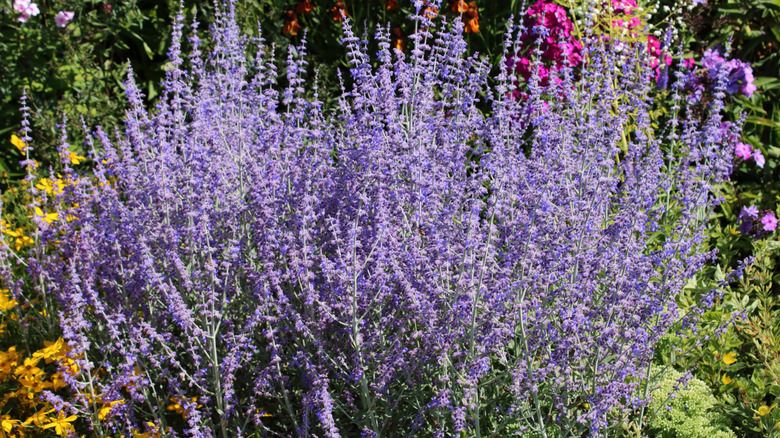
For this winter project, you'll need gloves, hand pruners, and a bin to collect the old stems. Start the pruning after the ground thaws but before new sprouts emerge from the herb. Anytime from late winter through early spring will work while the herb prepares to sprout new stems. Trim each stem of your Russian sage to about a foot above the ground. The new growth will emerge from below the cuts you make and from the ground, leading to a bushy and full structure rather than a floppy, overgrown one.
What do you do with all the leftover cuttings? You may chop them up and throw them on the soil to work as mulch. This method, called the chop and drop technique, is the easiest and best way to take care of your plants. Or, you may add the clippings to your compost alongside other organic materials, like fallen leaves and grass clippings. As a last step, mark the date you do the pruning on your calendar. This will help you remember to make cuts next year when winter turns to spring, ensuring your Russian sage looks its best year after year.