

8 Popular Driveway Materials That Are Permeable (And The Ones That Aren't)
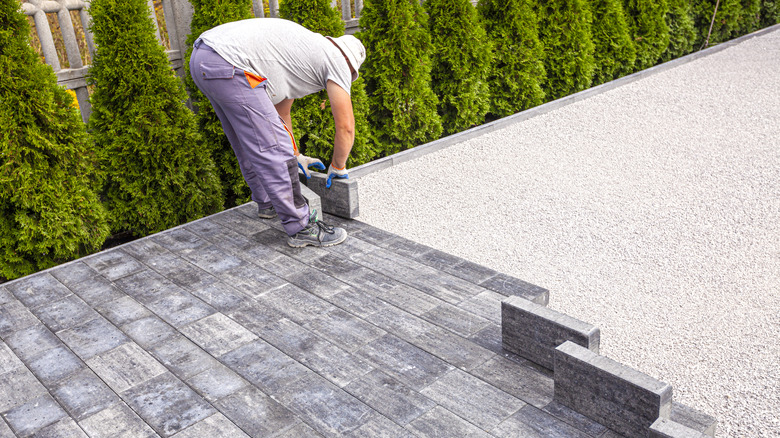
The material you choose for your driveway has a bigger impact than curb appeal. Permeable materials like pervious pavers, gravel, and pervious asphalt or grass pavers allow water to drain away into the earth below the base layer. Impermeable materials, like traditional concrete, pavers, and asphalt do not allow water to pass. Instead, they shed it from their surface.
Permeable driveway materials are the best option for the environment and your local area. Allowing water to pass through and soak into the ground helps mitigate against flooding by reducing pressure on local storm drains. Additionally, water passing through a surface prevents pooling, reducing the risk of dangerous icy patches in freezing conditions. Many areas now require or strongly encourage homeowners to choose permeable materials when having a new driveway installed to ease pressure on storm drains and reduce the risk of flooding.
Gravel driveways with a compacted stone base (permeable)
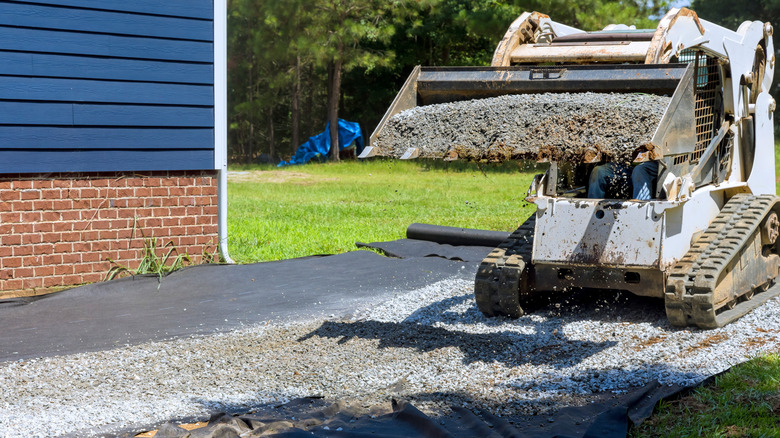
When installed correctly, crushed gravel driveways with a compacted stone base are permeable and reasonably affordable. They consist of several inches of free-draining crushed stone or aggregate, and they're topped with a thick layer of gravel. However, for it to truly be permeable, the crushed stone base needs to consist of large-ish particles of angular stone that's the same approximate size, with minimal fine particulate matter.
Make sure the contractor uses washed stone without too much sand or fine particles, also known as "crusher dust". If this is present, it can fill the voids in the base that normally allow water to pass. When this happens, the gravel is still permeable, but the aggregate sub-base is essentially impervious, so it contributes to runoff the same way as a fully sealed driveway. If you go this route, it is more affordable than other options, but because the gravel is a loose material, you'll need to rake it and top it up occasionally. You may also need to weed it as debris and weed seeds will fall through the gravel and potentially germinate. Adding grids below the gravel layer can help keep the gravel in place and reduce maintenance.
Interlocking concrete pavers (permeable)
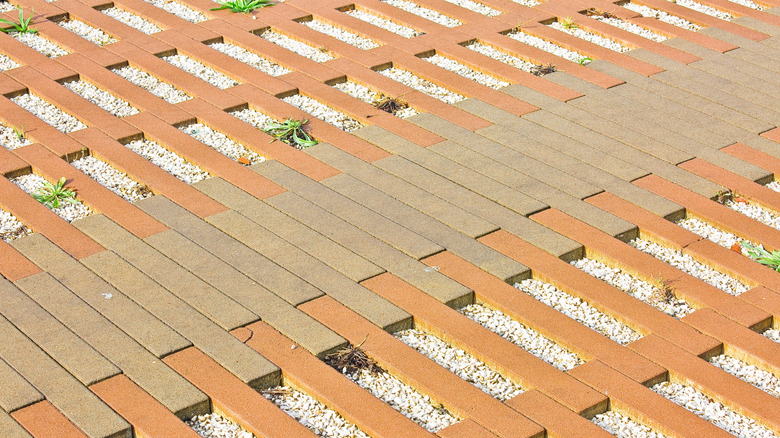
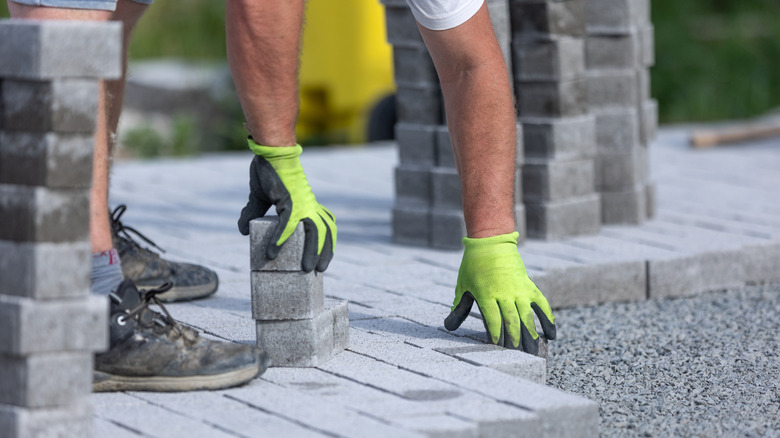
Permeable interlocking paver systems use specially shaped paver blocks and wide joints. The joints are filled with crushed stone. This is installed over a deep, open-graded aggregate base, with a base layer of finer crushed aggregate that acts as a reservoir, slowing the passage of water to give the ground time to absorb it. The pavers themselves aren't permeable. Instead, the water passes through the joints and — depending on the paver type — the gaps in the pavers and into the loose stone beneath. Here, it filters through into finer stone, then into the ground.
This type of permeable driveway is the first choice for many municipalities for true green infrastructure. When properly installed, permeable interlocking concrete pavers capture a huge portion of on-site rainfall and temporarily hold it in the base layer so it can soak slowly into the soil. This reduces runoff problems and pressure on local storm drains. But this relies on you working with an experienced and reputable contractor who can get the base depth and overall grading correct. Maintenance is minimal, but you'll need to lightly clean it from time to time to stop sediment from clogging up the joints over time. You'll also need to sweep the surface occasionally to keep it looking its best.
Stabilized decomposed granite over a free-draining base (permeable)
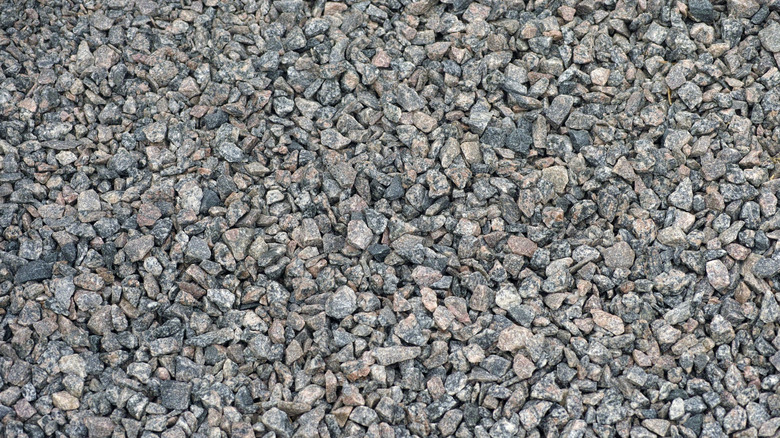
Decomposed granite or other, similar crushed stone, is spread over a compacted, open-graded aggregate base. There's usually a stabilizer of some kind mixed in with the top layer of crushed stone, like an organic or polymer binder, to reduce dust and tracking or ruts. With the binder and the often fairly large amount of fine particles in the top layer, this one is arguably semi-permeable. However, it does still allow a significant amount of water through. And the base layer, if it's a properly installed free-draining aggregate, does let water percolate through to the ground below.
Permeability is usually pretty good, providing there's not too much dust in either layer, the top surface doesn't get excessively compacted, and not too much fine sediment accumulates. You'll need to rake it occasionally to smooth ruts and top it up, as you would with gravel. And, if you're on a slope or are expecting heavy vehicles to be turning regularly, it's a good idea to add gravel grids or even permeable pavers in the areas that will take the brunt of the increased weight and pressure.
Resin-bound gravel over a permeable base (permeable)
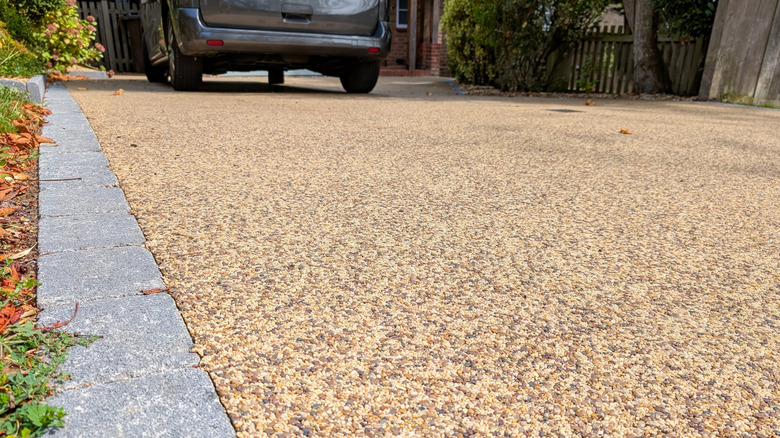
Resin-bound is not the same as a resin-bonded driveway. Resin-bonded systems are notorious for being impervious. Resin-bound systems, though, actually do let water pass through. With a resin-bound driveway, you've got an open but stable aggregate base, with gravel mixed with resin laid over the top in a single, porous layer. There are tiny, interconnected voids in this top layer that let water percolate into the base layer, and then into the ground.
Unlike loose gravel or stabilized decomposed granite, resin-bound gravel doesn't shift around, need topping up, or develop ruts. It's a simple upgrade that's great for a steep driveway, providing the look of a contemporary, smooth surface. It doesn't look like or behave like loose gravel, so you won't need to rake it over regularly. You will, however, need to sweep it free of accumulated leaves and other debris periodically to keep the voids clear and unclogged, otherwise you risk partially sealing the surface, making it less permeable and contributing to storm runoff problems.
Porous asphalt driveway mixes (permeable)
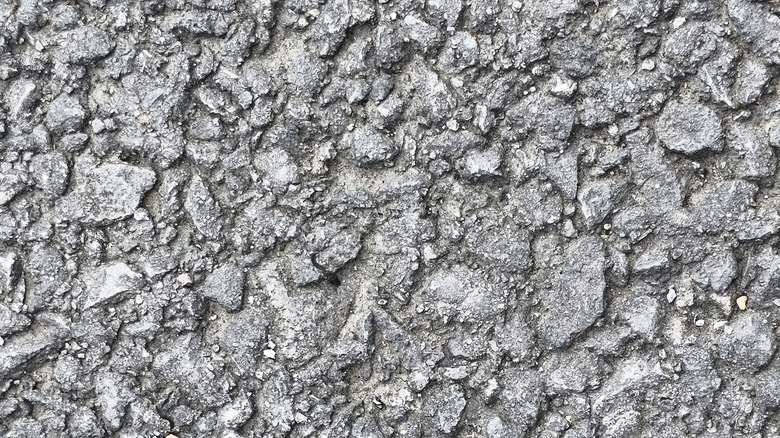
Unlike traditional asphalt, porous mixes do let water through. Like most of the other permeable options here, porous asphalt mixes have to be laid over an open aggregate base so that water that infiltrates the surface can also get through the base layer and into the earth. In this case, the base is generally a thick layer of crushed, open-graded stone that temporarily holds the water so it can slowly soak into the ground, rather than running off into storm drains. Porous asphalt is great for reducing driveway runoff and reducing puddling and ice on the surface, as the water penetrates through the top layer rapidly, then gets slowed down by the base layer and slowly soaks into the ground.
Because porous asphalt works with a series of voids or channels where the water can permeate, it's important that you keep them free of fine particles that can clog them. A common mistake is to lay sand for winter traction. The sand then gets wedged in the tiny holes and the surface effectively gets sealed, so water can't get through. You should also avoid applying an aftermarket sealant to try to make the driveway last longer. All you'll do is block the "pores" and cause pooling, make your driveway ice up, and contribute to local runoff problems and flooding. One good option is to hire a vacuum sweeper service once per year. This lightly scours the surface to loosen any debris, and sucks it up to keep the voids clear.
Pervious concrete slabs (permeable)
Pervious concrete slabs sit atop the same kind of open stone base as many other permeable driveway systems, sometimes with a geotextile filter layer below. The base layer is important because it slows down water infiltration, holding it among the stone layer long enough for it to thoroughly soak into the earth. With pervious concrete slabs, they are usually a cement paste that coats coarse aggregate but contain little to no sand. This creates a rigid and hardwearing slab. However, there are tiny channels in the concrete that let water through into the base, where it slowly sinks down into the underlying soil.
Permeable concrete reduces surface runoff and can help meet stormwater regulations without you having to add separate retention basins, which is especially useful on smaller properties. The surface is smooth enough for universal access, but gives plenty of traction for vehicles. And, because water penetrates the top layer so quickly, you should have fewer problems with the driveway icing up. Treat it very much like permeable asphalt, in that it should never be sealed, and you need to keep the water infiltration channels free of clogs with regular vacuum sweeping.
Grass or turf block pavers (permeable)
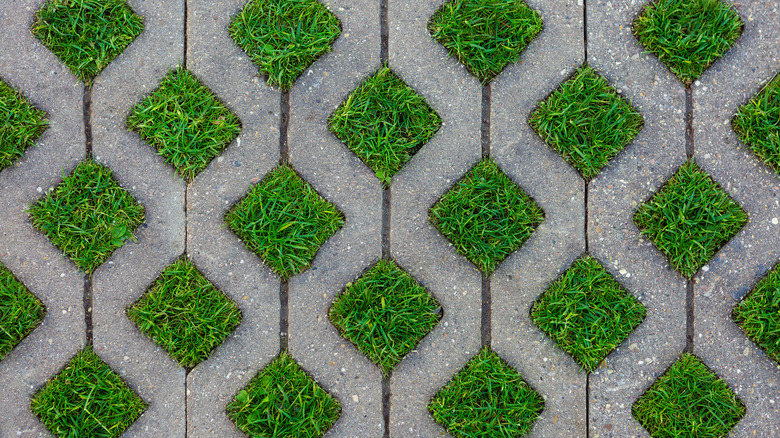
Turf block pavers, or grass paver systems, are a great green option, both literally and metaphorically. They have plastic or concrete grids with open cells that get filled with soil and turfgrass. The grid takes the pressure from the vehicles, so the grass doesn't get rutted, muddy, or sunken. The whole system sits on an open stone substrate, like most other permeable options. The water obviously soaks into the turf and is held for a time by the soil. What isn't used by the plants passes into the base layer, where it slowly filters into the underlying soil. Another benefit of grass pavers is that they stay cooler than asphalt or concrete during the summer.
Grass pavers are best-suited to driveways that only get light use, and ones that aren't subjected to heavy vehicles. You'll also need to choose a tough grass that can withstand some traffic, like zoysiagrass, tall fescue, bermudagrass, or ryegrass. Grass pavers need care, just like a lawn. They'll need periodic mowing, feeding, and reseeding. You'll also want to avoid parking in or driving onto the exact same spot while it's wet and muddy, or you could damage the grass and have to reseed earlier than you'd planned. And, if you have recently reseeded, avoid driving over the area until the new grass has had a chance to germinate and get established.
Gravel held in cellular grids or reinforcement panels (permeable)
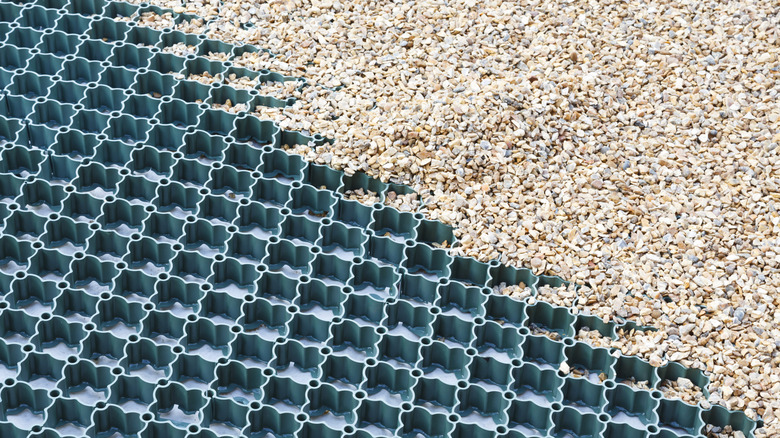
This is essentially the gravel equivalent of the grass pavers. Gravel with cellular reinforcement generally consists of concrete or plastic honeycomb-type pavers or panels. Some also use plastic grid systems. Each paver or panel has a void or series of voids that get filled with gravel. The whole thing sits over a prepared base of crushed stone aggregate. The benefit here is that there is far more structure than with a loose gravel driveway. The panels or pavers take most of the vehicle pressure so you don't get ruts or tracks. Additionally, the gravel is confined so, although it's still technically loose, it doesn't migrate as easily, which means there's less topping up and general maintenance. And water still passes cleanly through the gravel, then into the base, where it soaks away into the soil below.
Unlike a straight-up gravel driveway, unless you really know what you're doing, it's a good idea to hire a contractor. It's important that the base is the proper depth and is adequately compacted so that the panels don't flex, break, develop telegraphing spots, or sink in patches. Also, although less maintenance is needed, you'll still need to top up the gravel very occasionally, hand-pull any weeds that pop up in your gravel driveway, and rake it over once in a while.
Solid poured concrete driveway slabs (non-permeable)
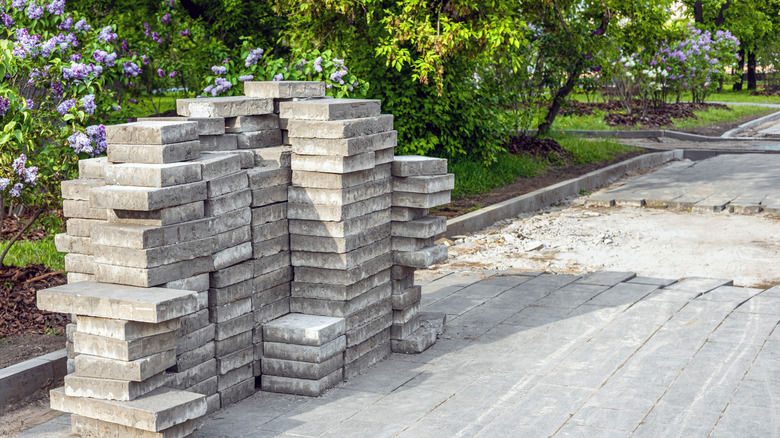
Solid poured concrete slabs are impermeable because they are dense, solid, and designed to not have voids or channels. They are continuous poured slabs with minimal permeability. Therefore, most rainwater and snow melt runs straight off toward the street, a storm drain, or puddle in the nearest low spot. It's true that joints between slabs or cracks that develop over time do allow some water ingress, but not enough to be effective at reducing runoff or to be considered truly pervious.
Homeowners can add drainage features to solid poured concrete, like channel drains to reduce runoff. However, heavy rain can still pool at the bottom of driveways, on public sidewalks, and in the street if the storm drains are already under a lot of pressure. Plus, water pooling on the driveway itself can freeze, which can crack the concrete while creating dangerously icy conditions for vehicles and humans. Yes, there are fancy colored and stamped concrete finishes that can make a low-budget impervious concrete driveway look like pavers or other high-end materials, but this is cosmetic only and does not change the actual permeability.
Traditional asphalt or tarmac driveways (non-permeable)
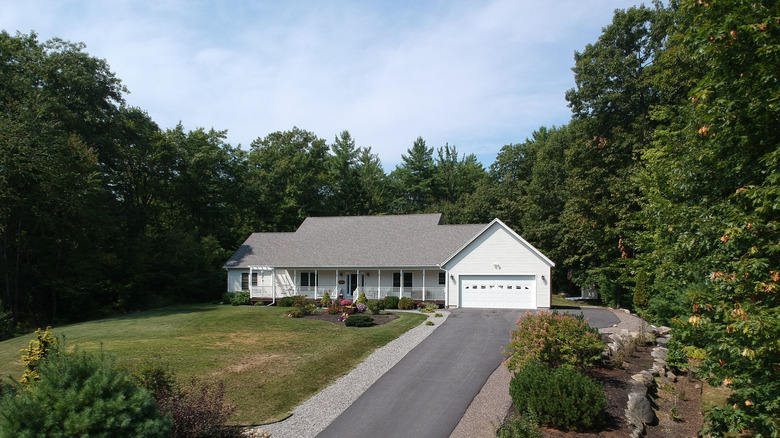
Regular asphalt is specifically designed to be impervious and, in fact, is supposed to shed water quickly. And it does exactly that. Water can't penetrate because the surface is sealed and, unless very old, worn or damaged, has no way for water to get in. Much like concrete, even when cracks appear, they don't let enough water through for the surface to actually be permeable. Large areas of traditional asphalt, such as driveways, contribute to local flooding and overflowing storm drains because they shed water so rapidly into the street. Plus, because the surface is sealed and impervious, pollutants such as oil collect on the surface. Then, when heavy rains, runoff, or snow melt sheds off, the pollutants go with it, straight into drains and waterways, causing significant environmental damage as well as the possibility of potholes on your driveway.
Some homeowners still choose asphalt in spite of the environmental and pollutant properties due to affordability, especially when they're covering a large area. However, it's then necessary to add swales or permeable features to meet local drainage and environmental regulations. So, if you are contemplating using regular asphalt, be sure to check with your municipality about what regulations you have to adhere to.
Resin-bonded gravel surfaces (non-permeable)
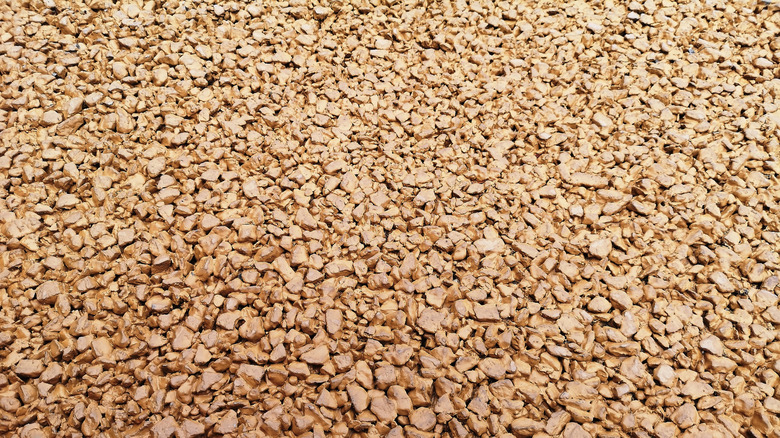
This is the opposite of resin-bound driveways. Resin-bonded ones usually involve an impermeable base layer, like concrete or asphalt. Liquid resin is applied over the top, and then loose gravel is spread across the top of the viscous resin layer. The gravel obviously sticks and embeds into the resin as it dries. Once the resin is dried and cured, the loose gravel is removed. It's a popular choice because it's a budget-friendly way of refreshing an old, beaten-up asphalt or concrete driveway, as it can be applied right over the top of the existing surface. You end up with a textured, high-traction surface that seems like a good idea at first. You've got a gravel driveway without the problems associated with gravel. Resin-bonded gravel won't travel, develop ruts, or need to be topped up. Which is true. But it also won't let water pass through.
Because the underlying base is a solid layer of resin on top of another impermeable layer, there's no way for water to get through. A small amount will sit in the gravel, but the vast majority will run straight off. This type of driveway is a good anti-slip surface, but it's not great for universal access, so anyone with a mobility aid, wheelchair, or pushchair won't be able to safely use it. And, depending on your local rules, you'll likely need to add drains, swales, soakaways, or other features that limit runoff.
Standard block paving laid on a compacted sub-base (non-permeable)
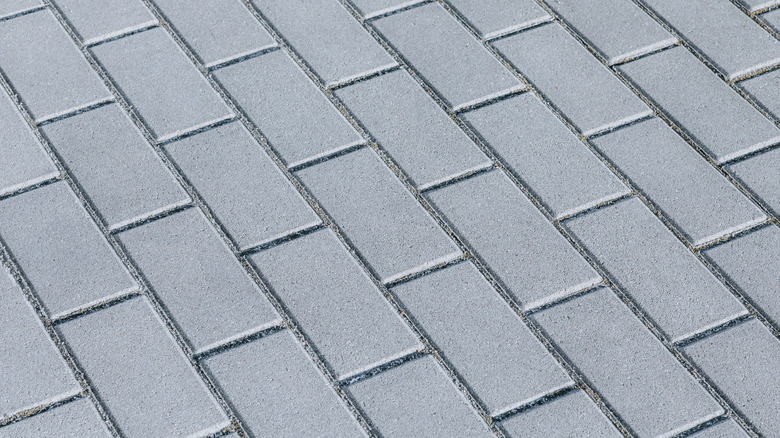
People often confuse standard block paving with permeable pavers, because they look similar and are often discussed interchangeably. However, traditional standard block paved driveways are not permeable. Firstly, the sub-base is often heavily compacted sand or fine-crushed stone and dust or dense-graded aggregate. This itself is barely permeable as there's very little continuous void space for water to percolate through. Secondly, the pavers are standard concrete or clay, which also aren't pervious, and they are laid very closely, with thin mortar or sand-filled joints. Therefore, water just cant infiltrate to any significant degree. Instead, it's forced to run off the surface.
Homeowners often love the look of traditional paver stones, because they do boost curb appeal as they look high-end, especially given all the different style, patterns, shapes, and colors you can get. Plus, if a paver shifts or breaks, it can be lifted, reset, or replaced. So you can understand the appeal. However, because they are not permeable, you'd still need to add drainage to handle storm water and make sure the whole area is graded appropriately so you don't end up with water running back toward your house or pooling somewhere you don't want it.
Exposed aggregate concrete finishes (non-permeable)
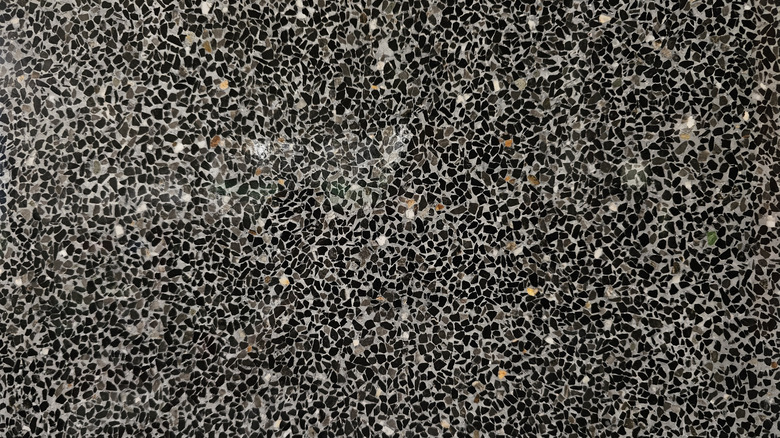
Exposed aggregate looks fancy but again, it isn't a permeable driveway material. Basically, you start with a compacted aggregate base layer. Then, a standard poured concrete slab goes over the top. Next, the top layer of cement paste is brushed, blasted, or washed away to reveal the stone aggregate underneath. It's a popular option because the homeowner ends up with a textured, visually interesting driveway surface that provides good traction. It's also reasonably affordable because they're still using standard concrete slab. And even though it looks like it's permeable because you can see textured stone or pebbles, it isn't.
The stone that you can see is locked inside traditional concrete and is sitting on a continuous poured concrete slab, too. Regular concrete isn't naturally porous. It doesn't have continuous channels or voids to let water pass. Instead, what happens with exposed aggregate finishes is the exact same as standard poured or stamped concrete. The water simply runs right off into the street or into your yard. It is high-traction, though, and it's comparatively affordable while having a moderately high-end look compared to poured concrete slab or asphalt. However, to meet most modern driveway regulations, you'd need to add proper drainage. You could, for example, edge the driveway with permeable gravel over an open aggregate base, so at least some of the water has the chance to soak into the ground instead of running into the street.