

Prevent Slips & Falls When Shoveling Snow With A Sandy Hack
We may receive a commission on purchases made from links.
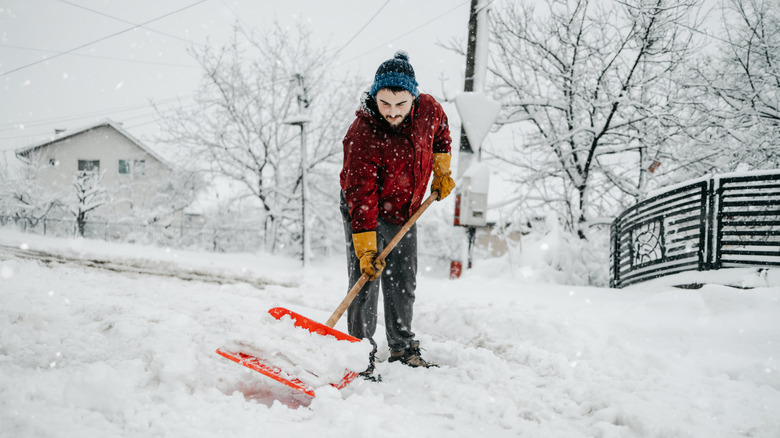
Most people don't look forward to shoveling snow. Whether you have a driveway or a sidewalk outside your apartment, there's a good chance you'll have to take on this burden at some point in your life (assuming you live in a part of the country that gets snow). Shoveling snow is a labor-intensive task that puts stress on the shoulders and lower back. The act of repeatedly lifting heavy, wet snow and ice also puts a lot of strain on the heart. But perhaps one of the biggest dangers is slipping and falling, which can leave you with bruises and broken bones. Fortunately there's a material that will add grip to any icy driveway. Simply add sand to your driveway to improve traction.
Some people use salt to melt ice for winter driveway safety, but this is not an immediate solution. Once you put the salt down, you have to wait a while for it to do its work. Salt can also damage your driveway and harm both plants and tributaries over time. Some homeowners try to increase traction by adding gravel. But the problem with gravel is that once the ice melts, a bunch of little rocks will clutter your driveway. Sand, however, creates excellent traction by embedding into the ice and easily washing away in the spring. Sand is also a more affordable option than chemicals such as calcium chloride. You can purchase a 50-pound bag of all-purpose sand for about $5.50 at Home Depot.
How to use sand to prevent slips while shoveling snow
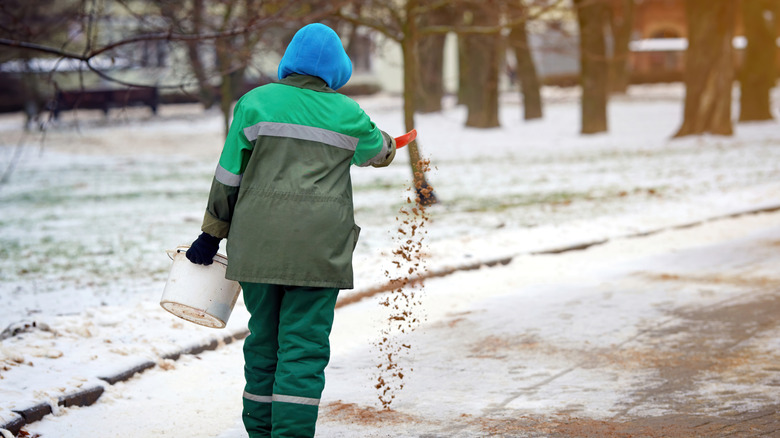
The process of applying sand to your icy driveway is simple, but it does require preparation. You need to have your materials ready before the storm, so stock up whenever you happen to visit your local garden store. You can cover about 640 square feet (roughly the size of a typical driveway) with one 50-pound bag of sand, but it's always smart to play it safe and buy more than you think you'll need. You'll get to use it all up eventually if you live in an area with regular snowfall. Then, be sure to spread the sand before the first snowflakes fall — when you hear a storm is coming.
Use a box cutter to slice open one end of the bag and spread the sand thinly across your driveway, sidewalk, or porch steps. You can even use a leaf rake to spread out any clumps. This layer will prevent some ice from sticking to the asphalt, stone, or concrete surface. If you're especially concerned about a heavy storm, mix some gravel along with the sand. When you actually have to get out and shovel the snow, you'll find that the driveway and sidewalk won't be as slippery, and you won't have to exert so much effort scraping up the packed ice. There are plenty of other items, which you can find in your pantry, that will help you remove snow and ice, including white vinegar, baking soda, and coffee grounds.