

The Small Hedge Tree To Prune In February For A Neater, Healthier Plant
Winter offers a perfect window to accomplish a variety of important tasks around the garden. There's much work to be done ahead of spring: clearing debris, picking out seeds, and, of course, pruning. While some plants should be pruned primarily during the growing season, certain shrubs and trees require pruning in late winter to stay neat and healthy. Hornbeams (Carpinus spp) — a quintessential shrub for creating hedges — is one plant you should prune in February.
The American hornbeam (Carpinus caroliniana) is a native deciduous tree found naturally throughout eastern North America. Its cousin, the European hornbeam (Carpinus betulus), is also commonly grown in the Americas. These gorgeous small trees are known for their landscaping versatility. European hornbeams are suitable to grow in USDA hardiness zones 4 to 8 while their American equivalents are suitable for USDA hardiness zones 3 to 9. All varieties can grow in full to partial sun. These hardy landscaping superstars are fairly resilient to pests. You can leave your hornbeam to grow naturally or prune it into a sculptural hedge for a formal garden. However, it's important to know how to prune bushes during winter dormancy. Let's explore the best practices when pruning your hornbeam shrub in February.
How to prune your hornbeam

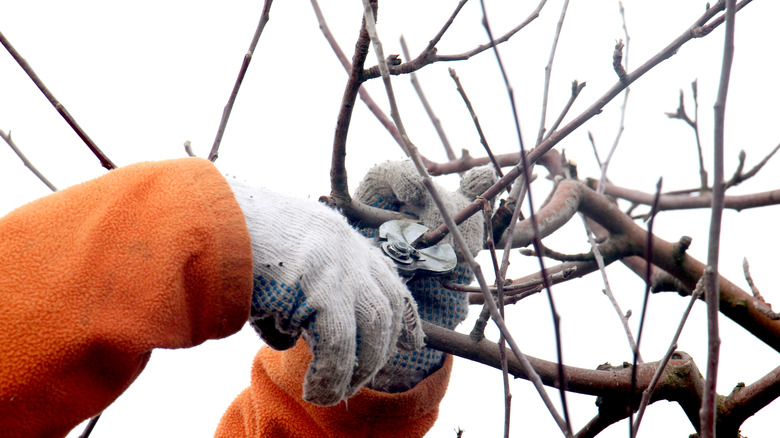
Before you get started, make sure you have all your winter pruning tool essentials together. Sharp, clean shears are essential. You can also use pruning shears to precisely shape your hornbeam shrub. Gardening gloves also aid in protecting your hands and keeping them warm as you work.
Hornbeams generally require pruning twice a year — once in the summer and again in late winter. It's best to generously trim and shape up your shrub around late winter before buds form. This is critical if you plan on cultivating a formal garden featuring intentionally shaped hornbeam hedges.
Use your shears to trim along the edges of your hornbeam shrubs to help them retain their shape. Focus on the branches that seem to be shooting away from your desired hedge shape. Not only will this help your plant keep its shape, but it can also encourage it to grow in the direction you want it to. You can forgo trimming up certain areas of your shrub and heavily trim other parts depending on how you want the hornbeam to grow. For instance, if you have a row of shrubs you eventually want to connect, trim the sides and top but leave the gaps between your plants to grow. Over time, they will merge to form one, dense hedge.