

9 Best Natural Stones For A Retaining Wall That Adds Privacy To Your Yard
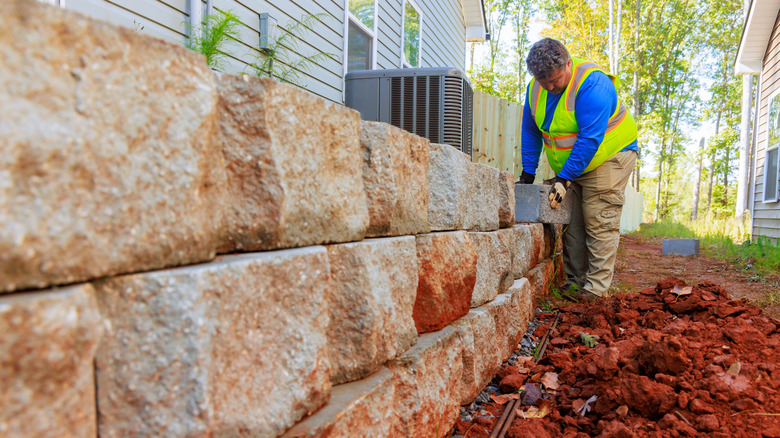
Retaining walls do more for your yard and garden than giving it a romantic, storybook vibe. They block out sounds, provide erosion control for sloping areas, and create zones that make it easier to care for plants with differing needs. And natural stones are one of the most sustainable and durable materials to build your wall with. Constructing a retaining wall with stone, such as fieldstone, slate, and basalt, adds privacy as well as aesthetic and environmental benefits.
When you're planning this barrier, don't forget to build in drainage to avoid a commonly-overlooked mistake that will cause your retaining wall to collapse. One way to achieve this is by including a trench filled with gravel at the wall's base. On a visual note, ensure to set yourself up for a pleasing result by making sure the stone you choose merges well with your home and any garden features – keep this in mind as you set about your ambitious DIY project or work with a contractor.
Granite
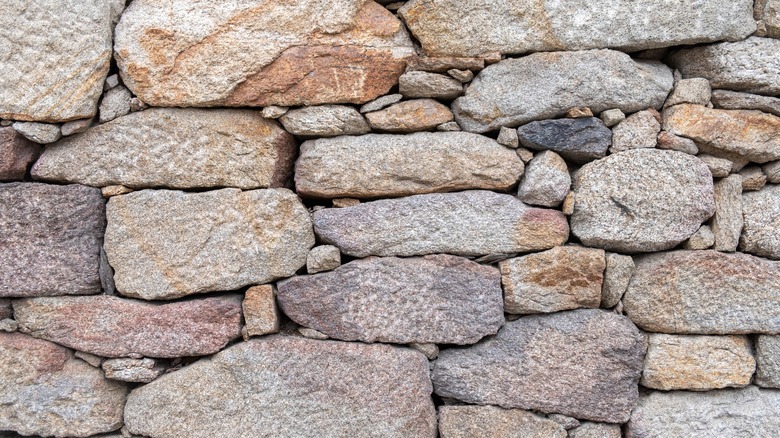
If durability is very important to you or you often brace for storms, consider granite when building your stone retaining wall. This igneous rock makes for stable walls, and is especially useful if the structure is tall and needs to last for many years. Key to granite's long-lasting quality is its ability to stand up to harsh weather conditions. Also, crushed granite is an ideal base material since it packs together well while still allowing some space for water to flow through.
Flagstone
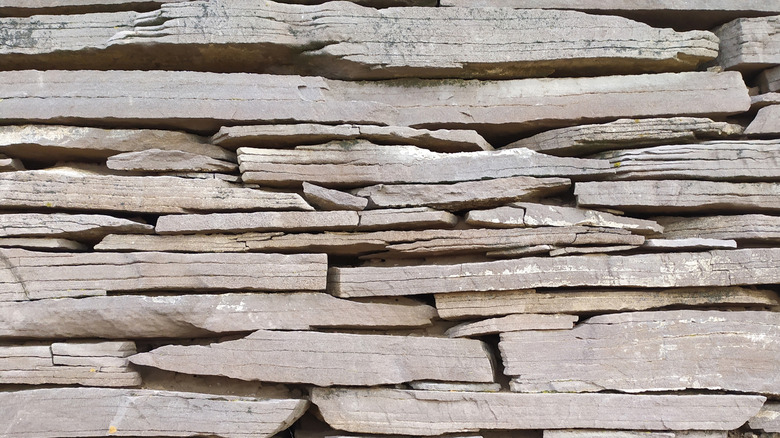
Flagstone is a mix of other natural stones. It may contain layers of sandstone, quartz, and feldspar, for example, so it can delight with unique color variations. A relatively lightweight sedimentary rock, flagstone is more resistant to damage from freezing and thawing than other types of stone, making it the best backyard material for cold weather. Other qualities that make this material popular include longevity and the interesting appearance of its slabs.
Limestone
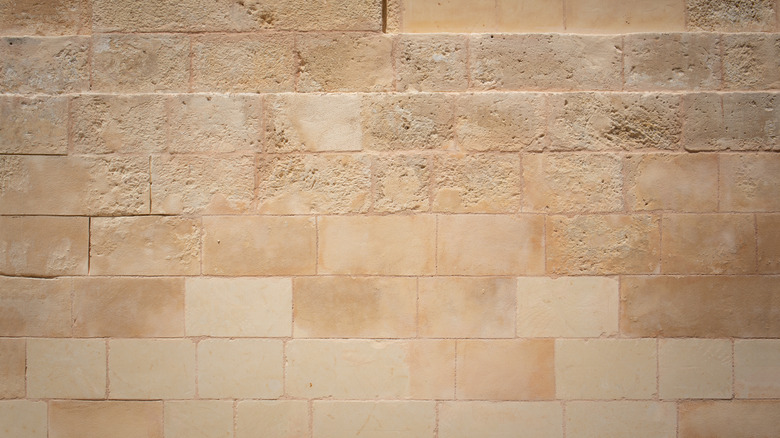
Formed under the surface of water from compacted shells, limestone is an commonly available natural stone often used to build retaining walls. Color-wise, there's a spectrum including shades of white from brown and red to gray and black. Consider using blocks or bricks made from this sedimentary stone for a wall that can resist cracking, especially if your area experiences temperature swings. Another way to incorporate limestone is to use finely crushed pieces known as screenings, which helps improve both drainage and stability.
Bluestone
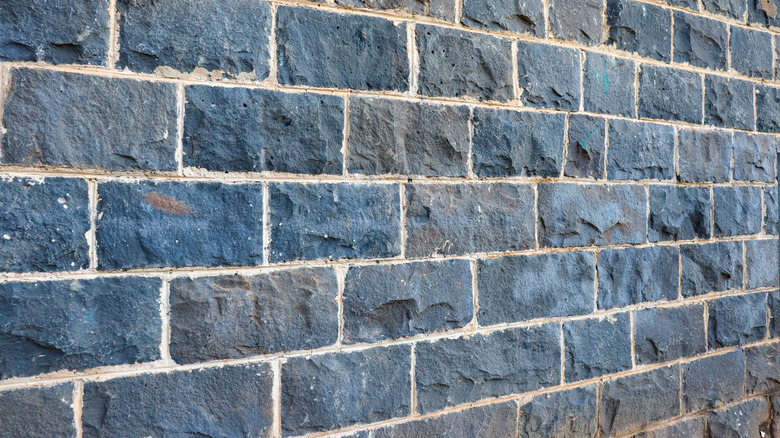
Bluestone refers to types of limestone or sandstone so distinct in color that it has its own name. You can find the stone in hues of blue as well as brown, greenish tones, and lilac. Both varieties of bluestone are known to be strong and long-lasting. The sandstone type, quarried in the Northeast, easily forms flat surfaces with textural appeal due to its layered structure. Other benefits of the stone include its relative affordability and resilience against damage from heat, moisture, and other climate elements.
Basalt
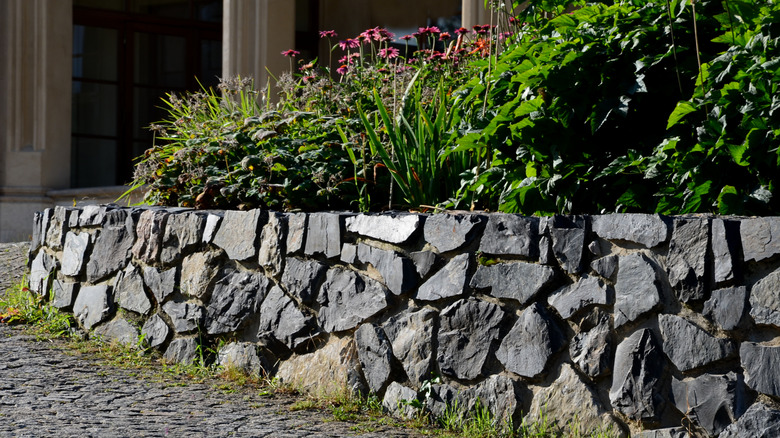
You can choose basalt to construct a stone retaining wall that will look amazing in your yard. The black or gray volcanic stone makes a dramatic statement and can be a visual complement to flagstone. From a practical standpoint, it's prized for having the durability to stand up to high heat and any acidic elements. Retaining walls with a rustic mountain feel can be made from basalt boulders. The popular dry-stack walls made from the stone without mortar provide a zen, modern look.
Fieldstone
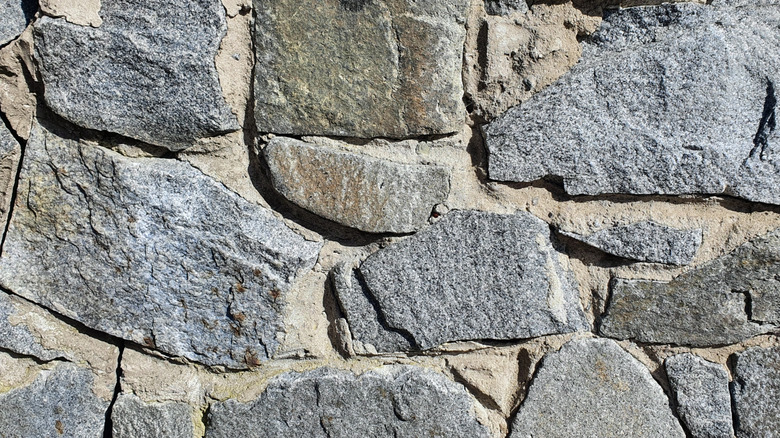
Retaining walls are often made from fieldstone, a natural rock that can be found on the ground's surface rather than beneath it. It's a good choice if you're looking for your privacy wall to have a natural aesthetic; the stones gain a charmingly worn texture from being outside in various weather conditions. Depending on how high you need your barrier to be, stacking the slabs or binding them tightly together are some options to try. Also, because fieldstones vary in sizing, it's advisable to see them in person to gauge how many you'll need to build.
Sandstone
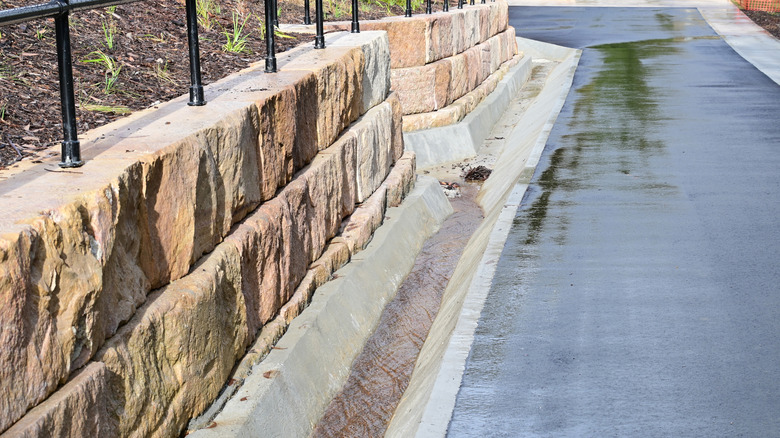
In one of nature's wonders, sand compresses over time to form sandstone, which can stand intact for hundreds of years. Whether you keep the stones in diverse shapes or cut them into identically-sized blocks, it's a reliable material for retaining walls. And because sand comes in a rainbow of colors, so does sandstone; beige and reddish purple are just a few options. The structure allows for some water drainage while keeping soil from washing away. Just remember that a proper base is key when you're working with this heavy stone to keep it from eventually shifting.
Slate
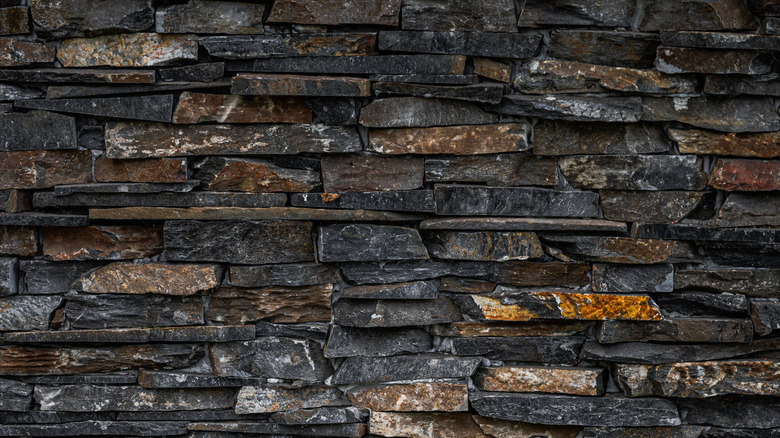
Slate is a metamorphic rock that's commonly used in dry stone retaining walls, where the stones are are placed strategically on each other without concrete. The stone usually has visible layers from the way it's processed in a quarry, but if you're not a fan of the texture, search for honed slate, which has a smoother finish. While slate is often gray, you can also find it with gold or green tones, or marbling. While slate is tough, you may want to use a different material for the base because it's a material that can split.
Quartzite
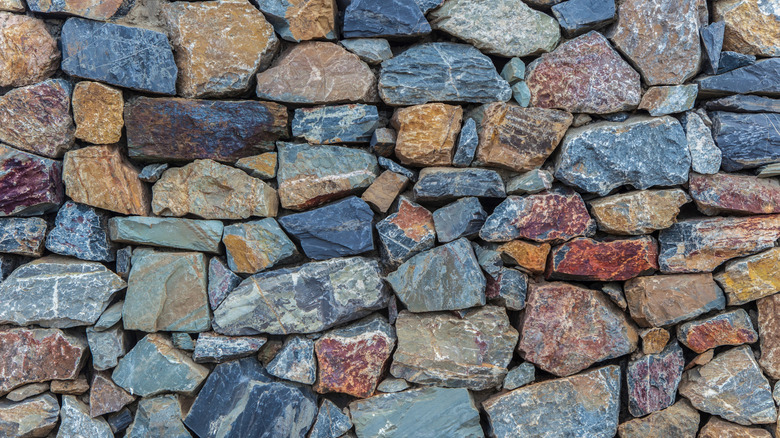
Quartzite, made from compressed sandstone, is a good retaining wall material due to its durability (it's even harder than granite and is very resilient to harsh weather). Stone colors range from sand-colored to reddish or bluish shades, which would shine when held together with wire to create a gabion wall, a sustainable way to add privacy to your yard. Quartzite itself is on the pricier side, but the gabion technique can be replicated with other rocks if that's an issue.