

Always Keep Your Dryer Lint For Your Crafty Projects. Here's Why
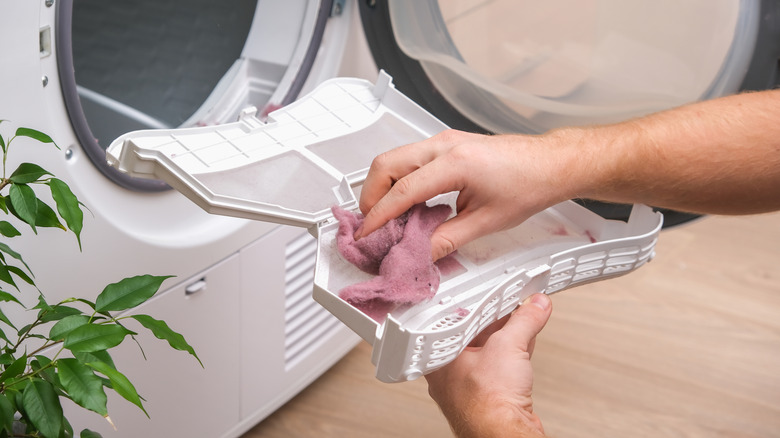
Cleaning your dryer lint trap is one of the most important household tasks. If you aren't cleaning before or after every load of laundry, you are increasing the risk of your dryer catching on fire. In fact, the lint trap may even be the one part of your dryer you've never thought to wash, but doing so can help make your dryer safer and more efficient. Typically, people just peel the lint off of the trap and toss it in the garbage can, but it may be a better idea to save it. There are many clever ways to reuse dryer lint around the home, and it's a great alternative to polyester fiber stuffing in small DIY projects.
Dryers create a lot of friction and send clothes tumbling inside the drum. During this movement, bits of fuzz, cloth, and threads shed from the clothing. The dryer catches as many of these little pieces in the lint trap as it can, and that is what you see when you open the lint trap. The texture is usually soft and fluffy, and it often has a nice, clean smell because it is freshly washed and dried. Lint comes from both natural fibers, such as cotton or rayon, and synthetic materials, like polyester. No matter what materials you are drying, lint is extremely flammable, which is why it is so important to remove. The flammability means that you will need to be a bit careful about what projects you choose to use it as stuffing for.
How to safely use dryer lint as stuffing in crafts
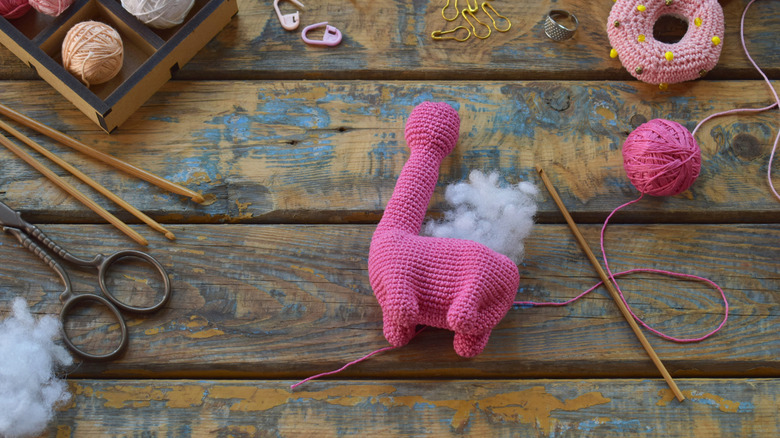
Lint is great because you get it for free instead of paying a few dollars for a bag of polyester fiber stuffing, but it takes time to grow a collection large enough to use for a small project. So, if you want to use your lint as stuffing in a craft, you'll need to start saving it as soon as possible. Remove the lint from the lint trap, and store it in a lidded mason jar. This will help keep the lint safe, secure, and as fresh as possible until you are ready to use it.
Then, it will be ready to go the next time you want to stuff a crochet project, small toy, ornament, or anything else. If you don't quite have enough lint and want to finish up a project, you can supplement it with crumpled newspaper, which is just one of many clever ways to repurpose old newspaper to use around the house and garden. Just remember that even inside a project, lint is still highly flammable. You may not want to give lint-stuffed toys to children or store them in places where fire or excessive heat could be an issue.
Along with avoiding heat, you'll want to avoid water. Washing a craft stuffed with lint will change the shape of the stuffing inside, and fixing the stuffing can be tedious and may even require the item to be re-stuffed. Instead, spot clean the surface with a damp cloth and mild detergent as needed, and avoid squeezing and twisting the toy.