

Important Things To Consider When Planning A Kitchen Island Design
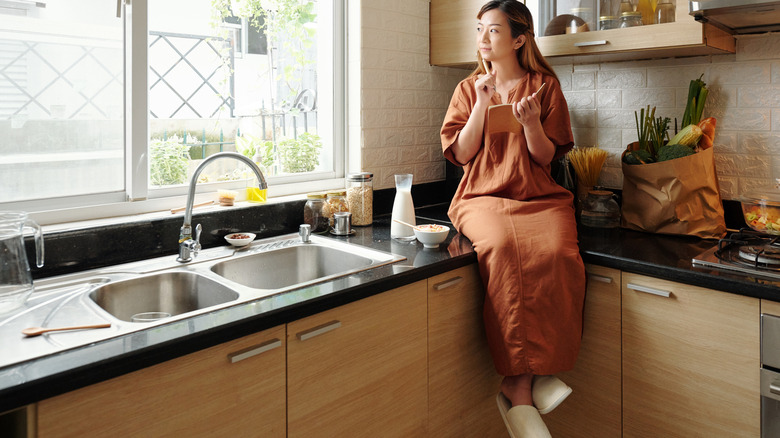
A kitchen island can be an absolute game-changer in any modern home. You can turn it into an extra prep space or a cozy nook to grab breakfast. Since one can never have enough storage in the kitchen, kitchen islands may also be utilized for more cabinets. The best part, though? When done tastefully, they can serve delicious looks, elevating the kitchen.
However, to enjoy these benefits, you must plan their design well. Important considerations involve deciding on the primary function for this feature and whether you have the space for it in your kitchen. You must also map out the right size, height, and depth of the island in accordance with your requirements. How a kitchen island can improve your workflow and whether you would require additional electrical and plumbing changes are other important factors. To balance form and function, you must also look into the quality and size of materials, lighting, storage, and seating requirements. With the basics established, here's the full lowdown on all the important things you must consider when designing your kitchen island.
Intended purpose of the kitchen island

Every household has a unique way of using and moving around the kitchen, which influences how you design your island. For example, if you're an avid cook, you might want it as extra prep space. This means including a sink and durable countertops. Conversely, if you envision the island as a casual gathering spot where children do homework while snacking or guests chat before dinner, seating arrangements will also be important (did we mention they're a great and comfy ROI opportunity?). Moreover, the design must clearly demarcate the cooking zone from the social area to ensure your workflow isn't disrupted.
Size of the kitchen island

How big your kitchen island needs to be is a function of its intended purpose — a prep space, a gathering spot, breakfast corner, or a combination of these — and the features necessary to accomplish this. On average, an island is about 47 inches long and 36 inches wide, not accounting for clearance. But you may have to go bigger if you're hoping to add seating, enhance countertop space, feature appliances, or hook up more storage cabinets.
Whether you have the space for it in your kitchen

After having the size down, you get to decide whether you have the actual space for an island in your kitchen. To ensure you can move around your kitchen uninterruptedly, you must leave out at least 42 inches of walking area on all sides of your fixture; go with 48 inches if there are two or more cooks in a household. Account for additional space around doors, the oven, and cabinets, so they may swing open easily. If the space is lacking, you may have to give up the idea altogether or compromise on the required features to make it work.
How the island scales in the kitchen
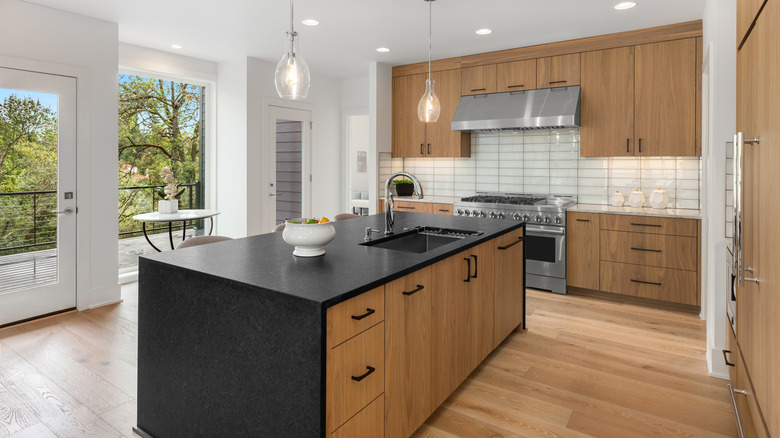
Even if you have the space to squeeze a kitchen island, it's equally necessary that it looks proportionate to your workhorse's dimensions. If it's too large for the space, isn't centered well, or has an awkward shape, you won't enjoy your time using it. Besides, it may work conversely if the idea is to boost your home's value through a kitchen remodel. The golden rule is that a kitchen island shouldn't take up more than 10% of the total square footage. But it does boil down to the kitchen's overall design.
Depth of the kitchen island
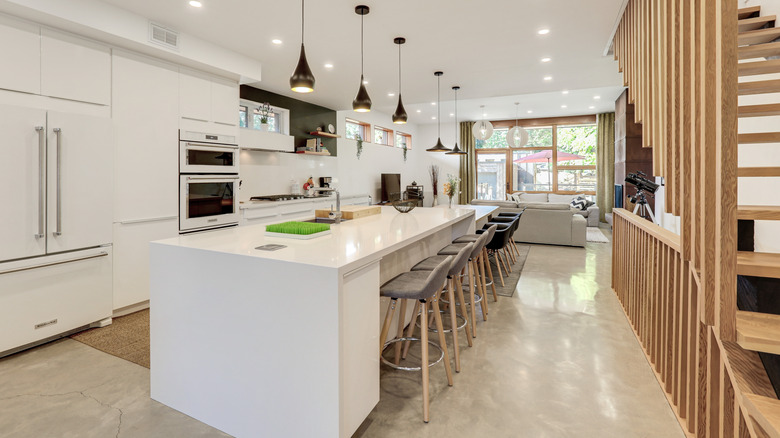
A kitchen island's depth will vary depending on whether you treat it as a secondary prep space or turn it into a social hub. In the former, you can put down a slab 24 inches deep. But for the other, you must account for legroom, ensuring everyone sits comfortably without their knee caps grinding against the cabinetry. Plus, if you would like to tuck in chairs or bar stools, you must plan accordingly. Usually, this means leaving out an additional 18 to 24 inches of space underneath. And be prepared to set aside even more for wheelchair accessibility.
Shape of kitchen island
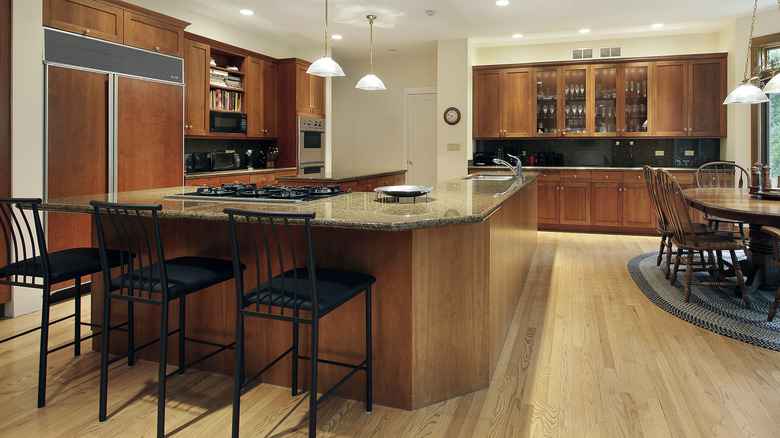
Kitchen islands don't always have to be shaped like a rectangle or a square. Granted, they're easier to plan around. But the utility drops fast once more than three people come into the picture, as you can only interact with the ones on your sides. But if you plan on using it as a breakfast corner or bar counter on party nights, consider going the L-route to seat more people, or creating double tiers that separate cooking and eating areas. Unconventional island shapes can also give the kitchen a unique character while enabling people to face each other, facilitating better interaction.
Height of the kitchen island
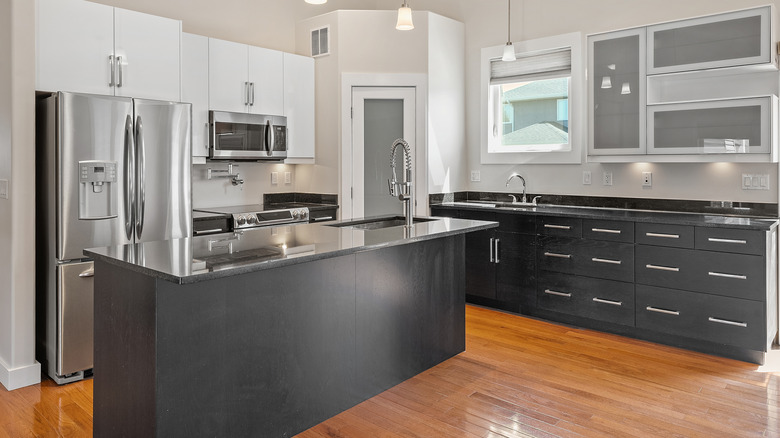
Most standard kitchen islands are around 36 inches high, which is ideal if you're simply working around the countertop. However, you may have to switch things up if you plan on adding seating. Bar stools, being longer, would raise the total height to about 42 inches. But if you have kids or prefer dining height (about 30 inches), the island should be lower. In such a case, you may have to partition the island into sections, with one meant for cooking and the other for eating.
Kitchen island-kitchen work triangle axis
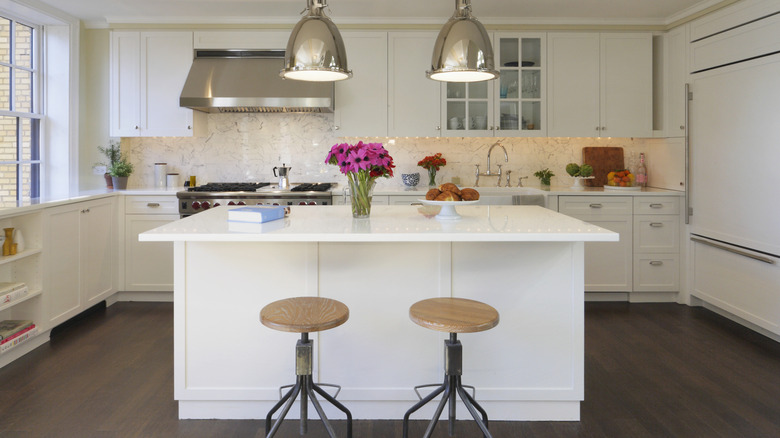
A well-planned kitchen is designed around a kitchen work triangle, with the refrigerator, stove, and sink as endpoints. These units are placed along an imaginary triangle, with each unit reachable in under 8 feet and the total distance not exceeding 26 feet. This ensures you spend the least time moving, supporting an efficient workflow. So, when you retrofit your kitchen island with a sink, under-counter fridge, or range, you must take these distances into account while finalizing its placement.
Countertop materials

Many homeowners treat kitchen islands as both functional and focal elements, cladding them in materials that inject different textures, colors, and finishes into the overall design. However, before playing mix-n-match and finalizing the island design, rank beautiful countertop materials by durability and maintenance. That's because, as supplementary to main kitchen counters, they also undergo lots of wear and tear. To ensure longevity and avoid having them show ugly scuff marks, budget for durable, scratch-resistant, and easy-care countertop materials, like engineered stone or quartz.
Size of materials
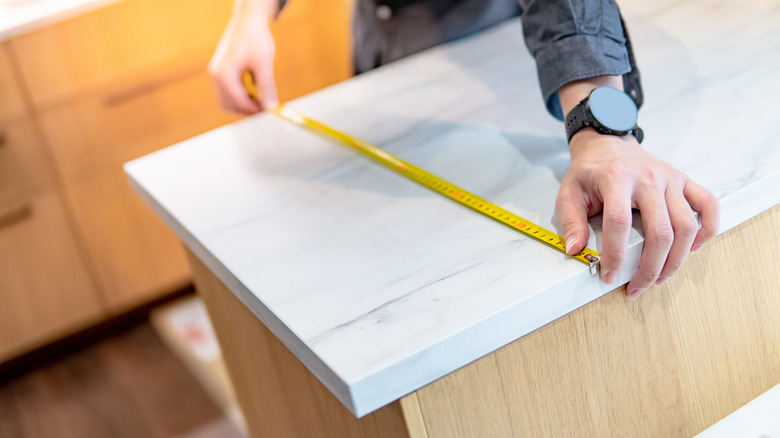
Alongside durability, you must also consider the size of materials. Kitchen islands look best when they have a seamless finish, and that can be achieved by covering them in a single slab. However, if you're planning a big island, you may face a dearth of options, as some manufacturers, especially for quartz or porcelain, max out at 118 inches. So, unless you're willing to compromise on the design or mask the joints with chopping blocks, you may have to rework the island's size or switch your material choice.
Built-in or freestanding units
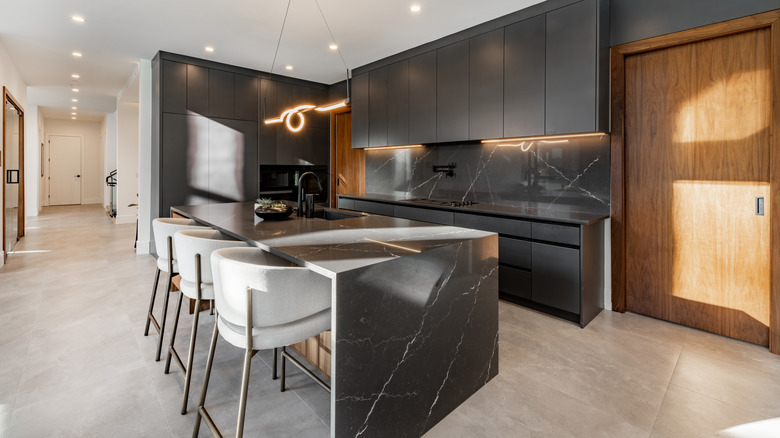
You don't necessarily have to take the traditional approach to kitchen islands, deploying units with built-in cabinetry. While it's undeniable that they offer prized storage, they can feel cramped and cumbersome in kitchens with limited square footage. The alternative to that is to opt for a worktable, the trending thrift store replacement that looks so chic and leaves the space seeming airy. Freestanding and portable islands, like a butcher block cart, which you can pack away after cooking, may also be handier around small kitchens.
Seating arrangements for your kitchen island
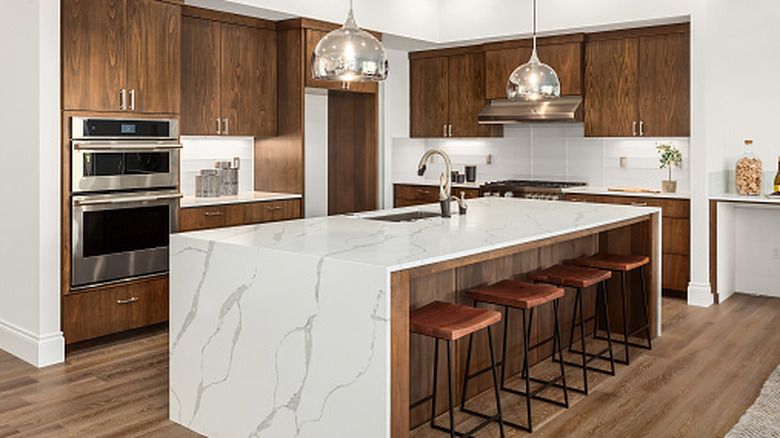
Apart from knee clearance, you must also consider elbow clearance to avoid having people haggle for space like they would in an economy-class airplane. This means spacing each seat at least 24 inches apart. If you don't have the necessary length, you may have to switch over to curved or L-shaped islands, where you can make use of the corners for seating. Besides that, you must also decide if you would like to include roll-out seating arrangements, bar stools, or dining chairs, according to your needs.
Power outlets for appliances

If you'd like to move some of your routine small appliances, like the mixer, icemaker, or coffee machine, onto the kitchen island, you must plan for power outlets. The same applies if you mean to incorporate a microwave oven or a mini refrigerator for added convenience. Besides, if there are seats, you may want to spend your coffee break scrolling on your phone, which necessitates charging points. Making such arrangements can be cumbersome and may even involve digging out the floor for some. You may also look into adding a charging drawer to limit the cable mess.
Lighting
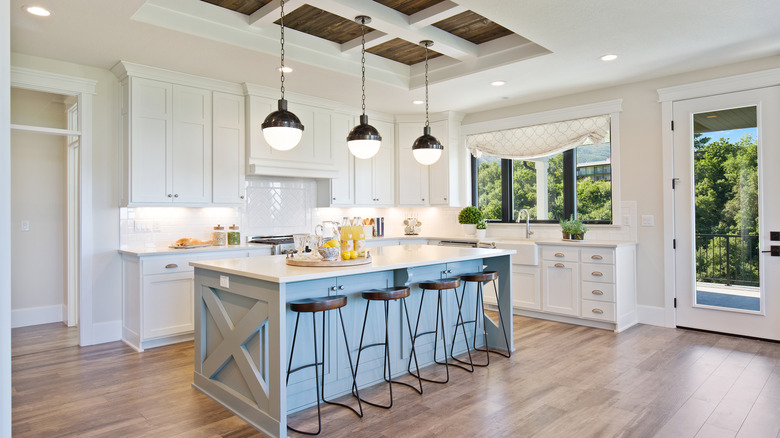
When planning a kitchen island design, don't forget lighting. After all, you wouldn't want to risk cutting yourself with a knife or let your kids excuse themselves from helping out because there isn't sufficient light. Ideally, you would at least have to add a couple of task lights or pendants, with dimmers, so you switch to ambient settings when you're winding down the day. However, they can be impractical in vaulted or cathedral ceilings. The other option is to incorporate table lamps, which may require new sockets.
Storage requirements
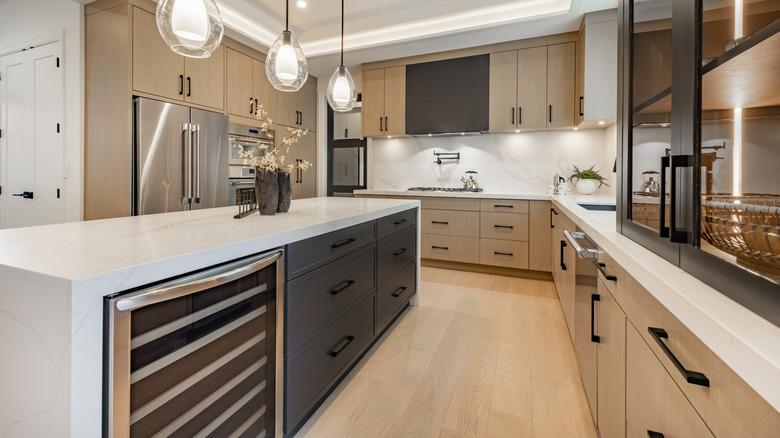
Access your needs and workflow while picking out storage. If you're into heavy-duty cooking, you may require deep cabinets or pull-out shelves to keep your pans and casseroles within easy reach. However, if your kitchen island is likely to become a drop-off point for miscellaneous items or if you've far too many cookbooks, a furniture-style storage full of open shelves, shallow drawers, and a Lazy Susan may be better suited. Such mixed storage units are also on-trend and can help elevate the look of your kitchen island. If you regularly host, you may also want wine racks.
Fittings on the kitchen island
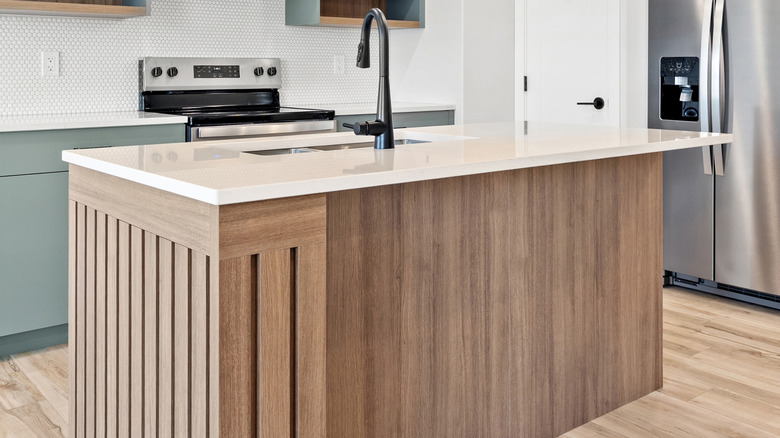
When your main counter has limited space, your kitchen island may become the catchall where you relocate the sink or the hob. Unless you're remodeling your entire kitchen, including these fixtures may require serious drilling and digging. Sinks require making plumbing changes, including pipes and waste arrangements. You may also have to increase the width and depth of the kitchen island to avoid any splashing back from the dishes. For the hood, similarly, you must make electrical changes and even whip out the ceiling to add an extractor for ventilation. So, design your kitchen island with these considerations in mind.