

Brass Vs Copper Kitchen Sinks: Which Has The Easier Maintenance?
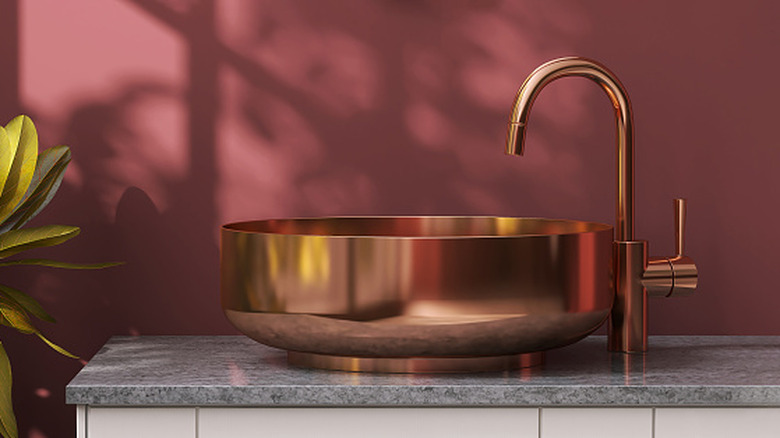
From stainless steel to porcelain, choosing the best material for your kitchen sink can feel like falling down a rabbit hole. Chances are, if you're in the market for a new kitchen sink, you might've stumbled across the trendy warm metallics of brass and copper, which are becoming favorites, while also offering functionality that other metals simply can't match. Both sinks have antimicrobial properties and often require similar care and routine maintenance, as both metals develop a patina over time. But, in general, if you prefer a gleaming kitchen sink for lower maintenance, brass may be the better option.
However, before you make your selection, it's important to note the differences in each material's composition, as this will affect the maintenance routine. Copper sinks are often made up of 99% copper with 1% zinc. Alternatively, Brass is an alloy composed of copper and zinc. The amount of zinc in a brass sink's composition will not only influence color but also affect its hardness and durability, making it more durable than copper alternatives. And if you prefer a polished look, a brass sink may be more ideal since it requires less frequent waxing and care between uses, as a lacquered finish, in particular, will patina more slowly. But if you love the idea of a patina, a copper sink could be easier to maintain, since the patina acts as a natural protective barrier.
What to know if you choose a brass sink for your kitchen
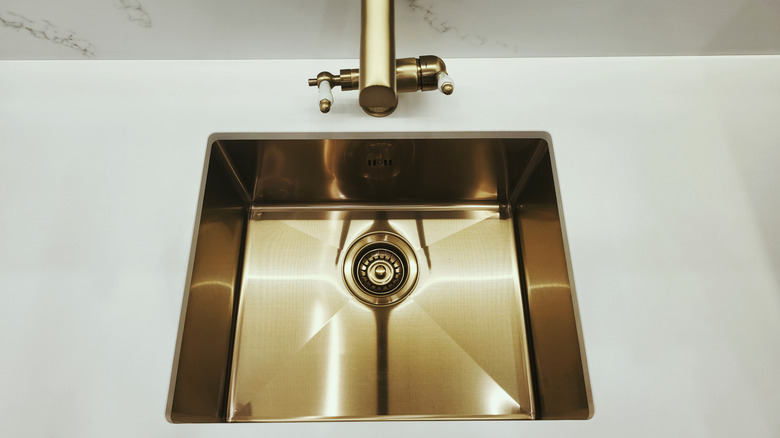
When it comes to maintenance, brass is antimicrobial thanks to the copper in its composition. However, zinc is added to the metal, making it more durable than copper. Despite this, brass can still be prone to scratches, dents, or damage from heavy cookware. Additionally, you should avoid cleaning brass with harsh chemicals. For these reasons, some folks might consider brass the luxe-looking kitchen-sink material you're better off avoiding. But, if you favor its unique look, using a mild soap and water is enough to keep it clean, and will not remove the patina.
The aesthetic preference for your brass sink's color could determine how much care goes into maintaining it. Depending on the finish, this metal can develop a patina over time, often turning a darker, richer yellow with subtle brown undertones rather than a light golden yellow. Some folks like the natural patina, while others may prefer a polished look. When choosing a finish, a lacquered brass is unlikely to patina quickly, while an unlacquered alternative could develop a patina within a couple of weeks. Alternatively, some folks prefer antique or aged brass, which already exhibits a darker patina. If you want to restore brass to its original look, you can use a brass-specific polish. Though experts also warn against polishing lacquered brass sinks, as it could ruin their look and feel.
Copper sink maintenance tips to consider
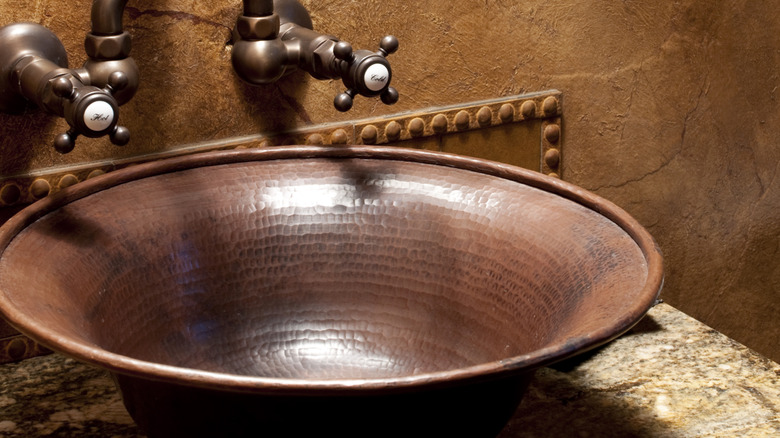
Copper can appear bright orange when new, and sometimes features red to brown undertones, depending on lighting and age. Experts liken copper sinks to the color changes found in pennies. The faster patina and aging can be an attractive feature for some folks, while others may not be fans of the material's quick changes. Since the aging process progresses faster when exposed to acidic foods, you may need to take extra precautions to prevent oxidation. However, once copper develops a strong patina, it may be better protected than when it was brand new.
Copper isn't very durable. It is prone to scratches, dents, and discoloration, making it less ideal for frequent use and in busy households. Contact with knives and heavy objects could impact your copper sink. Those hoping to maintain the bright and shiny look of copper may need a more regular maintenance routine. Cleaning and fully drying the sink after every use, applying a wax or polish regularly, and avoiding abrasive scrubbers are some ways to best preserve the copper. And when it comes to the best way to clean your copper sink, the good news is you likely won't need to disinfect it, since copper is naturally antimicrobial. Some folks say a gentle cleaning with mild soap and water works best. However, if you want to slow the aging process, a good polish can stall discoloration but may not prevent it entirely.