

How To Use Your Lawn Tractor For Easier Snow Removal
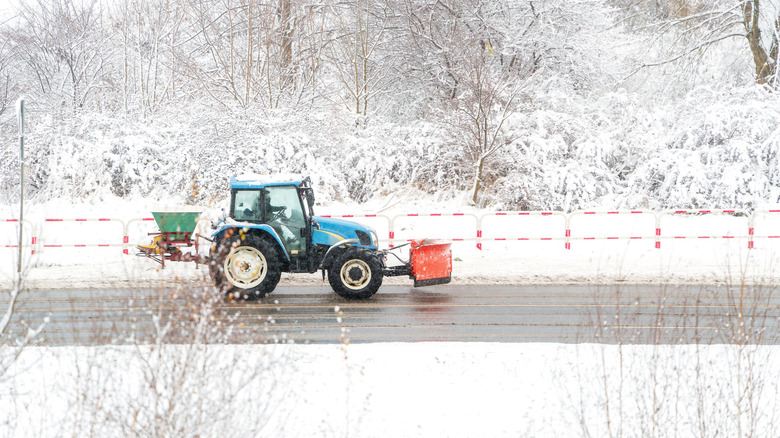
Shoveling the driveway by hand might be a good way to get some exercise, but the novelty of tossing heavy piles of snow gets old in a hurry. Using a lawn tractor for snow removal means you can clear large areas in a fraction of the time it takes to walk behind a traditional snow blower, and you can save your physical energy for other fun winter activities instead of wearing yourself out. It's a practical way to get more use out of an expensive piece of equipment that usually sits unused during the coldest months of the year. To use your lawn tractor for easier snow removal, you have to attach a front-mounted plow blade or a snow blower unit to the frame.
These machines are essentially smaller versions of agricultural tractors, featuring a front-mounted engine, a steering wheel, and a mid-mounted cutting deck for mowing. They differ from garden tractors because their lighter frames and transmissions are meant for grass rather than heavy ground work like tilling. Most of these units use a belt-driven system to power the attachments, which requires a specific front-facing hitch or mounting kit. Fortunately, there are many attachments for your riding lawn mower that make snow removal a breeze. Many models have plenty of power to handle winter weather once you add the right accessories, like tire chains or rear weights, to prevent the wheels from spinning on the ice. A lawn tractor can make the back-breaking chore of clearing snow into a more manageable job that saves your back while you clear your property.
Choosing the right snow removal attachments for a lawn tractor
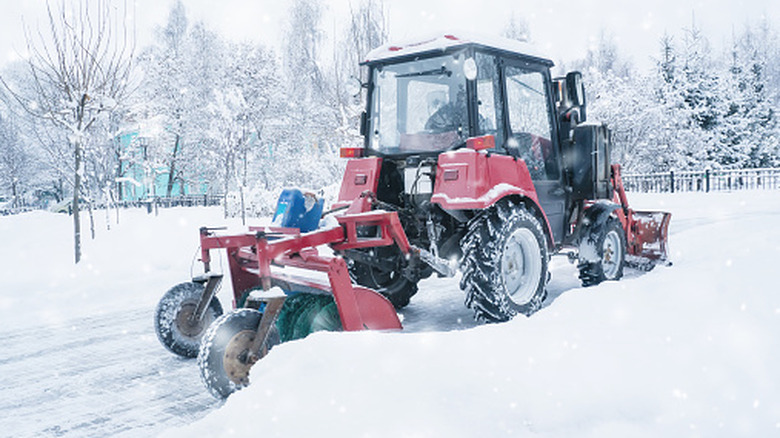
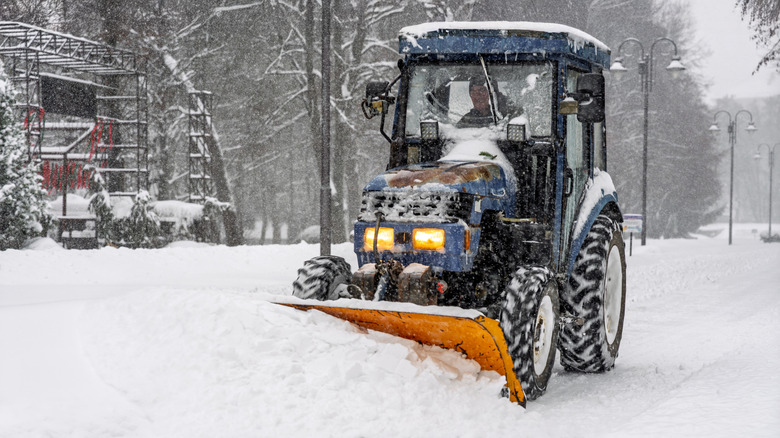
Turning your lawn tractor into a snow-clearing machine involves choosing between some must-have tools that make snow removal so much easier: a front-mounted blade and a snow blower attachment. A plow blade is often the best choice for light accumulation or slushy conditions. It works by pushing the snow aside, which is effective when there is enough space to create piles.
Most blades have an adjustable angle setting that allows you to direct the snow without stopping. If you live in a location that sees frequent, heavy storms, a snow blower attachment might be a better fit because it throws the snow far away from the area you're clearing. This prevents the buildup of large piles of snow that can eventually make your driveway feel narrow. Most snow blower attachments use a two-stage system, with an auger feeding snow into an impeller that ejects it through a chute.
Regardless of the attachment you choose, adding extra weight is a necessary step for getting enough traction on slippery surfaces. Most lawn tractors use rear-wheel drive, and they don't have the natural weight to keep a grip on ice. Installing suitcase weights on a rear bracket or using liquid-filled tires gives the lawn tractor the extra weight to keep the wheels from spinning in place. Tire chains are also worth considering, since standard turf tires on these machines provide almost no traction on frozen ground. For even better results, some owners install a weather enclosure or cab to protect themselves from the wind and blowing snow while working. These soft-sided or hard-shell covers mount directly to the lawn tractor frame, and some of them even include glass windshields or manual wipers.
How to prepare a lawn tractor for cold weather snow removal
Freezing temperatures put a lot of stress on internal parts, so a quick tune-up keeps your lawn tractor from failing when the flakes start falling. Start by checking the battery health, as cold temperatures reduce cranking power. If the battery is several years old, it might struggle to turn the engine over on a freezing morning. You also need to swap out your summer oil for a thinner, winter-grade synthetic oil that works better in lower temperatures. This reduces wear on the engine during those first few moments of operation. Adding a fuel stabilizer helps prevent gasoline from degrading or clogging the carburetor during periods of inactivity between storms.
While you're looking at the mechanical parts, also check the cooling system to make sure the antifreeze mixture is right for your local climate. Safety is another big factor when working in the snow, since visibility drops during a storm. Make sure the headlights and rear reflectors are clean and working so that neighbors or passing cars can see you while you're clearing the snow. If your lawn tractor uses a belt-driven attachment, look at the belts for cracks or fraying, since cold rubber can become brittle and snap under heavy loads. You should also grease all pivot points on the augers, axles, drive gears, and discharge chute to prevent them from seizing up due to any salt and moisture. Taking these precautions means you can remove snow from your yard with a riding lawn mower while avoiding any type of mechanical issues that could leave you stranded in a drift.