

What To Do If You Find Snake Eggs In Your Yard
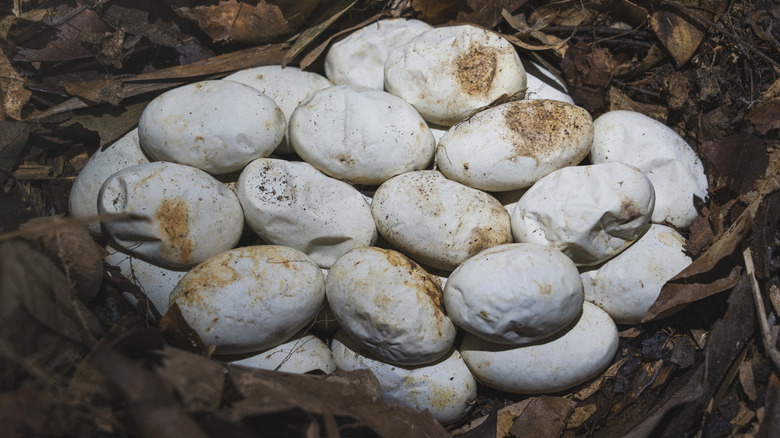
Deweeding your garden only to find a cluster of snake eggs may sound like a gardener's nightmare, but it doesn't have to be a scary experience — a yard full of snakes can be a good sign that your ecosystem is thriving. Snake eggs can be identified in a number of ways: First, they have a leathery texture, as opposed to hard, glossy bird eggs. Snake eggs are also typically shaped like an oval, they're a couple of inches long, and are found in clutches of five or more. Regardless of what type of eggs you're dealing with, it's best practice not to move or even touch them, as doing so can cause harm to the eggs and you. Instead, it's best to let professionals take the lead on removing snake eggs.
Attempting to handle snake eggs yourself can lead to a number of hazards, like inducing early hatching, covering your hands with foreign bacteria, and invoking the ire of any nearby mother snakes. Calling your local animal control or private snake removal service is the best solution, since they can take care of the eggs safely without causing the snakes too much discomfort. While you wait for them to show, try out some effective ways to deter snakes in the future.
How to move snakes safely
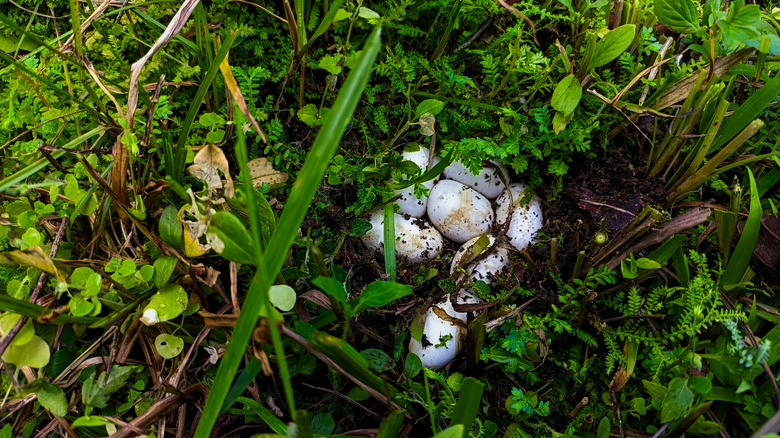
If you're in a situation where moving the eggs yourself is absolutely necessary, such as after accidentally digging them up or incoming damage to the surrounding area, you should still call a professional before dealing with the eggs in the meantime. Ideally, you should put them back in the ground exactly how you found them with minimal jostling. If this isn't possible, put them in a box next to a damp paper towel to maintain their moisture, and try to keep them in the same position as much as possible. Wear a pair of gloves during this process — some reptile and bird eggs can be covered with the bacteria that cause salmonella.
It may behoove pest-infested gardens to keep the snakes as long as they're not venomous. An animal control specialist may be able to identify whether the eggs belong to a venomous snake; if they don't, keeping them around may help cull your yard's pest population. Different species of garden snake eat everything from roaches to rodents to even other snakes. However, there are a few snakes you do not want to see in your yard. Or, if you have pets, small children, or ophidiophobia, it's probably best to have a professional evict them, whether they're venomous or not.