

I've Been Growing Houseplants Around Cats For 15 Years. Here Is My Number One Rule To Protect Them
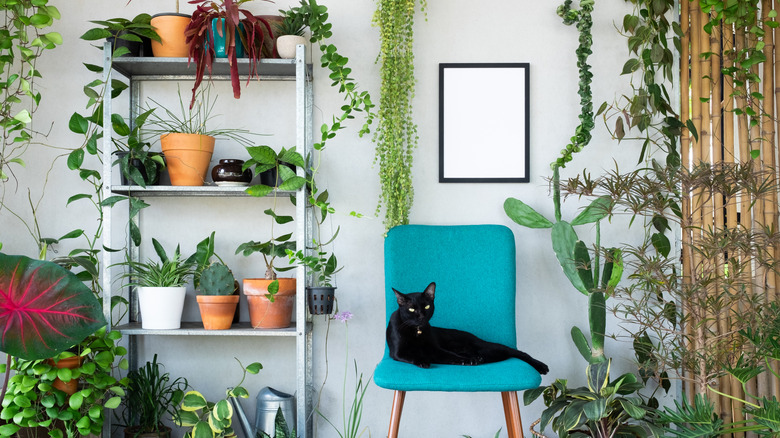
Keeping cats and growing houseplants doesn't have to be a problematic lifestyle choice. I've had feline companions in my home for over 15 years, and during that same amount of time I've built an indoor plant collection so large that I need a spreadsheet to keep track of all of them. I propagate new types from seeds, cuttings, and division, usually with one of my housecats watching curiously nearby. But since there's a long list of common houseplants you should never grow in a home with pets, I've come up with one important rule to protect my fur babies — I always keep toxic plants out of my home.
When I brought home my first cat, I didn't think about the vegetation I kept in my space. And I didn't have to, because that particular feline wasn't super plant curious. However, the rescue kitten I adopted to keep her company proved more exploratory with my indoor greenery. My experience quickly taught me that when it comes to cats, there truly is no "out of reach" — felines can jump and climb, while leaves and stems can fall. And since some species of houseplants contain high levels of calcium oxalates or cardiac glycosides that can harm or kill your pets by causing kidney failure or heart problems, keeping toxic plants in the house can be costly or even deadly. Now if someone offers me a florist's kalanchoe as a gift, I politely decline because I know this pretty plant could stop my pet's heart.
I keep toxic houseplants out of my home to protect my pets
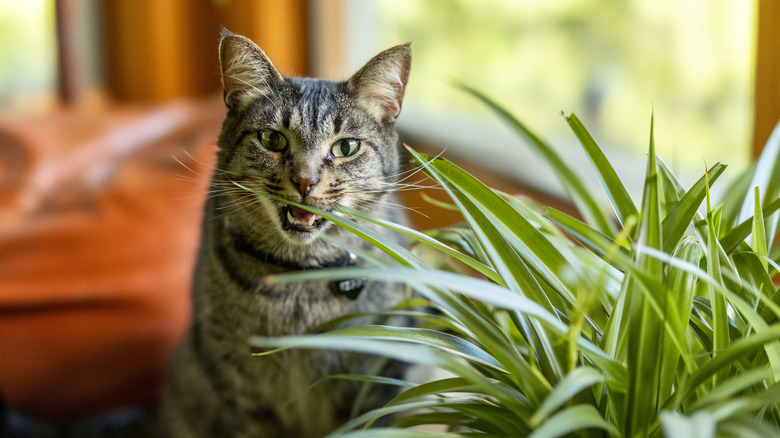
Since I can't be 100% certain to keep my indoor plants out of the reach of my cats at all times, I've adopted the simple (if sometimes frustrating) rule to keep problematic vegetation out of my home, period. This has meant foregoing some of the houseplants that are poisonous to cats that I used to love. If felines nibble on Aloe vera, it can cause vomiting and lethargy. Golden pothos, peace lilies, and monsteras can all lead to vomiting, oral irritation, and difficulty swallowing. Sago palms are attractive evergreens, but they are highly toxic and can cause liver failure in cats, dogs, and humans. Do you have a desert rose on a high shelf? Please find a new home for it if you have feline residents in your home because ingesting the sap from this succulent could kill them.
As a consolation, there are actually plenty of nontoxic houseplants that are safe for any space, so why bother with the dangerous ones? This strategy offered me the opportunity to discover many different species I might not have bothered with otherwise. I include sweetheart hoyas in my cat-friendly houseplant collection — they're the ones usually sold as cute, little single-potted leaves. Other types of hoyas are also nontoxic to pets, such as wax plant. Peperomia rotundifolia is also a good option for households with cats or dogs. Spider plants and parlor palms are common, low-maintenance greenery options that are pet safe.
I keep my nontoxic houseplants & cats safe from each other
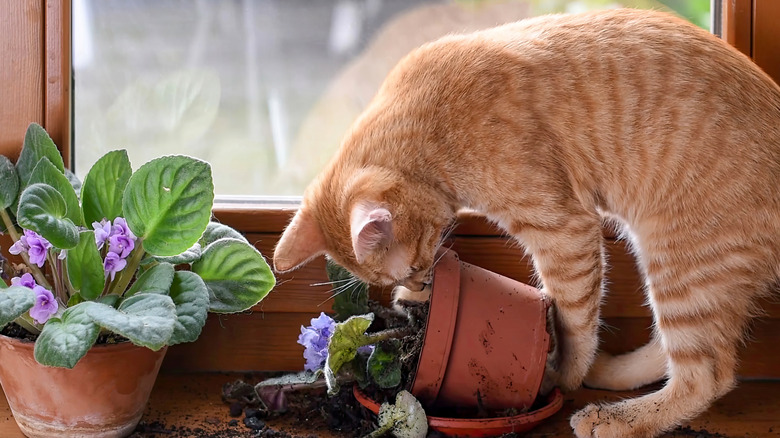
Both the number of felines and plants in my household have increased over the years. Even though I know my cats aren't at risk of getting deathly ill from ingesting the defensive compounds of any of my houseplants, my plants are still at risk of being nibbled or mauled if I'm not careful to protect them in turn. Some pet guardians may have felines who are indifferent to greenery, but in contrast, one of my housecats seems to seize any opportunity to attack my plants. So as a rule, I also use a few different strategies to shield my houseplants from my pets.
Hanging baskets are an easy way to make vining hoyas look good and keep them — theoretically — out of reach, as long as any trailing foliage is kept tucked up above the plant instead of hanging down, and no perches are nearby. I use vivariums with mesh screens to keep my nontoxic succulent collection of Haworthia and Gasteria species protected from sharp feline teeth and claws. And, in my kitchen, I fitted a large wall shelf with grow lights to cultivate additional succulents that are cat safe, such as Echeveria species and split rock plants. Both my potted and sharp-toothed companions now share my space in safety and harmony.