

Bird Feeder Materials That Are Strongest Against Mold
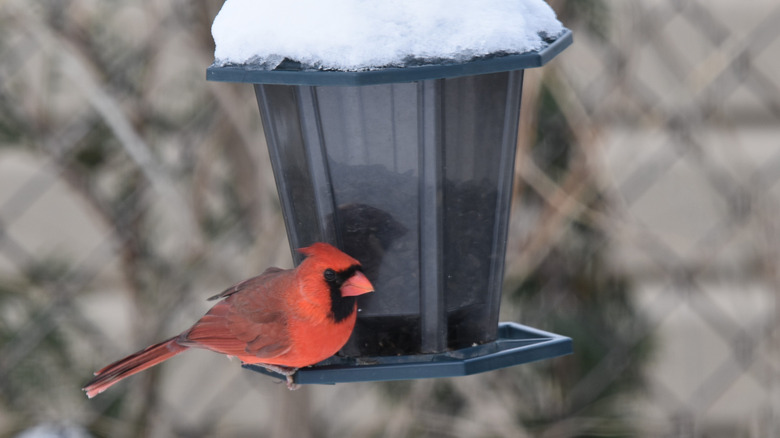
Keeping a backyard bird feeder is a rewarding hobby, but it also requires good moisture management. Why? Because mold thrives in damp, dark environments, and a bird feeder packed with seeds is the perfect incubator. When rain or heavy humidity reaches the seed, fungi can begin to bloom there in less than 48 hours. That's a problem, because mold produces toxic spores that can cause respiratory infections or even death in small songbirds. Feeders made of glass, metal, or recycled plastic significantly reduce the risk of mold growth, which is what makes them such fantastic material options.
While traditional wooden feeders offer that classic backyard look, wood is porous and acts like a sponge for moisture, creating a breeding ground for fungi. The expansion and contraction of wood create small cracks where seed dust and moisture collect, forming ideal conditions for mold growth. And unfortunately, this hidden buildup becomes a textbook-perfect mold breeding ground that'll contaminate every new batch of fresh seed you pour in after that. Even with regular cleaning, wooden feeders can be difficult to fully sanitize.
Choosing a feeder made from non-porous materials helps reduce health risks and minimizes frequent scrubbing. A non-porous design is one of the things you should be looking for in a bird feeder since they help protect your feathered visitors from illness. They do a good job of providing a solid defense that'll keep water on the outside of the feeder, keeping the food inside safe and dry for the birds.
Why recycled plastic, metal, and glass resist mold best
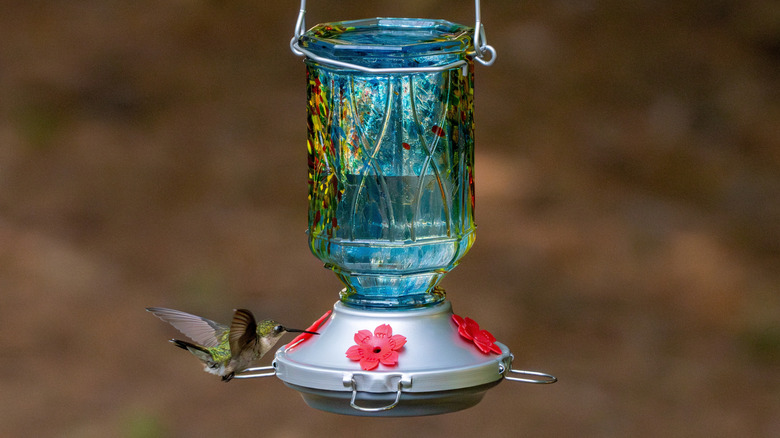
Recycled plastic feeders are highly durable and easy to clean, resisting warping, rot, cracking, and fading over time. And since the material is non-porous, there aren't any sneaky surfaces for mold spores to grab onto. If mold does manage to grow on the surface due to wet seed, it can be easily and completely wiped away with a simple soap and water solution. Recycled plastic offers a heavy, durable feel and doesn't have any of the biological drawbacks a feeder made of natural timber would.
Powder-coated metal and glass are equally effective at keeping your bird station nice and sanitary. Powder-coated metal feeders create an impenetrable barrier that moisture simply can't get through. These coated versions stay smooth and easy to clean for longer, unlike raw metal, which could rust. Glass feeders are also an excellent bet, because they have a smooth surface that's easy to sanitize with a quick soapy soak. Plus, you can easily see through the glass to spot any clumping or dampness before it becomes a real hazard. Choosing these materials greatly reduces the chance of mold forming on feeder surfaces. And it'll make your weekly maintenance much faster while providing a significantly safer dining environment for the birds in your neighborhood.
Why smart feeder designs matter as much as material
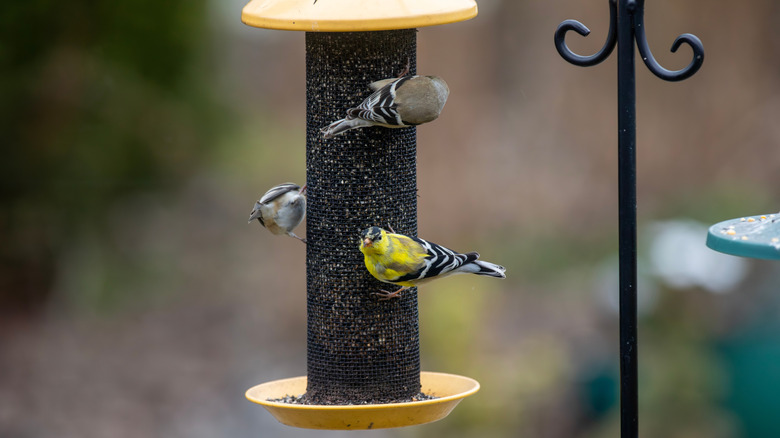
The architecture of your feeder also plays a massive role in stopping mold growth. Even the best feeder can't save your bird seed if water pools at the bottom or if there is zero airflow. So, when choosing a feeder, prioritize designs with good built-in drainage. Ventilation is just as important, so look for feeders with air vents. This creates a natural chimney-like effect so humid air can escape, and seeds stay crisp. Good airflow keeps the internal temperature from spiking, too, which can trigger mold to start blooming inside a more closed-off feeder. And you don't need a fancy store-bought feeder to achieve this; you can opt for a budget-friendly DIY bird feeder instead.
Some feeders include antimicrobial coatings designed to slow bacteria and mold growth before they take over. This extra bit of protection is terrific for rainy springs and humid summer months. When you combine an antimicrobial defense with non-porous materials and smart physical features like slanted roofs and wide overhangs, you create a fortress that keeps bird seed bone dry. By opting for the right type of feeder, you'll spend less time scrubbing away stubborn gunk and more time enjoying all the vibrant activity at your backyard station. It's truly the best way to take care of your local feathered friends. Just make sure you don't make any common mistakes with your bird feeder.