

Help Your Monstera Plant Thrive With These Fertilization Tips
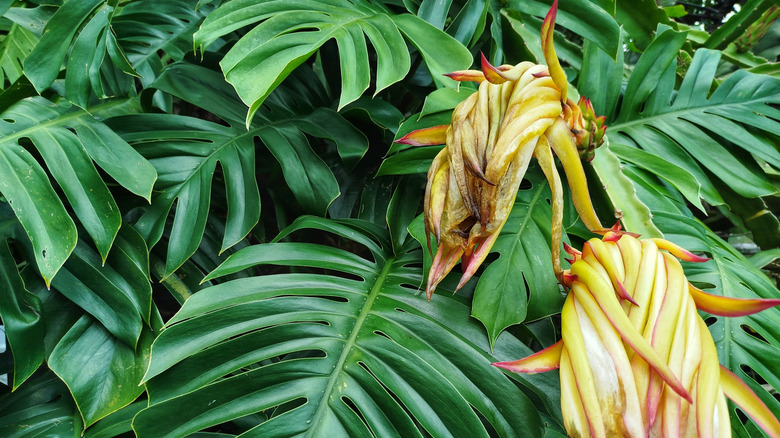
The monstera (Monstera deliciosa), the National Garden Bureau's 2025 choice for houseplant of the year, goes by many names. Because of the shape of its leaves, the tropical native is sometimes called the cutleaf philodendron or split-leaf philodendron, but it's more closely related to calla lilies (Zantedeschia aethiopica), elephant ears (Colocasia esculenta), and the corpse flower (Amorphophallus titanum) than to philodendrons. When grown indoors, the climbing plant will reach up to 8 feet tall under ideal conditions. Along with enough light and water, monsteras benefit from fertilization with a balanced formula specifically made for foliage plants.
Stunted growth and yellowing leaves can be signs that your plant needs fertilizer. If you're meeting the plant's other needs but haven't been fertilizing your monstera, set up a regular fertilization schedule. Many houseplants need fertilization only when they're actively growing. For monsteras, that period is from spring to fall. This timing typically coincides with the plant's production of flowers and fruits, but indoor monsteras very rarely do either. Fertilize the plants every two weeks during the growing season. Master gardener Susan Marqueson at PennState Extension recommends also fertilizing once a month during the winter even though it's typically not the plant's growing season.
Choose the right fertilizer, and don't overfertilize
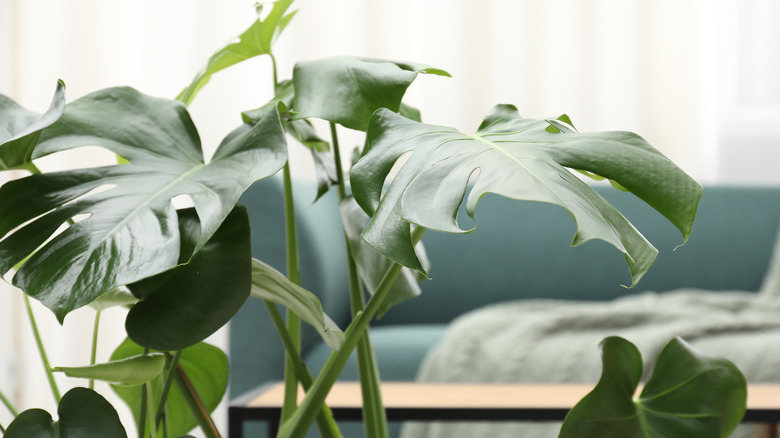
While houseplant fertilizer is available as a liquid, in a water-soluble granular form, and as slow-release sticks, the water soluble and slow-release forms are less likely to cause fertilizer burn. Choose a 20-20-20 formula made for houseplants. Switch to 15-30-15 in the highly unlikely case your plant flowers. The numbers represent how much nitrogen, phosphorus, and potassium are in the fertilizer and should be clearly displayed on the label.
If you see white buildup on the soil, around the pot's rim, or next to the drainage holes, you may be overfertilizing the plant. These are signs of too much salt in the soil, which may lead to root rot, a condition that can kill the plant. Make sure you're using only the recommended amount of fertilizer on the packaging and that water flows out of the pot's drainage holes when you irrigate. If the problem persists, repot the monstera in fresh soil.
Also keep in mind that monsteras thrive in warm, moderately bright, high-humidity conditions. Your indoor monstera will need sturdy stakes to grow on as it gets larger so that the small roots growing from the leaves have something to attach to. Because the plant likes a relative humidity of at least 50%, make a habit of misting your monstera to keep it healthy and happy. Keep the plant out of drafts, and water it thoroughly when the top inch or two of the soil dries out. Monstera plants contain calcium oxalate crystals, so they should be kept out of the reach of children and pets. They're not highly toxic unless ingested in large quantities, but they can cause skin irritation, so consider wearing gloves when you're touching the plant to avoid contact dermatitis.