

Goodbye Useless Trays: How This Common Decor Piece Can Become Clutter
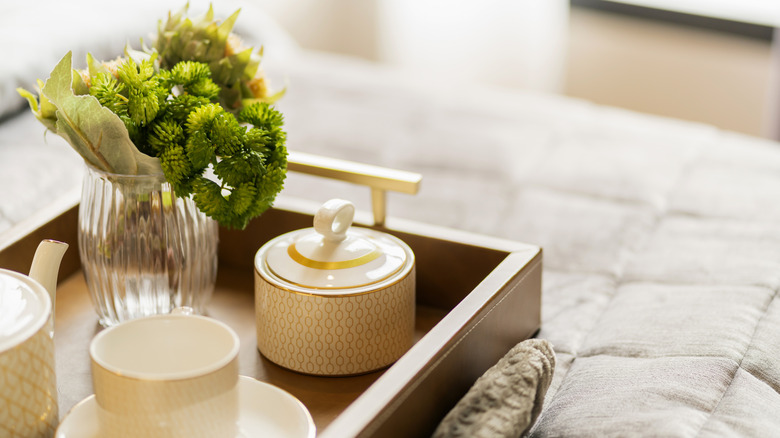
You might look at your bare coffee table, end table, counter, or cabinet and think that it may look better and more aesthetic if you were to add a tray. Many design guides agree that using a decorative tray can showcase the idea your items and objects were meant for it, adding some visual balance to your space. However, if not executed properly, the trays end up falling short of their purpose. They become yet another common place to corral belongings and contribute to the clutter in a room, rather than reduce it. In order to say goodbye to useless trays and bring about better organization, they must serve a certain function, so that they don't contribute to — and become more of — a mess.
Trays can actually be a helpful way to declutter your home, and one of the easiest ways to keep your entryway organized. They play an active role in helping a room feel complete, and make more of a statement as a central decor piece in a thoughtful design. However, they don't usually eliminate or reduce the extra "stuff" that's around your home. So, they may end up quickly becoming more of a contained pile of items in a spot, rather than actual order, which overflows and brings about more clutter.
When a tray becomes useless, and what to do to fix it
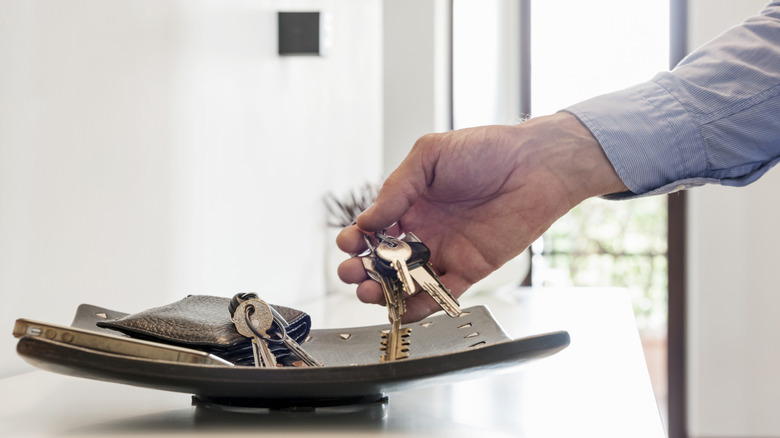
Your tray becomes useless when it's nothing but a landing spot for everything that's not put away. It acts instead as decorative clutter in its designated spot, since there is no clear organization. There is a big difference when styling your tray and complementing your room's design, or simply using it to hold "stuff," since placing trays don't inherently enforce order. They'll attract more of that useless behavior, lacking compartments and just staying out in the open.
Consider DIYing a decorative and functional storage tray for holding specific items. Using your tray should be intentional and sparing, limiting the number of items you put in it. In short, your tray must have a purpose so that it works to help you organize. Having a small tray with a specific job, such as one placed on the entryway cabinet or table and only used to hold your keys, can provide structure without inviting more random accumulation. A bigger tray can also invite more clutter, so the smaller, the better.
To achieve this, assign your tray to a single and practical function, so it can be expertly utilized as a tool rather than a junk drawer without enclosure. Consider a trendy round serving tray that holds certain decor, for instance. Since the goal is less clutter, find drawers for your other necessities, like wallets, change, and glasses, instead of adding them to the tray that's only for keys or specific decor items. The trays themselves aren't the problem, only the lack of having a defined purpose.