

How To Repair Heat Damage On Your Corian Kitchen Countertops
We may receive a commission on purchases made from links.
When looking for low-maintenance materials to use for kitchen countertops, many people settle on Corian, which is a nonporous countertop material made by DuPont. This type of solid surface countertop offers a variety of benefits, from cost-effective pricing to durability. However, no surface is invincible.
For all the functional and visual benefits that come with choosing this material, there are downsides to installing Corian countertops in your kitchen. That includes the fact they aren't meant to handle sudden or long-term exposure to high temperatures. This means a pot without a trivet could lead to heat damage, marring the appearance of your well-loved countertops.
Your ability to repair heat damage depends on the severity. In milder cases, repairing a solid surface kitchen countertop is simple enough for an afternoon DIY. In more severe cases, however, homeowners may be wise to place their beloved countertops in the hands of professionals. For the DIY route, you'll need an abrasive cleaner or sander. Keep in mind that the exact steps will depend on your specific countertop, so you should consult the manufacturer for the best course of action.
Fixing a burned Corian counter at home
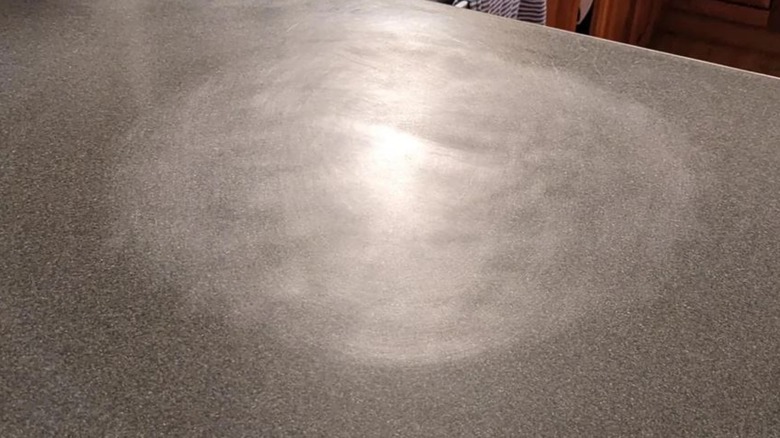
One of the main benefits of Corian countertops is that the material is the same all the way through. This means that, when you're dealing with mild burn marks, you may be able to simply buff away the visible damage. For minor heat damage, it's best to start with the least aggressive fix: an abrasive cleaner. Apply water and an abrasive cleaner designed specifically for solid surfaces, such as Bon Ami, then wipe gently with a soft cloth using a circular motion to avoid additional damage.
If an abrasive cleaner isn't enough on its own to remove the signs of scorching, the next course of action will be to use a scouring pad. While you want it to be tough enough to handle stains, choose an option that's safe for countertops, such as the Scotch-Brite Non-Scratch Scrub Sponges. Then, repeat the same process from before, using your abrasive cleaner, scouring pad, and water to buff the heat damage in a circular motion.
But what about severe damage? For a DIY approach, you could opt for light sanding using manufacturer-approved sandpaper.. Just be sure to follow proper safety techniques and reference any manufacturer instructions to prevent noticeable patterns or damage. Improper sanding can permanently damage your countertops, while heat damage can sometimes crack a countertop rather than just stain it. As a result, homeowners may prefer to consult a professional to ensure a uniform finish on their countertops following repairs.