

8 Stunning Types Of Vintage Armoires To Look For At The Thrift Store
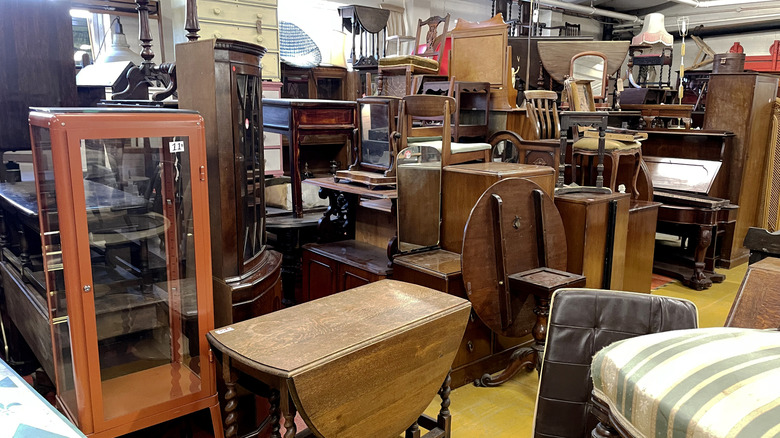
While some folks may think of armoires as an outdated trend that is taking up way too much space in your bedroom, many others find them to be functional and stunning furniture pieces that provide storage in multiple settings. Armoires are one of the genius clothing storage solutions for bedrooms without closets, but you can use them in other rooms to store anything from linens and toys to office supplies and books. Even though armoires are handy for storing items behind closed doors, you may have other plans; maybe you're thinking about unique ways to repurpose an old armoire around the house.
Whatever your objectives, you should be able to find multiple eye-popping types of vintage armoires at thrift stores from various eras and regions of furniture history. As you're thrifting armoires, consider the condition, materials, and durability, of any piece you're thinking of buying. Make sure it functions properly with doors that open and close easily.
Then, consider if there is a historical design style that especially appeals to you. Some styles, like Victorian armoires, are plentiful, while others, like the German Biedermeier style, are said to be sought out and hard to find. We've curated a sampling of gorgeous vintage armoires from several style eras to show the range of designs you might encounter in a thrift store.
French Provincial armoire
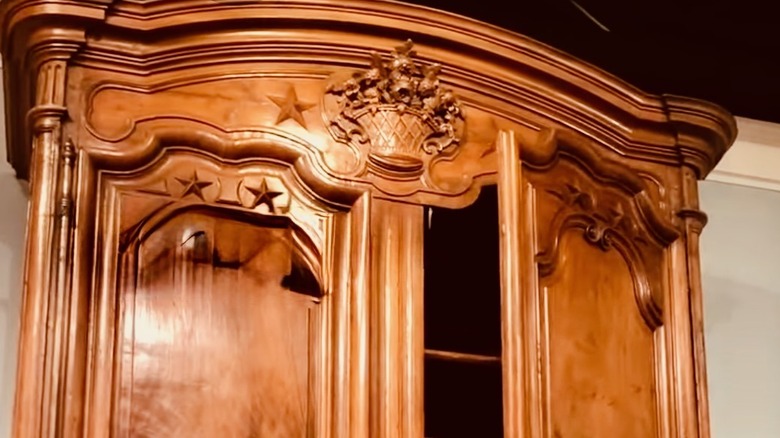
The French Provincial style of furniture sprang from country artisans reproducing the grand and lavish styles they saw in Paris in the 17th and 18th centuries, while also applying the practicality and durability required for country living. You'll often find ornate carvings, such as flowers, on French Provincial armoires. Curved shapes and paneled doors are also common. Typically made from local wood found in the French countryside, such as oak and walnut, armoires were considered essential pieces of functional furniture in this era.
Queen Anne armoire
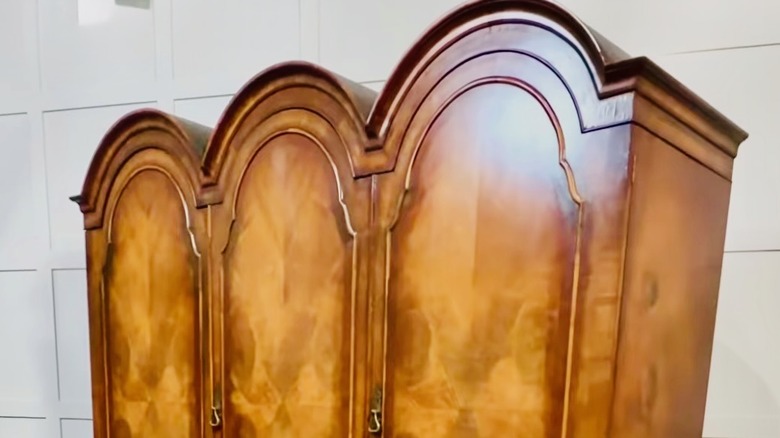
Curves at the top of an armoire and on its panels are a good sign it could be from the Queen Anne Period (1880 to 1910). In this transition away from the ornate Baroque period in art history, you'll see a simpler, more elegant design on Queen Anne pieces than armoires from other eras. These pieces also tend to be made with lighter-colored woods. Walnut was the most prevalent wood used for these armoires, but cherry and maple were also used. You'll likely see fewer decorative elements on Queen Anne armoires than on other styles.
Victorian armoire
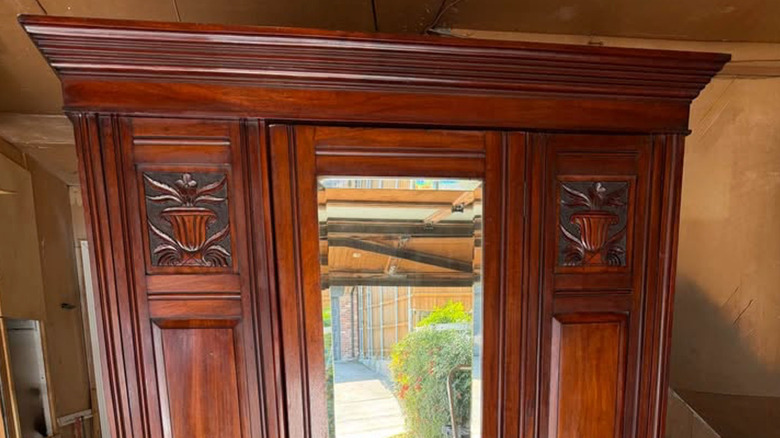
If you see an armoire with a mirror in a thrift store, chances are it's from the Victorian Period (1837 to 1901). Armoires of this era are typically tall, lavish, and grand. When you note the Victorian era's overlap with the Gilded Age, you understand why these pieces were often about showing off wealth. Victorian pieces convey a sense of heaviness and drama. Ornate, decorative carving returns to armoires in the Victorian age, and carvings are sometimes adorned with inlays of metal, ivory, and other materials.
American Empire armoire
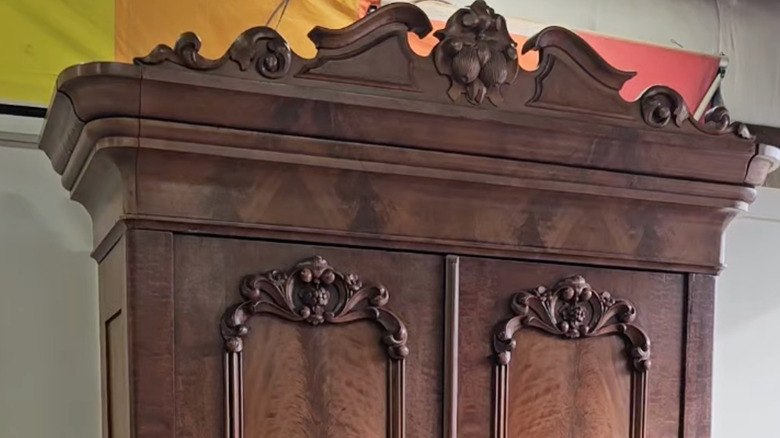
American Empire-style furniture (1805 to 1830) had roots in the French Empire style at the time of Napoleon Bonaparte and became especially popular around 1820. Hardwoods, especially mahogany, dominate this style. You'll often see ornamental carvings, columns, inlays, and sometimes even gilding on pieces in this style. Later furniture from the Empire period took on the tone and motifs of American patriotism. It's not unusual to see animal motifs on American Empire armoires, especially on their feet.
Gustavian armoire
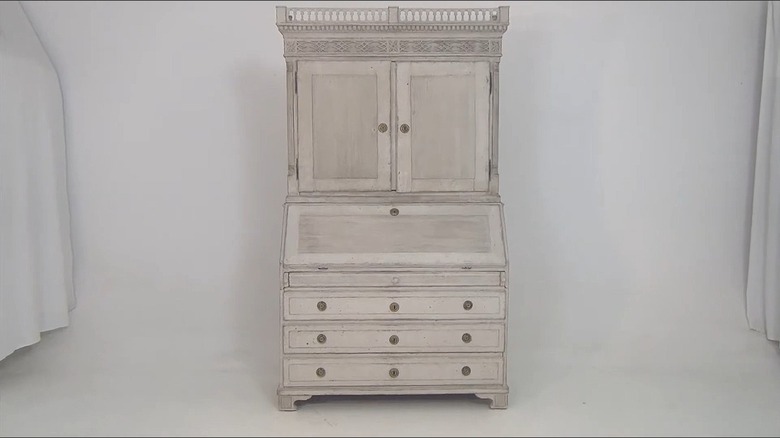
The Gustavian furniture style (1771 to 1809) is derived from French Neoclassicism and is the Swedish interpretation of that style. Swedish King Gustav III triggered the style after he traveled to Versailles in 1771 and became enamored with the palace's furniture style. Gustavian furniture pieces are often painted in light or neutral colors and may have a distressed look. Simple and symmetrical designs dominate, and decorative elements are subdued. Carved motifs like laurel leaves are a nod to classical themes.
Art Deco armoire
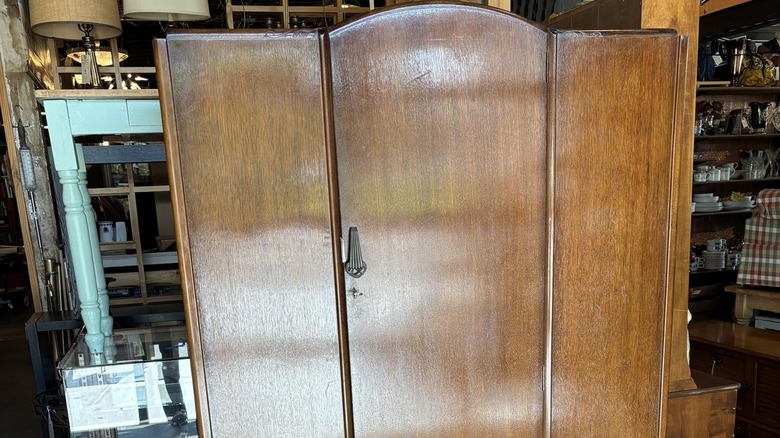
With Art Deco style, gone are the carved embellishments of earlier armoires. This style shows clean lines with a streamlined design, having shed the bulkiness of previous eras. The look is sleek, modern, and often suggesting movement. Rounded corners are also characteristic of Art Deco armoires. Despite the streamlined appearance, it's hard to have Art Deco without the deco, and decorative elements take the form of inlays, geometric shapes, and exotic wood veneers — like zebrawood.
Spanish Colonial Revival armoire
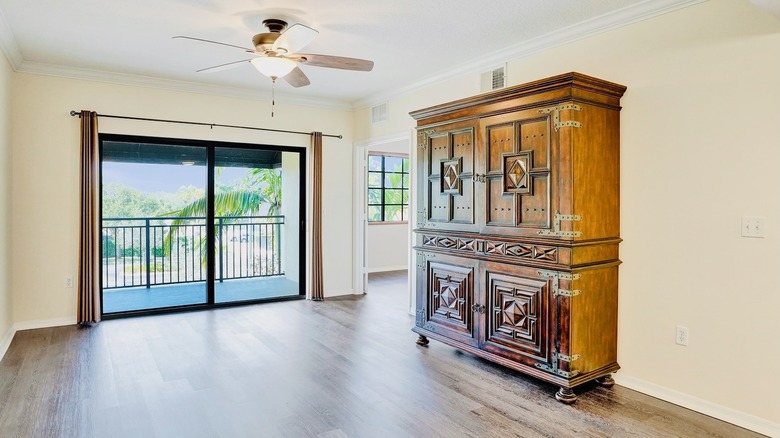
Darker woods, geometric shapes, and prominent metalwork (often wrought iron) characterize armoires from the Spanish Colonial Revival period (1900 to 1930). Furniture pieces from this period demonstrate a heaviness and solidity. Numerous cultural influences, from Spanish Baroque to South American, can be found in Spanish Colonial Revival design. Crafted in much more modern ways than the original Spanish Colonial furniture, revival pieces were once considered reproductions but are now considered antiques since they've been around more than 100 years.
German Biedermeier-era folk art armoire
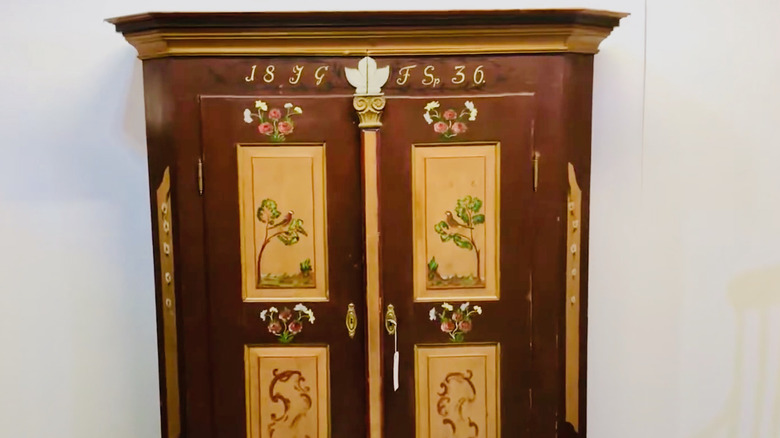
The Biedermeier era (1815 to 1848) of furniture making marked the first time furniture makers began crafting furniture for people outside the aristocracy, creating simpler, more informal pieces for the middle class. Dark woods gave way to lighter tones. Comfort, clean lines, and functionality were important in this style. Folk art, known as bauernmalerei (peasant painting), sometimes appears on pieces like armoires during the Biedermeier period, featuring images from nature, like flowers. Armoires were also sometimes personalized with dates and initials and given as marriage armoires for newlyweds or were part of the bride's dowry.