

The Watering Misstep To Avoid With Calathea Plants That Leads To Damage
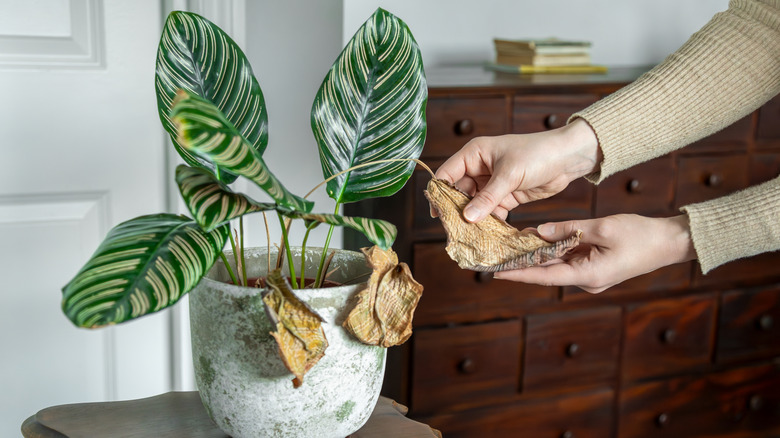
Calathea plants (Goeppertia sp.) are among the prettiest options for houseplants. With their velvety textures and intricate, painted-looking leaf patterns, Calatheas make any corner of a room feel like a tropical escape. But many indoor gardeners find themselves heartbroken when those vibrant leaves start to develop brown, brittle edges. When you see that, your first instinct might be to water it more; however, the problem might not be how often to water your Calathea, but rather the type of water you're using. These plants are infamous divas, but their drama stems from a very real sensitivity to the minerals found in hard water. So if you notice blemishes on your Calathea, it might be a sign that your local tap water is the culprit.
Most tap water is treated with chlorine and fluoride to make it safe for human consumption, and can also contain other hard minerals like calcium and magnesium. These are harmless to us but toxic to the Calathea's sensitive roots. These plants natively grow on the damp tropical forest floors and have evolved to thrive on pure rainwater. When you use hard water, the plant absorbs these salts and chemicals and tries to push them out through its leaf tips. As the water evaporates, the minerals stay behind, effectively burning the leaf tissue (which creates that browning). Any buildup in the soil can also prevent the plant from absorbing the actual nutrients it needs to stay healthy and bright. Using water better suited to the Calathea is one of many genius tips for watering your plants.
What are easy solutions to keep this foliage flawless?
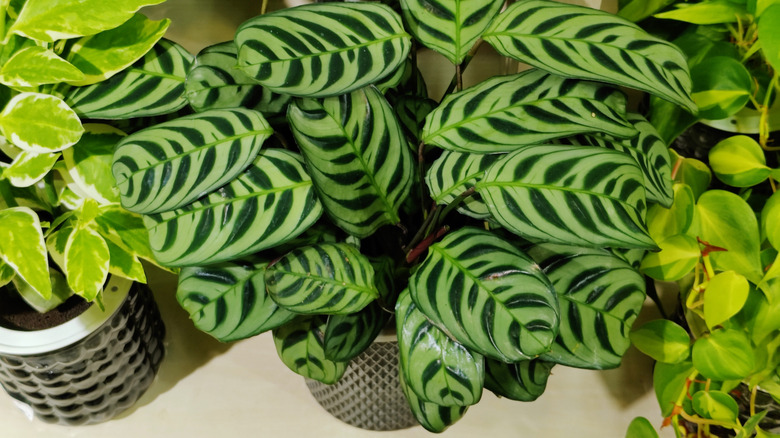
The good news is that you don't need a graduate degree in botany to fix this common watering misstep; there are several easy watering tips to help your indoor plant thrive. In fact, the most effective way to save your Calathea is to just switch to a cleaner water source. Rainwater is the gold standard, since it's naturally chemical-free and soft, which Calatheas love. If you don't have a dedicated rain barrel, distilled water from the grocery store also works, as it does not contain minerals. Some Calathea enthusiasts use a water filtration pitcher (like a Brita) to remove any chlorine – though Brita filters do not remove fluoride, so you may even opt for a reverse osmosis filter.
If your plant's soil already has a visible white crust on the surface, it's a sign there's already some mineral buildup. But don't worry, you can reset your Calathea by taking it to the sink, flushing the soil thoroughly with rain or distilled water, and letting the excess drain out the bottom. This washes away the lingering salts and gives the roots a fresh start.
Moving forward, using purified water consistently can help ensure any new leaves grow lush, green, and totally free of issues. By making this one small adjustment to your plant watering routine, you can stop the accidental cycle of damage and finally enjoy the lovely foliage that makes these plants so special. Your Calathea will reward you with happy, vibrant colors.