

8 Self-Watering Tools That Will Keep Your Plants Hydrated At All Times
We may receive a commission on purchases made from links.
Proper moisture levels are the key to happy, thriving plants. Photosynthesis, the process that turns sunlight into energy for plants, cannot occur without water. A dehydrated plant will show visible signs, with brown, curling leaves, and severely under-watered plants eventually die. So, it's vital to remain proactive in thoroughly watering all the plants in your home and garden.
Without enough water, your flowers, vegetables, and other plants cannot grow strong. The best way to avoid issues related to watering is to regularly water your plants. Whether you struggle to find time to keep them consistently moist or need to leave on a trip, self-watering tools remove the uncertainty when it comes to watering plants. From simple glass globes that release water slowly into the soil to extensive drip irrigation systems that continuously water flower beds, there is a self-watering tool to help you keep your plants effectively hydrated. Keep in mind that the design of some self-watering tools works better for houseplants, while others make more sense in an outdoor garden setting.
Terracotta spikes
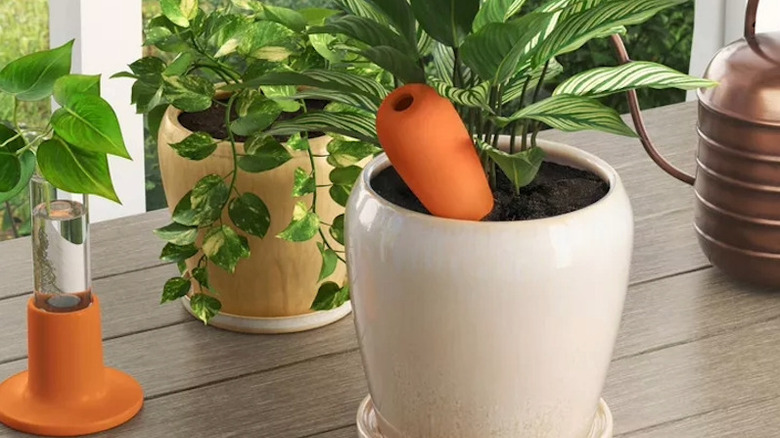
Sticking terracotta spikes in the pots of your favorite flowers is an affordable trick gardeners swear by for hands-off watering. Terracotta spikes are a type of watering spike that is filled with water and then tipped upside down and pushed into the soil near the roots of your plant. The result is a slow release of water that keeps plants hydrated without constant watering. Once implemented, this is a low-maintenance tool that only requires you to check on it periodically to add more water.
Watering trays
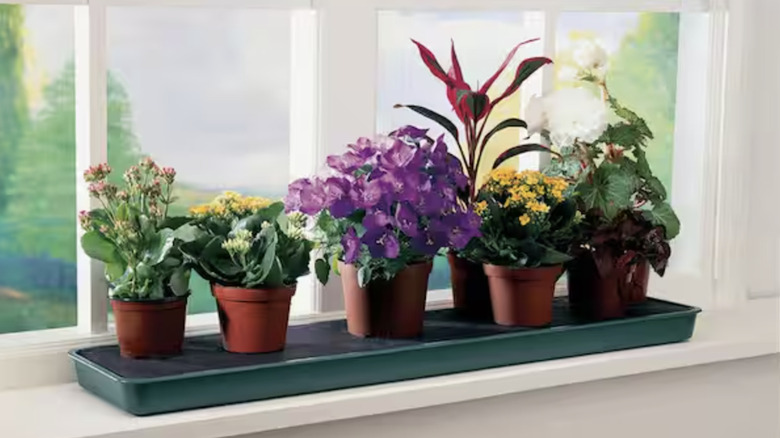
Many people swear by watering their houseplants from the bottom, especially ones with low water needs, like cacti. If this is you, you may want to try a watering tray with capillary matting — a self-watering tool you can set potted plants on that lets them take up water when they need it. The key to this system is the capillary mat, which slowly soaks up water from a reservoir below. Water is taken up via the drainage holes in pots, but only as needed by the plant.
Wick systems
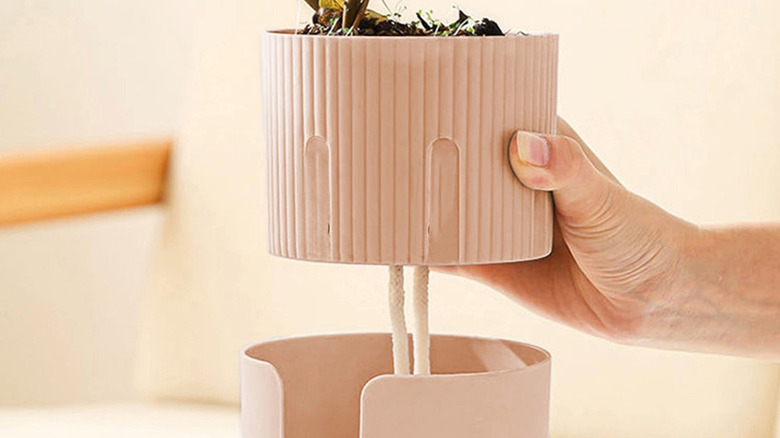
There are several ways to utilize wick systems for self-watering, too. A popular option features a pot with a thick cotton string or rope that sticks out of the drainage hole. The wick soaks up water from a shallow reservoir, providing a steady source of moisture that's best suited for plants that do not need much water. Other wick systems involve sticking the wick into the soil at the top of a pot, with the other end in a large reservoir of water, which is best for plants that require lots of water.
Irrigation globes
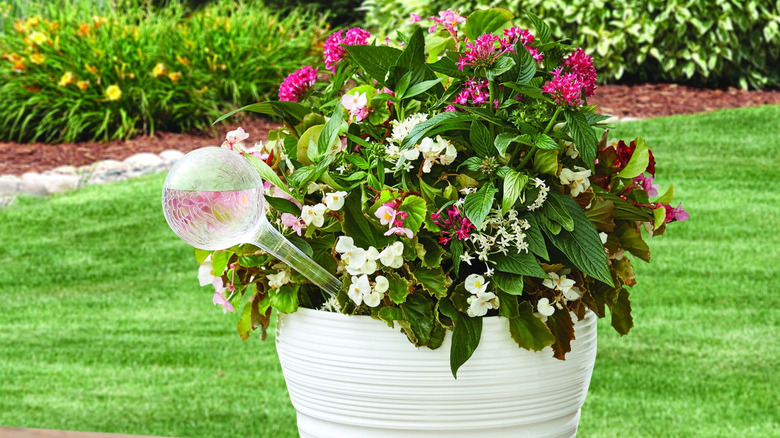
There are several reasons why you should be using irrigation globes in your garden, but the main one is that they provide a reliable water supply. Even if you forget about your plants for a little while, a filled irrigation globe will continue to release water into the soil as needed. Gravity helps pull the water down. Irrigation globes serve as a good self-watering tool because they hold a significant amount of water. Altering the angle can help adjust the rate of self-watering.
Soil additives
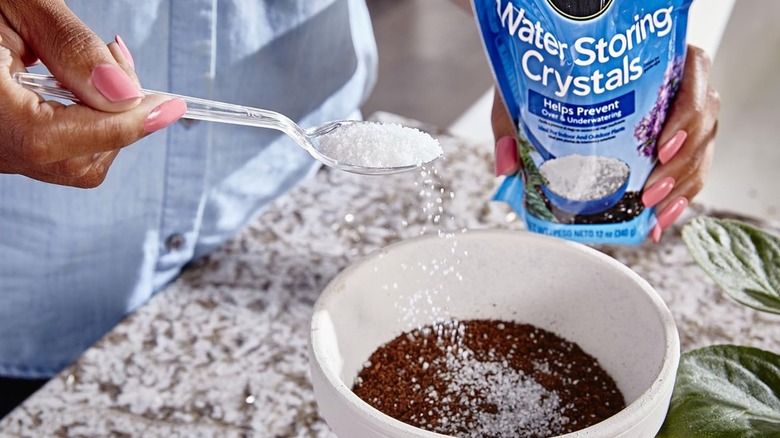
Mixing in specific soil additives to your potting mix is a unique self-watering tool. Several types of soil additives can improve water retention or store excess water for later use. Soil can be amended with inorganic additives, such as perlite or vermiculite, or with organic options, such as cococoir dust or compost. You can also find soil additive products, like Miracle-Gro Water Storing Crystals from Home Depot, which store and release water into the soil over time.
Olla pots
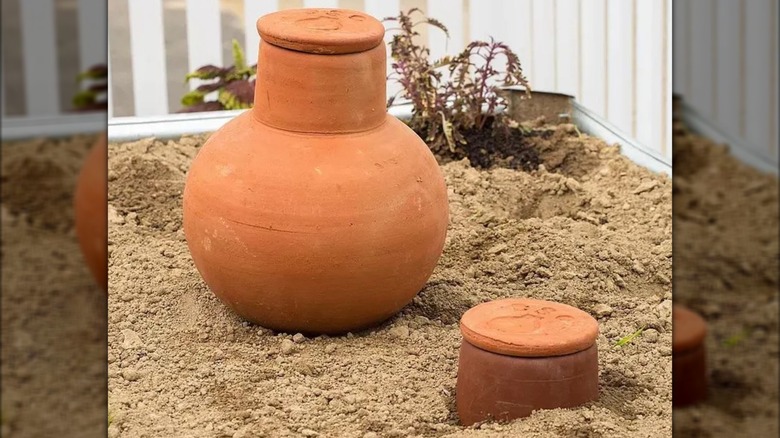
Self-watering with olla pots is best done outside in a container or in-ground. Olla pots are unglazed clay pots buried in garden beds, with the top part peaking out above the surface. This type of self-watering irrigation works because clay is a porous material, allowing water to gradually leave the vessel. This consistent watering is maintained as long as the olla pot remains filled with water. Additionally, olla pots will not provide excessive moisture to the soil, but work with the environment to keep plants hydrated without overwatering.
Drip irrigation
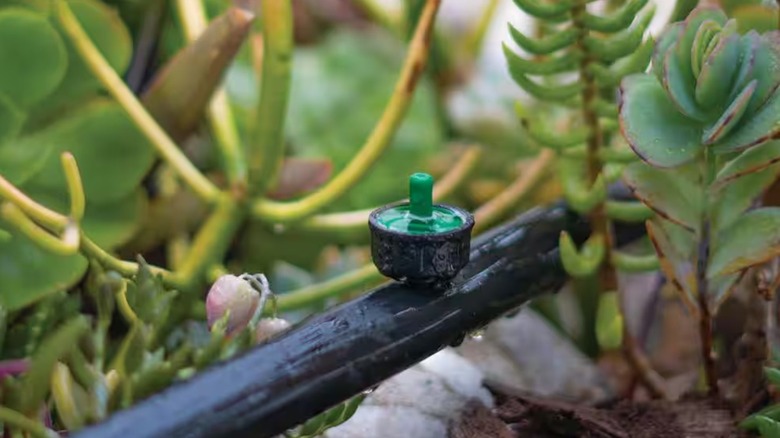
Some of the best irrigation systems for flower beds are drip irrigation systems, which can offer a versatile solution for slow, self-watering. Instead of deeply soaking your flower beds or other garden areas, drip irrigation systems allow you to consistently and slowly deliver water to your plants. Drip irrigation is one of the more complicated yet adaptable self-watering tools, because you can design a large configuration for a flower bed or set up a small system to provide moisture to a single vegetable pot. It also reduces water loss and makes watering less labor-intensive.
Plant pot reservoir
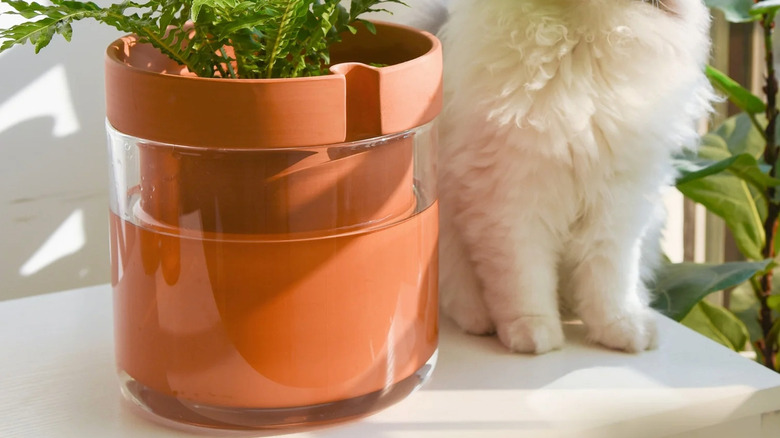
This simple self-watering tool utilizes a reservoir of water for a plant pot to sit inside. You can find pots designed with this feature, like EFISPSS 6-Inch Self-Watering Terracotta Pot from Walmart. They often have a transparent reservoir to show the current water level, but do not have wicks sucking up the moisture into the soil. This kind of self-watering tool can be DIYed using a pot or glass bowl filled with water that will fit your potted plant. Houseplant owners going away for a period of time do this kind of houseplant bath to keep moisture-loving plants hydrated.