

Why Designers Are Saying Goodbye To Kitchen Islands — And What's Replacing Them
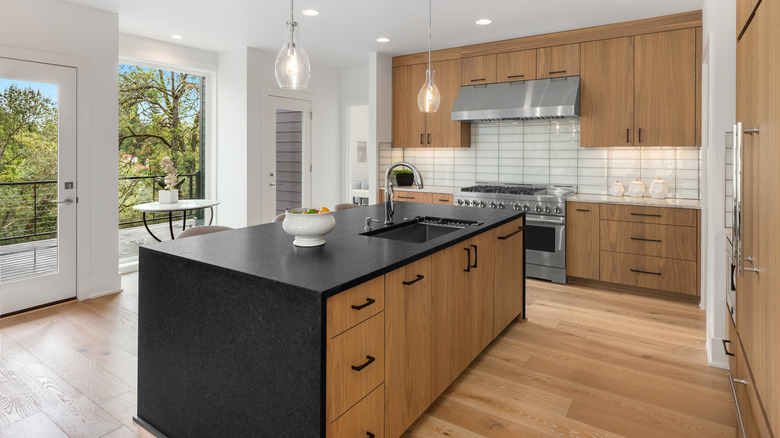
Although they've been around for centuries, kitchen islands have reigned supreme over the past few decades. They're considered a major staple in modern kitchen design by almost everyone thanks to the many benefits they offer, from added storage and countertop space to extra seating. Kitchen islands are as much a countertop extension as they are a space for people to gather. Despite their popularity, these permanent fixtures aren't devoid of downfalls.
"Islands can dominate smaller spaces or interrupt traffic flow," design expert Matthew Andrews said in an interview with Livingetc. This was echoed by interior designer Kunal Trehan: "Forcing an island into a compact space can make the room feel cramped." Luckily, there are several popular alternatives to consider. Options like a freestanding work table can still provide extra surface area and even some storage underneath, while placing a traditional dining table where an island would normally sit is another kitchen island alternative that's both pretty and practical.
One trend that's expected to be everywhere in 2026, however, is swapping kitchen islands for a peninsula and table combo. "A kitchen peninsula is a fantastic alternative as it offers many of the same benefits as a standalone island," Elizabeth Sherwin, creative director at Naked Kitchens, explained to Homes & Gardens. Essentially a connected version of an island, peninsulas extend from the wall rather than sitting detached in the center of the room. They still offer storage, extra counter space, and optional seating, but take up less room overall and leave valuable space in the middle of the kitchen for a dining table. This trending layout is especially helpful if you're trying to make a small kitchen space seem bigger.
How to incorporate the peninsula and table trend into your kitchen design
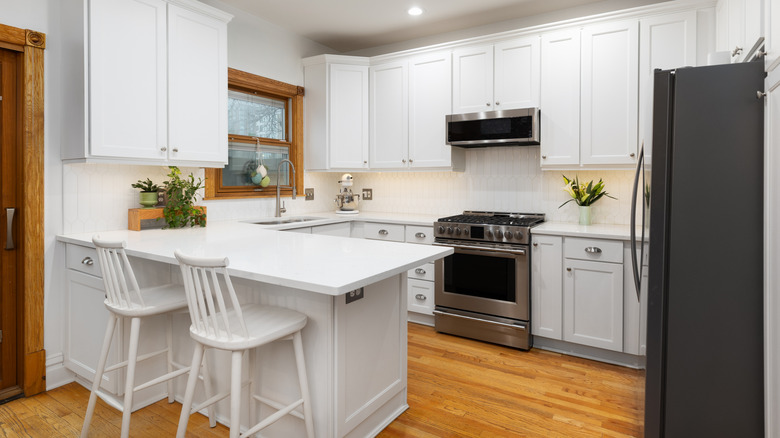
One of the easiest ways to integrate a peninsula into your kitchen design is by extending it outward from the wall your existing countertops and cabinetry run along, creating an L or U-shape, depending on the layout of your kitchen. To make the peninsula feel seamless and cohesive, it's a good idea to carry over the same design elements used throughout the rest of the kitchen. For example, if your kitchen features white marble countertops, continue that look on the peninsula. Likewise, match the peninsula cabinet and siding color with your existing cabinet color — or at least a complementary color.
Once you've determined where the peninsula will sit and how long it will be, you can start thinking how to incorporate a kitchen table into the layout. If you opt for a dining room table in the center of the kitchen, finding the perfect size dining table is key for the space you've saved by skipping the island. It's recommended to leave 30 to 36 inches of clearance between your dining table and nearby counters or to ensure chairs can be pulled out comfortably, making sure there's enough room to walk around the table without the area feeling cramped. If your kitchen doesn't have enough space for a central dining table, adding stools to the outer end of the peninsula is a great way to make it multi-functional by having it double as an eating area. Alternatively, for kitchens with very limited space, a peninsula with a pull-out table can provide extra seating when needed without permanently taking up floor space.