

The Expert Approved Tip To Extend The Life Of Your Water Heater
We may receive a commission on purchases made from links.
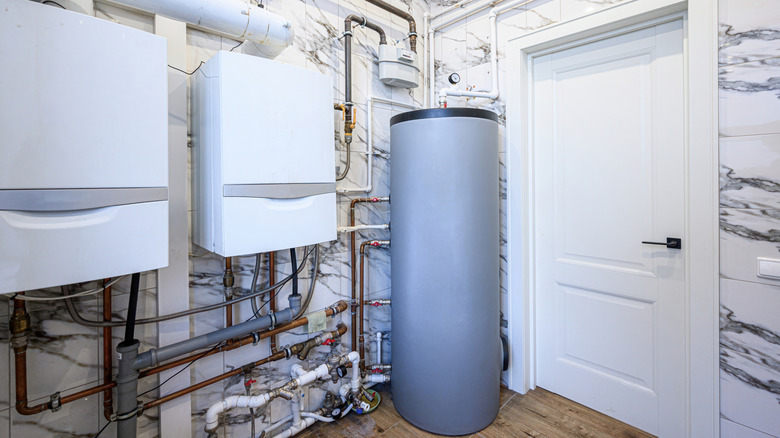
Your water heater is the unsung hero of your home, working tirelessly to make sure you're using the ideal temperature for every shower and load of laundry. However, this essential appliance isn't just one of the biggest energy consumers in your home; it's probably also leaking energy and having to work harder to warm your water. But there's an expert-approved secret to boosting its lifespan and saving money each month and it's super simple: putting an insulation blanket around it.
Many older tanks (and even some newer budget models) suffer from what the pros call standby heat loss. This occurs when heat keeps escaping through the steel walls of the tank into the cooler air of your basement or garage. But wrapping a heater in a high-quality insulation blanket creates a thermal barrier that'll keep heat in where it should be to begin with. This simple accessory helps keep your water at the desired temperature for longer periods without requiring the heating elements to work as much. And the less often you have to run these heating cycles, the less wear and tear your heater will have to deal with, which easily adds years of reliable service to the unit.
If your water heater feels warm to the touch right now, it's actively wasting energy and could use insulation. Adding an insulation layer with a solid R-value (the "R" references thermal resistance; the higher the value, the better for insulating) is the fastest way to turn a hardworking appliance into a more efficient one that'll stand the test of time. It's an expert tip for doubling the life of your water heater.
How to easily install a water heater insulation blanket
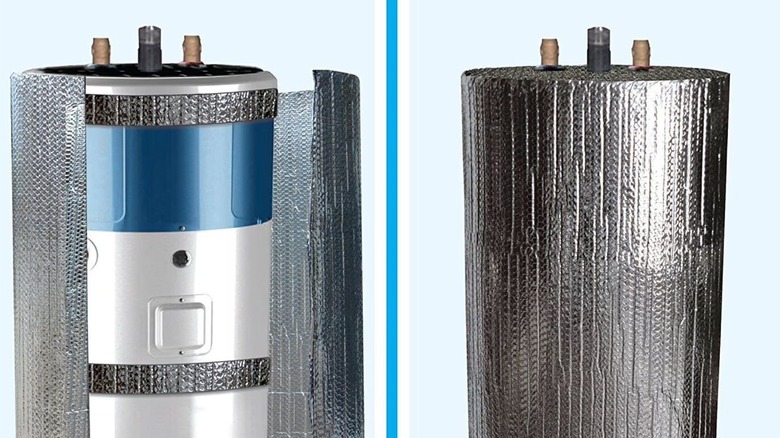
Making this upgrade happen is easy, but will require precision on your end. The installation process differs slightly depending on whether you have a gas or electric model, and following expert safety guidelines is recommended. For those with electric water heaters, the process is pretty straightforward, though you'll need to cut out openings for the thermostat access panels to prevent them from overheating. If you own a gas-powered unit, you need to be even more diligent about airflow; never cover the heating elements or top of a gas heater, and the thermostat (as it is also for electric models).
Regardless of the type you have, the most important rule overall is to leave the pressure relief valve and its discharge pipe completely untouched and unobstructed. The safety valve must remain accessible for regular testing and be free to operate instantly in an emergency. Typically, insulation kits are made from fiberglass, foil, or foam, making them easy to trim with standard utility scissors for a custom fit. Once fit, secure the blanket with heavy-duty foil tape, and voila: From here on, you'll likely notice the unit running more quietly and less frequently than before.
Taking an hour to properly wrap your tank is a small investment that pays off in lower monthly bills and a longer life for your water heater. It's an easy DIY project that's a win for both your wallet and your home's long-term maintenance. By following these simple safety steps, you can enjoy the benefits of a high-performance appliance without worrying about having to replace your water heater.