

If You Want An Indoor Plant That'll Thrive In Dark Rooms, Consider This Orchid Variety
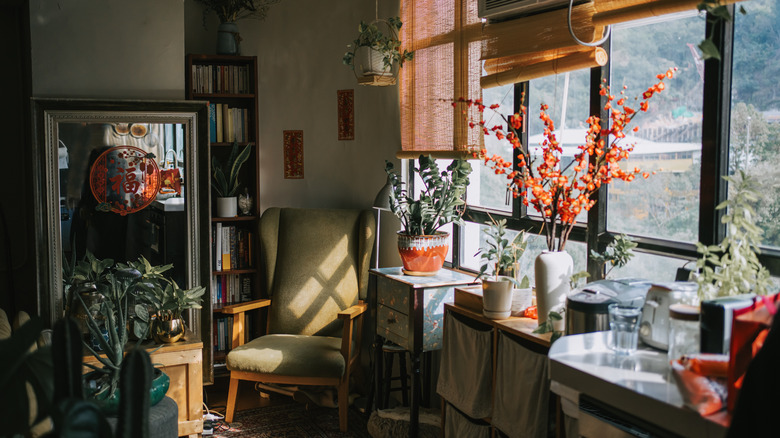
If you're looking for a pretty flowering plant to brighten up the dimmer rooms of your home, it can seem like adding an orchid is out of the question. After all, many orchids require six to eight hours of indirect light each day. Fortunately, there is one genus of orchids that thrives in low-light conditions, all the while sporting the same show-stopping blooms the family is beloved for. Paphiopedilum orchids, or slipper orchids, are a genus of indoor orchids that can handle life in the darker rooms or corners of your home. While all plants need some level of light exposure, their native forest environment means they've adapted to shady conditions.
The best part? While orchids can be notoriously tricky, slipper orchids number among the types of orchids that make the easiest houseplants. They're the perfect choice for beginner gardeners looking to test out their green thumb. While slipper orchids can survive in the dimmer spots around your home, it's important to still provide them with some light. This could include choosing a room with at least a small window or installing grow lights. Light exposure is also just one aspect of cultivating healthy, thriving orchids at home. You'll also need to meet other requirements to successfully care for indoor orchids, such as watering and temperature.
How to grow slipper orchids in shaded spots in your home
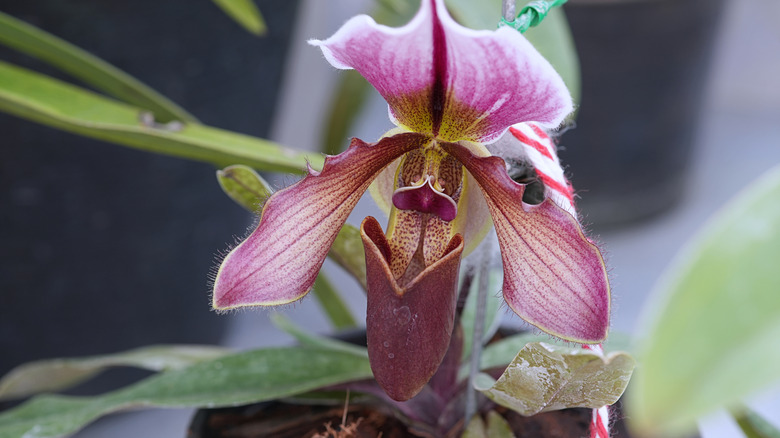
When determining the right amount of light for your slipper orchid, think about their natural habitat. These flowers grow best with dappled sunlight or deep shade, which means they can survive without direct light. Instead, they do better in spots with indirect light, especially in summer. Consider situating your slipper orchid near an east-facing window so it receives brighter light in the early morning that dims by the afternoon.
You'll also need to consider the temperature and humidity of a room. Slipper orchids are tropical plants, which means they thrive in warmth and high humidity, even if they don't require bright, direct light. All slipper orchids prefer humidity levels at least 40% to 60% or above. While there are many ways to increase humidity for plants, one of the most popular, misting, can lead to fungal disease in orchids. Invest instead in a humidifier or sit your plant on a tray of pebbles and water. The perfect room to grow orchids in your home could be the bathroom — it's dark and humid.
The right temperature for your slipper orchid depends whether it is warm- or cool-growing: the former requires daytime temperatures of 75 to 85 degrees Fahrenheit and nighttime temperatures of 60 to 65 degrees Fahrenheit; the latter likes it about five degrees cooler. Slipper orchids need regular soaks for hydration, but it's important to avoid overwatering. Plant them in well-draining bark or New Zealand tree fern fiber with perlite, coarse sand, and sphagnum moss. This gives your plant ample moisture while preventing pooling.