

8 Tips And Tricks To Make Your Heat Pump Water Heater Even More Efficient
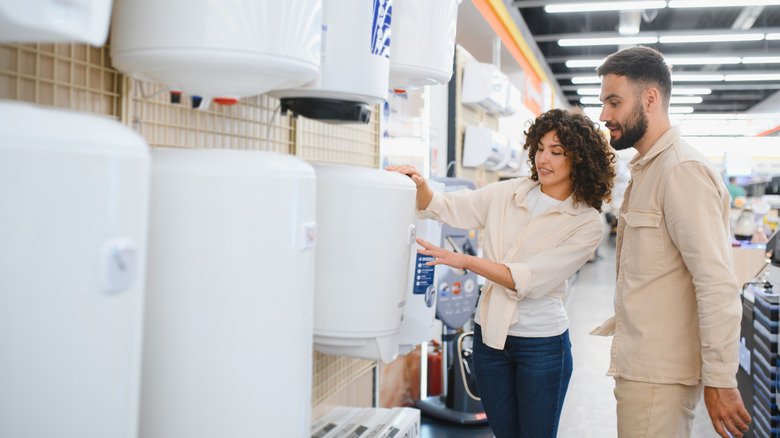
Many homeowners looking to lower their energy bills might opt to switch out light bulbs, unplug appliances, or close off unheated rooms, but it's easy to forget the big picture: Water heating is the second-most energy-related cost that homeowners face, after space heating. Shifting to an energy-efficient heat pump water heater is one of the best ways to cut your energy costs and save you money over the long run.
A heat pump water heater is five times more efficient than an electric, gas, or propane water heater, according to Energy Star, which estimates that you can save more than $5,600 over the lifetime of your water heater – about the same as it may cost to install your next one. And that's before you add in the home efficiency tax breaks offered by many states, local municipalities, and utility companies that can defray the upfront costs.
A heat pump water heater heats water by using electricity to draw heat from the surrounding air and transfer it to the water, in the same way that a refrigerator draws heat from inside the refrigerator box and sends it out of the back of the fridge. Keep that simple process in mind as you consider the best ways to maximize the cost-savings potential of your heat pump water heater.
A larger tank is more efficient than a smaller one
As a backup, heat pump water heaters (often called "hybrid water heaters") have resistance heaters for periods of high demand. Resistance water heaters heat the water directly through electric coils rather than by drawing warmth from the surrounding air — a less energy-efficient and more expensive way to heat your water. A larger tank reduces the likelihood of your appliance needing to run the backup heater, especially during periods of high demand.
Install your heat pump water heater indoors
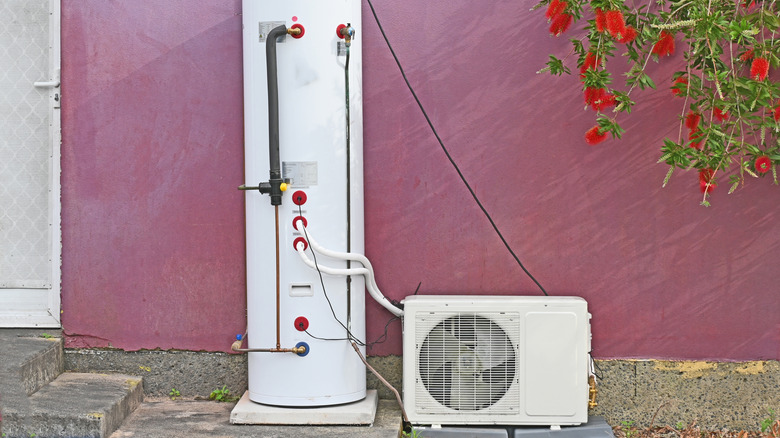
If you live in a tropical climate where temperatures don't drop below 40 degrees, it would be wise to install a heat pump water heater outdoors. If you live in a colder climate than that, you should install your appliance indoors. Otherwise, it will need to work too hard. And below 40 degrees, your water heater will shift to the less-efficient resistance heating mode.
Maximize the airflow into the heat pump water heater
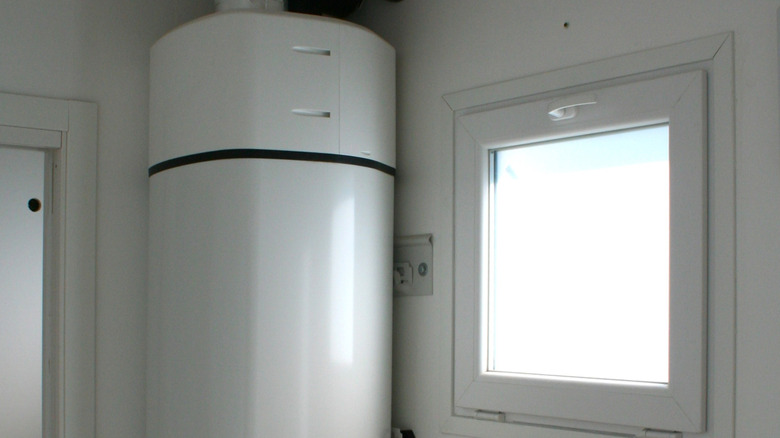
Proper ventilation in and out of the unit is a top priority when seeking to increase your heat pump water heater's efficiency. While it's tempting to tuck your water heater away in a basement closet or other confined space, heat pump water heaters work best if installed in an open area. Otherwise, they're working hard to draw heat from a limited volume of air. Manufacturers typically require a minimum of 450 to 700 cubic feet of air space to draw from.
Insulate to keep in the heat
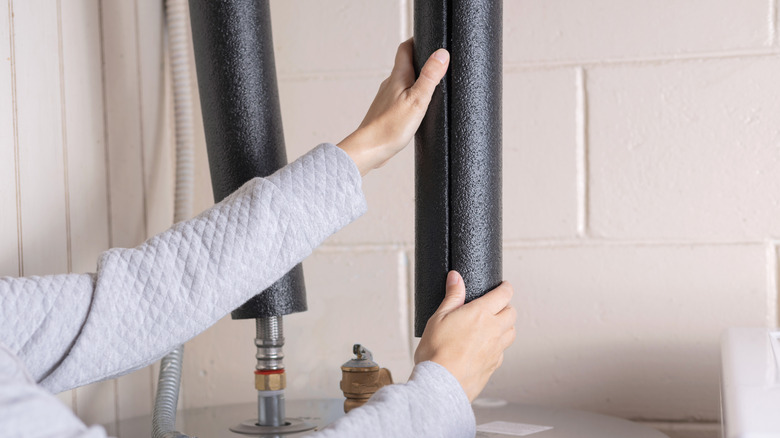
Adding a layer of insulation around your water heater's parts, including the tank and piping, means less heat loss, allowing the water heater to work less frequently. A new heat pump water heater is likely already properly insulated, but there's one simple way to find out: touch the water tank. If it's warm to the touch, then it's leaking heat and wasting energy. Adding a layer of insulation to your water heater can save you up to 16% on water heating costs, according to the U.S. Department of Energy.
Re-consider venting the cool air outdoors.
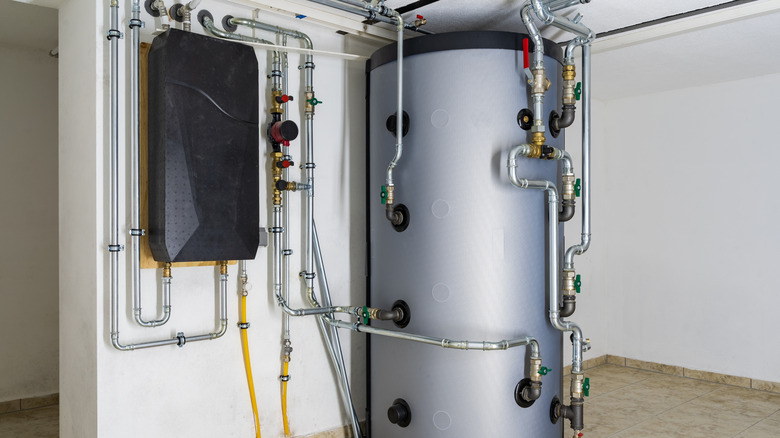
Heat pump water heaters emit cool air as part of their operation, so you might be tempted to vent the cool air outdoors using ductwork, similar to the ductwork on a clothes dryer. In theory, this can make the heat pump water heater more efficient in drawing warmth from the air around it, but it can also create an imbalance in air pressure between the intake and exhaust, making heating and cooling systems work harder. Any gains saved by your water heater are offset by losses in your HVAC system.
Keep your air filters clean.
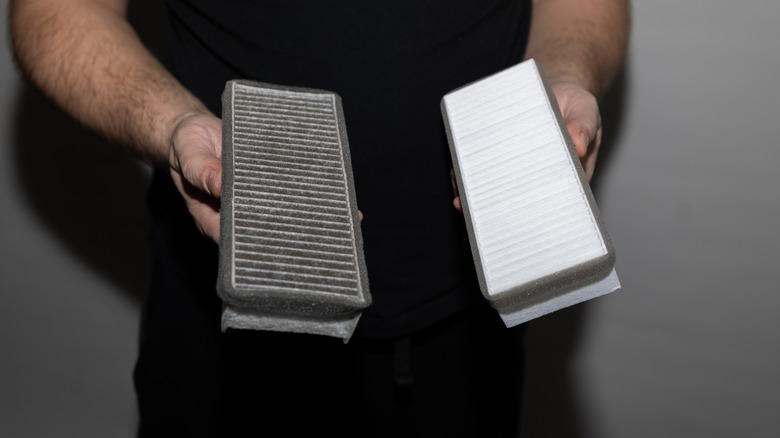
If your air filter is dirty, a heat pump needs to work harder to draw air in, making it less efficient. Every few months, place the water heater in Standby Mode and turn off power to the water heater. Then, remove the filter, usually found at the top of the unit. Wash the filter with a mild detergent and let it dry before putting it back in place.
Ventilate an enclosed space for your water heater.
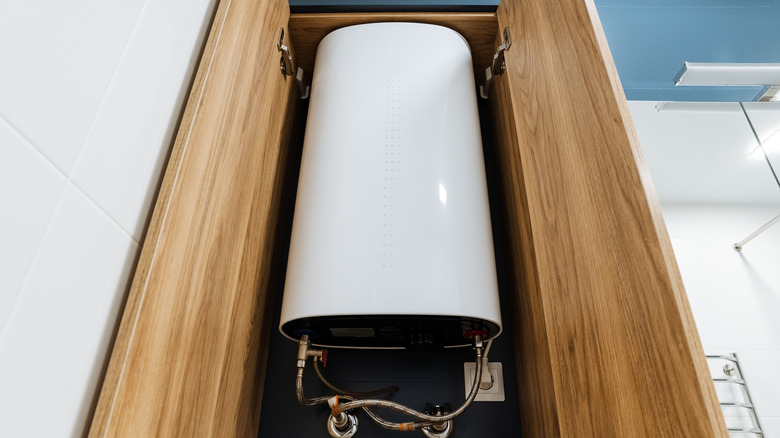
If you prefer to tuck your water heater in a small space, make sure that it is open to the air. If you're hiding it in a closet, use either ducting or a louvered door to bring air in and out of the space. If the confined space has grilles, there should be at least 240 square inches of total space between the fins. Grilles should be placed at the top and bottom of the door or wall enclosing the water heater, or use ducting to bring air in and out of the space.
Use the most efficient modes on your heat pump water heater.
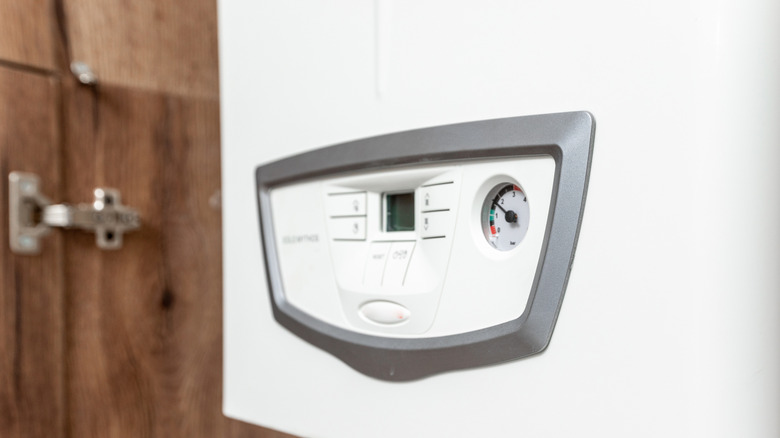
Heat pump water heaters often come with multiple modes, which can usually be set on the unit's panel display. "Energy saver mode" is likely the default setting. It primarily uses the heat pump but resorts to the electric resistance heater during periods of high demand. "Heat pump mode" — the most efficient one — turns the electric resistance heater off. By contrast, "electric mode" turns off the heat pump and relies solely on the far-less-cost-effective resistance water heater. When you're going away on vacation, use "sleep mode."