

The Fertilizer Made Of A Popular Leftover Kitchen Scrap That Boosts Your Citrus Tree Harvest

Citrus fruit, like oranges, lemons, and grapefruit, contains immune- and digestive system-boosting Vitamin C and fiber. You get easy access to these benefits if you grow your own citrus trees, either as houseplants or out in the garden. However, citrus trees don't respond well to commercial fertilizers coming into direct contact with their roots, particularly when being planted or potted up. Natural and organic nutrient amendments are gentler on roots and release nutrients over a longer period. One affordable, accessible option to consider is rice water — it comes straight from your kitchen to the garden.
Washed rice water, in particular, contains nutrients leached from the grains during the rinsing process, something that also happens when cooking rice in water. There are, for example, around 16 amino acids in both white and brown rice. And that's just the beginning. Rice water can deliver a lot more benefits to your citrus trees when used as a fertilizer: sugars, fats, vitamins (like Vitamin E), and minerals such as calcium, zinc, and potassium.
That pot of murky water leftover after rinsing (or cooking) rice is full of starches that are good for more than just mixing into stews or soups as a thick stock alternative. Once the starch is processed by beneficial microbes in the soil, it's transformed into a food source for citrus trees. There are even more reasons to consider rice water as a great soil additive. It may, for example, help your shrub to produce higher quality fruit, though this has only been proven in date palms, per a 2025 Sarhad Journal of Agriculture study. So, keep your rice water: there are plants that love it, like your citrus trees.
Using rice water to feed indoor citrus trees
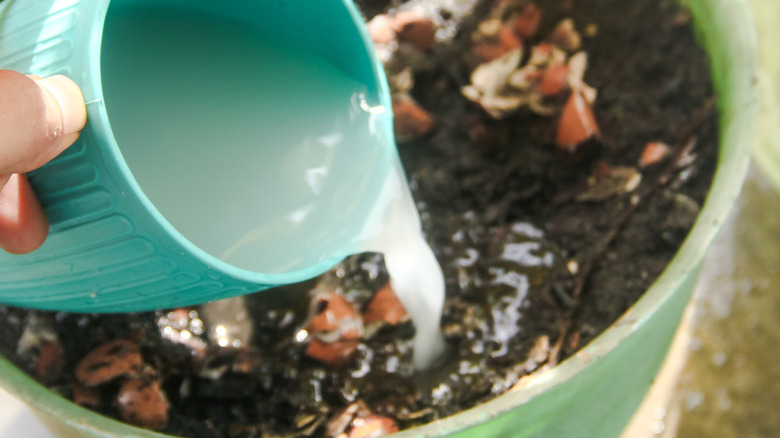
If you're planning on growing a citrus tree indoors, you should know that using rice water makes it easy to fertilize your potted plant. It is, after all, likely a short walk from the kitchen to whichever room your lime or calamansi tree is growing in. Or, if your kitchen will provide a citrus with the six or more hours of direct sunlight a day it needs, why not set it up in there, where you have easy access to rice water? Kitchens typically have extra moisture and heat due to cooking, and citrus trees, which originate from subtropical and tropical Southeast Asia, appreciate the warmth and humidity.
What's more, potted citrus trees thrive on a regular watering schedule — they hate dry soil. The loamy or sandy loam soil they prefer, even indoors, should be free-draining, so pots can dry out fast. Pouring a saucepan-full of cold rice water over the soil keeps them irrigated and adds nutrients, killing two birds with one stone. On a practical note, reusing rice water is resource-friendly. It's going on your plants instead of down the drain. It's also important to note that some citrus trees will be easier to grow indoors than others, no matter what you fertilize them with. There are, for example, lots of compact orange tree varieties you can grow in a container.
How rice water helps citrus trees growing outside in the garden
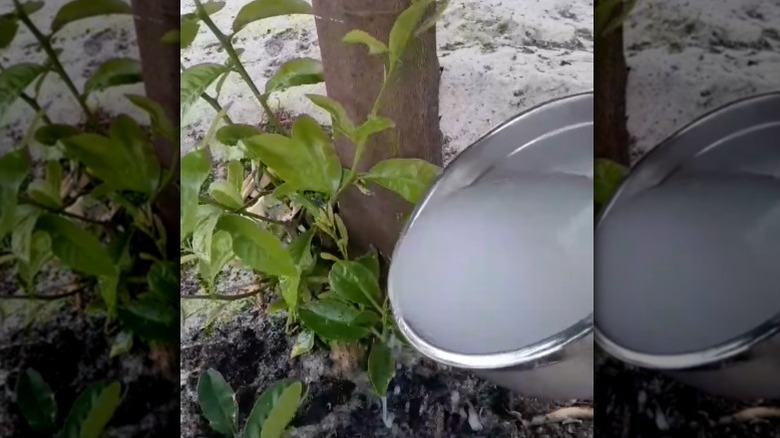
Outside in the garden, citrus trees are safe to plant in spring, anytime after the last frost. You can apply rice water fertilizer to these fruiting shrubs throughout spring and early summer, but stop after early July. Applications after this time can leave the trees more susceptible to frost damage, disease, and pest infestations, like leaf miner. During the hotter months, add rice water only in the morning, when evaporation rates are lower. You want to minimize water loss to ensure the nutrients from your washed rice water make it to your plant's roots.
When planting a new citrus tree, you need to treat the root ball with care. Dig a hole no deeper than the roots, leaving the trunk's soil line a few inches above ground level. Planting in a raised mound can aid soil drainage, which is particularly important if you're dumping lots of rice water over the tree on a regular basis. If you want to improve this natural fertilizer, ferment the rice water for a few days. Fermentation encourages the proliferation of beneficial microorganisms, creating a more nutrient-dense fertilizer. It may also increase soil acidity — a boon if you're going to be growing citrus trees, as they enjoy slightly lower pH levels.