

Hate The Empty Space Above Your Kitchen Cabinets? Hide It With A Trendy Art Piece
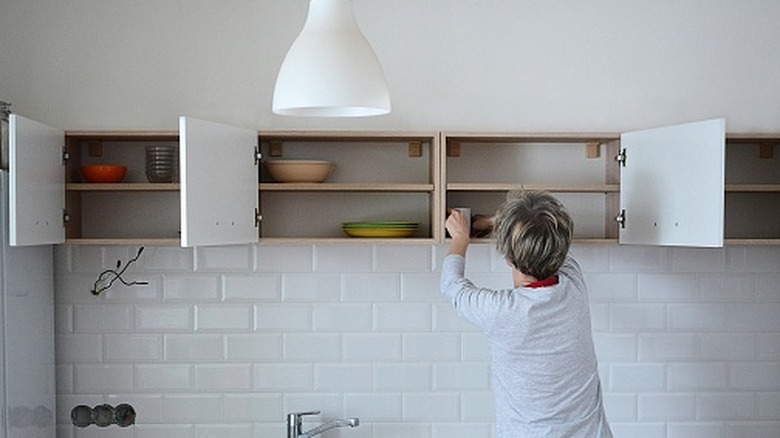
Kitchens are one of the most used spaces in a home, and everything here has its place and purpose. For example, if you place kitchen appliances in the right spot, you end up maximizing kitchen space and ensure easier movement for whenever you need to cook. However, some kitchens may have excess space unaccounted for, such as that awkward gap above kitchen cabinets. As much as it's worthy of decor or storage, they're usually too high to reach, yet too visible to ignore. When left bare, that hollow strip can make an otherwise decorated kitchen feel unfinished or oddly unlived-in.
Interior designers recommend seeing this empty space in your kitchen as a design opportunity rather than a problem. An easy and trendy solution to cover that space? Hide it with a tapestry. Instead of resorting to bulky decor that may collect dust over time, a tapestry easily adds a splash of color, texture, and personality without overwhelming the room. Beyond styles and trends, tapestries make a practical choice for interior decor. It's easy to install and requires no major renovations, making them a renter-friendly design idea for kitchens.
How to choose and install a tapestry in your kitchen space
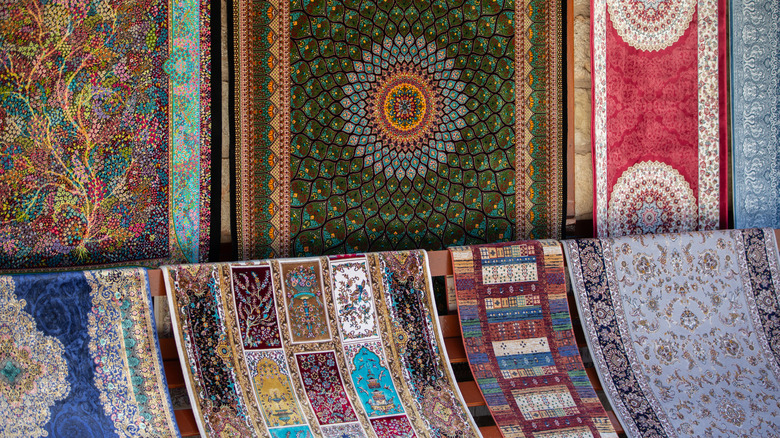
You figured out an easy way to cover that space above your kitchen cabinets — now you need to consider what works best with your overall kitchen design. Start with the material: tapestries are often made with wool, cotton, or linen. Thicker wall tapestries are commonly made of wool, which has more texture and depth, perfect for rustic or farmhouse-style kitchens. Cotton and linen, on the other hand, are much lighter fabrics, making them great for modern or coastal kitchens. Next, you'll want to consider its size. Above the cabinets, you would need something horizontally-oriented. Find tapestry designs that are lengthier but shorter on height.
There are many ways to hang tapestries, with tension rods, wooden dowels, clips, and rings as the most commonly used devices. Many tapestries will already have loops to slide onto either a curtain rod, a tension rod, or a wooden dowel. Make sure the rod or the dowel is long enough to be installed across the hollow space. If the tapestry does not have loops or a pocket, opt to use decorative clips you can place evenly throughout the rod.
Lastly, remember to take safety into equation as you clean and maintain your tapestry. Avoid hanging them in busy and/or flammable areas, or near stovetops where smoke or grease may get on the fabric. Clean the tapestry regularly with either a soft brush or a vacuum cleaner, and avoid using harsh cleaning solutions.