

Wait, Why Are People On TikTok Sucking On Their Garden Seeds?
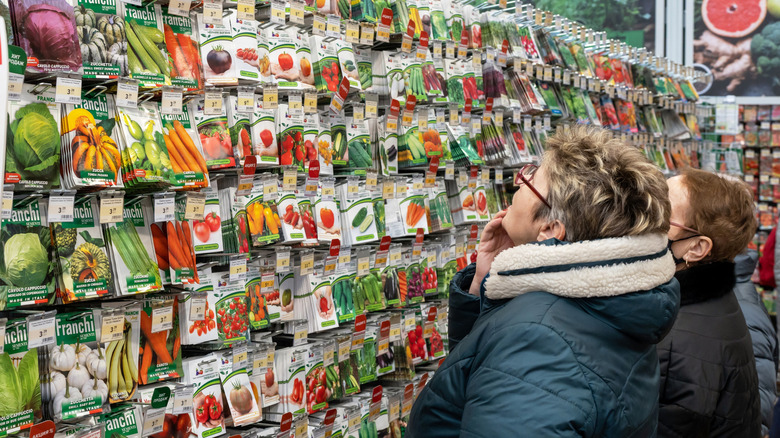
There's plenty of debate around best practices when it comes to gardening. Is it better to start your seeds indoors or direct sow when growing flowers? Which soil mixes are best for container gardening? What is the most eco-friendly way to fend off pests? Every gardener has their own preferences around how to help their plants thrive. But have you heard what some organic gardeners are claiming on TikTok recently? According to this latest viral trend, putting seeds in your mouth before you plant them can transfer your DNA to the seed, thus customizing them to grow specific nutrients your body needs.
"It actually absorbs everything within your saliva and is able to see all of your deficiencies," claims TikTok user @taliaesperanza. "When it grows, it actually makes sure that it has the nutrients that you need in order to support that deficiency," she concludes. Sucking on seeds before germination, sometimes referred to as signature planting, is a method that a surprising number of people on TikTok — and elsewhere — are promoting. In fact, the idea has been around online since at least the turn of this decade. Is it a simple yet genius trick that will help your seeds grow into vegetables better able to cater to personal nutritional needs? Or is it pseudoscience and a complete waste of time? We're here to help you sort fact from myth when it comes to optimizing what you grow.
Is sucking on garden seeds actually effective?
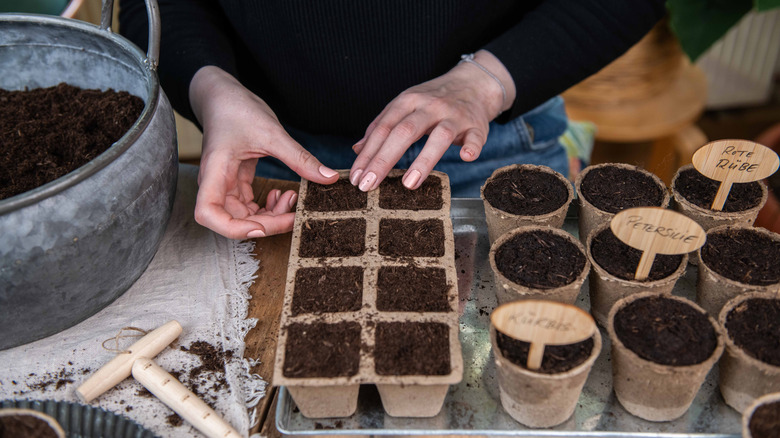
As cool as it would be to grow custom plants at home, there is no evidence to suggest that sucking on a seed changes it in any way. Signature planting is not rooted in science. "This is totally ridiculous that just putting your saliva on the seed can somehow change its DNA to feed you better," said Maureen Hanson, molecular biologist and professor at Cornell University, via USA Today. Changes of this nature are something only complex, lab-based gene editing — where you insert foreign DNA into a plant — could achieve.
Simply put, sucking on a seed will not make it more nutrient dense or encourage the seed to grow into a plant with specific vitamins or minerals. It could, in fact, even harm it: human saliva may inhibit seed germination, per research published in a 1948 issue of Science — though this is, admittedly, a rather old finding. Plus, many vegetable seeds are coated with pesticides before they're sold, especially when packaged in bulk for farmers, which may not be safe to ingest. These seeds typically have a brightly dyed exterior.
Signature planting might serve as a way to metaphorically connect to the plants you're growing, something that may appeal to gardeners who enjoy engaging in ritual or grounding practices. If you take appropriate precautions, like avoiding treated seeds, you could still make it a part of your spring garden prepping routine. Overall, however, it's far better to rely on tried-and-true methods of seed improvement, like pre-soaking, scarification, and cold stratification. Many seeds have a tough exterior and need a little extra help to germinate. While these techniques won't create tailor-made fruit and veggies, they can help increase your germination success rates.