

Attract More Pollinators By Growing These Herbs Next To Catmint
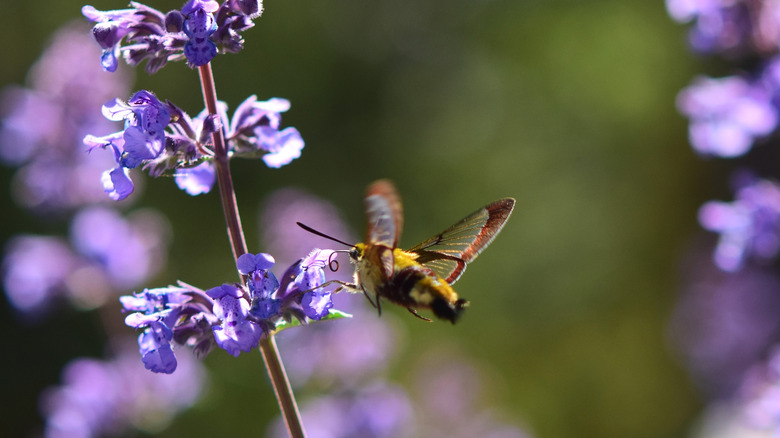
If you love the way catmint (Nepeta spp.) attracts bees, butterflies, and hummingbirds to your garden, then you'll be thrilled to multiply your pollinator impact by growing a well-chosen selection of companion plants nearby. Since catmint is one of those low-maintenance perennials that hardly need any attention to thrive, you'll want to pick herbs that like the same type of sunlight and soil conditions as this low-maintenance herb. Top choices include yarrow, Russian sage, and hummingbird mint.
Gardeners in USDA Hardiness Zones 3 to 8 grow catmint as a pollinator-friendly flowering perennial for full sun in well-drained soils. To choose the best companion plants for this member of the mint family, you'll need to pick herbs that thrive in overlapping zones. Don't just select herbs for the same growing conditions. Plus, you want something that visually complements the plant's soft, gray-green leaves and purple, blue, or white flower spikes. There are many options; narrow down the selection with plants that attract beneficial insects, while also serving as perfect partners
Grow catmint with companion plants for more beneficial bugs
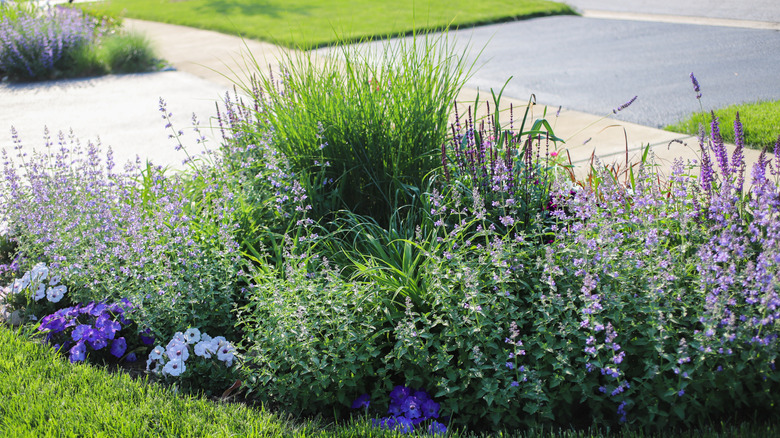
Yarrow (Achillea spp.) is one of the top wildlife-friendly options you can put in the ground or planter next to catmint. It attracts butterflies, and caring for catmint plants means you're also caring for this native herb, since their needs are the same. This ferny-foliaged plant with white flowers comes back every year in zones 3 to 9. But there are other choices as well.
Russian sage (Salvia yangii) is another great herb companion plant for catmint because bees love both plants. Russian sage also prefers full sun and well-draining soil, and is perennial in zones 5 to 9. Gardeners in zones 3 and 4 should leave this one off their list. Most types of catmint reach around 1 to 2 feet tall — such as 'Walker's Low,' a fast-growing herb with purple flowers that makes a perfect ground cover. Pollinator-friendly Russian sage grows taller, up to 4 feet, so plant it to the north of the catmint to keep the smaller herb exposed to a healthy amount of sunlight.
Hummingbird mint (Agastache spp.) is yet another good partner for catmint. It's ideal for attracting pollinators, including bees, butterflies, and hummingbirds. There are many different Agastache species and cultivars, with some reaching 4 feet tall and smaller types at 1½ to 2 feet in height. There's lots of room to play with landscaping design. While most hummingbird mints thrive in the same conditions as catmint, not all varieties survive in the same zones, so be sure to check compatibility before planting.