

Want A Bonsai Collection? Here's How To Choose The Best Plant To Start From
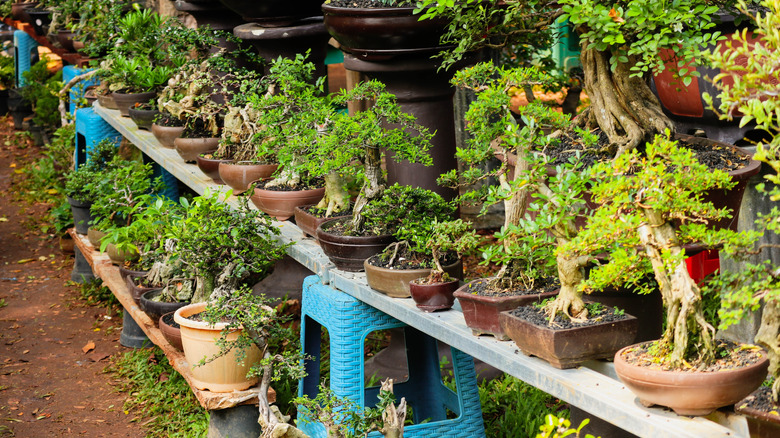
The practice of bonsai fuses art and gardening into a delightful pastime. It's more than a hobby — it's a lifestyle. Starting may seem daunting and time-consuming; however, this simple trick makes bonsai easier: peruse your local nursery for large, overgrown trees or common shrubs that can actually become stunning bonsai. These woody specimens contain all the attributes you need for success, like a tapering trunk and elaborate branching. This trick works for outdoor and indoor specimens, no matter if you're starting a patio collection or want to add a dramatic flair to your indoor space. With pruning, wiring, and consistent care, you can turn wonky, forgotten nursery plants into stunning examples of this long-practiced art form.
Bonsai has its origins in China and Japan — the Chinese word pun tsai translates to tray planting in English. Indeed, each tiny ceramic container holds a garden or natural landscape in miniature. A large, thick tree in a small pot helps create the illusion of a mature specimen. To start, head to your local nursery and search for a candidate in forgotten corners or the discount section. Focus on healthy yet overgrown, curvy, or odd-looking deciduous and evergreen shrubs or trees already growing in a pot. Twisty branches are a plus, as are visible, thick roots above the soil line. It's okay if the plants are rootbound since you'll prune their roots anyway. Avoid diseased or pest-ridden trees, and leave struggling ones behind in favor of vigorous growers.
Select a potential bonsai tree with budding harmonic proportions
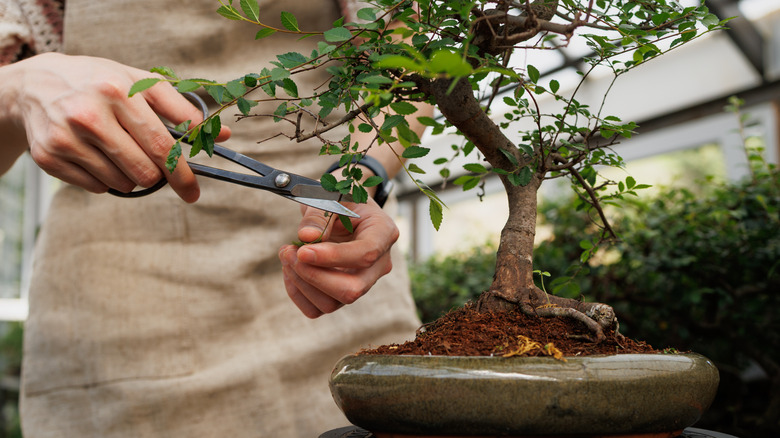
Some simple rules of thumb related to growing and caring for a bonsai tree can guide your selection. First, look at how tall a tree or shrub is. You're aiming for a total height that's about six times as large as the width of the trunk for balance. For example, if a plant you like has a 2-inch-wide trunk, then you'll want the entire plant to be around 12 inches tall. Keep this general rule in mind while shopping at the nursery to help you visualize your future bonsai.
Here's another helpful rule — the trunk should taper towards the top. It doesn't have to taper perfectly or evenly, but it should be smaller at the top than the bottom. The same is true for the branches, which should start thick near the trunk and get thinner along their length. If the branches aren't in a position you want them to be in, that's okay. Later, you can use bonsai wire to gently twist them into your desired shape. Don't bend too hard or you may snap them.
Harmonic proportions also apply to the containers. Bonsai trees are typically planted in wide, shallow containers to maintain the illusion of a mature specimen. In most cases, a plant you find at a garden center will come in a cheap plastic nursery pot that's deeper than it is wide. When repotting your nursery find, free the roots from the soil and gently cut them shorter with pruners. This helps keep the tree small and comfortable in a tiny bonsai pot for at least a season. Scale up again only when you see roots poking out of the drainage holes.