

What Is A Japanese Soaking Tub? And Why We Want One Right Now
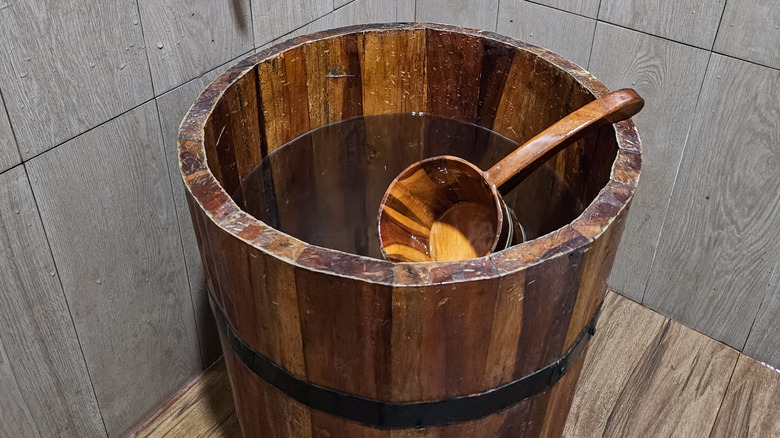
If a typical bathtub is the workhorse of the bathroom, a Japanese soaking tub is its zen, spa-minded cousin. Also known as an ofuro, these tubs aren't meant for scrubbing, shampooing, or washing at all for that matter — they're designed purely for soaking and relaxation. The idea is simple: Wash and rinse your body outside of the tub, then step into a perfect deep basin of hot water meant only for unwinding. In Japan, bathing in the ofuro is treated as a daily wellness ritual rather than a mode of cleansing.
Unlike the long, shallow tubs common in American bathrooms, Japanese soaking tubs are shorter and much deeper, allowing you to sit upright with water up to your shoulders. That compact-but-cozy shape makes them surprisingly practical for small bathrooms, tight floor plans, and anyone who wants the feeling of full-body immersion without needing a lot of space. Many modern versions are crafted from acrylic, stone resin, or metal, while traditional tubs are made from hinoki wood, which releases a gentle, calming aroma when warmed.
So why all the sudden buzz? Between the growing focus on at-home wellness and minimalist design, Japanese soaking tubs have quietly become one of the most coveted bathroom upgrades around. They promise spa-level relaxation without leaving the house, and that's a luxury just about everyone can get behind.
How A Japanese Soaking Tub Actually Works
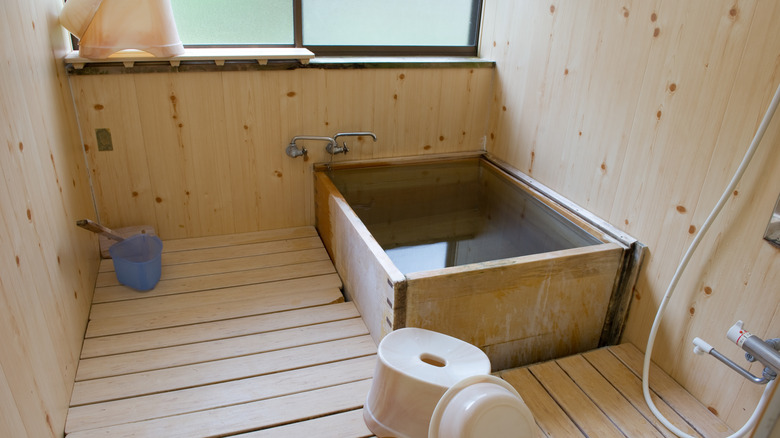
At first glance, a Japanese soaking tub might just seem like a deeper version of a regular tub. In reality, the experience is completely different. Traditional Western tubs are built for laying back and bathing all in one place. An ofuro, rather, is meant only for soaking — which is the reason behind Japanese bathrooms often being designed as waterproof "wet rooms" with a shower area right beside the tub. You clean up first, then slip into the hot water afterward.
The depth is what really sets these tubs apart. Most ofuro's measure anywhere from 24 to 30 inches in height, letting water cover nearly the entire body while sitting comfortably with knees bent. That upright position isn't just a design quirk — it allows for deeper heat penetration, which many experts say can help relax muscles, improve circulation, and reduce tension faster than a more shallow soak.
Ofuros' smaller sizes also allows them to use water more efficiently than oversized Western bathtubs. Less surface area means less heat loss, so the water stays warmer longer without constant refilling. In Japan, it's common for more than one family member to use the same water as it retains its heat so effectively — Ofuro water can even be used for a hot cycle in a load of laundry. Some models even come with insulated covers to trap warmth between uses, making the whole setup feel more intentional and luxurious.
Why Everyone Suddenly Wants One
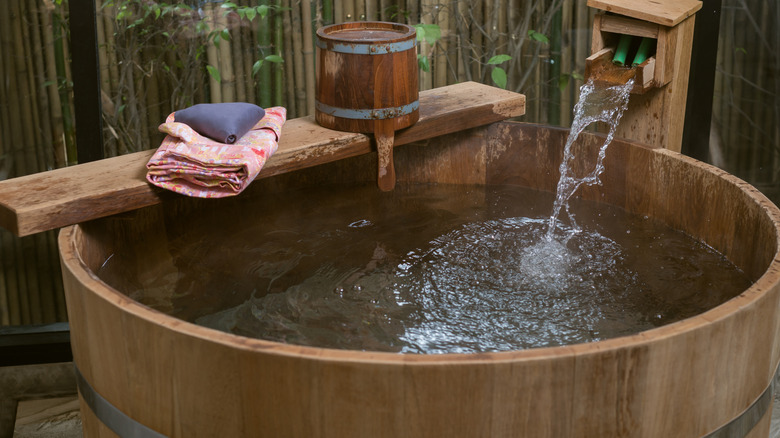
Japanese soaking tubs didn't become trendy out of nowhere. They're riding a wave of bigger home and wellness shifts that have been bubbling up for years. As people continue to rethink the possibilities within their own homes, bathrooms are no longer just practical spaces, but personal retreats. Industry reports on home design trends show a rising interest in spa-like features, calming layouts, and wellness-focused renovations, and deep soaking tub fits perfectly into that mindset.
There's also the fact that modern homes and apartments are getting smaller as time goes on and prices go up. A Japanese soaking tub delivers the indulgence of a luxury bath experience without eating up precious square footage. For city dwellers, renovators, and anyone working with a compact bathroom, it offers maximum comfort with minimal space required. Designers love these tubs for the same reason: They look elegant and luxurious while still being practical.
And we can't forget the vibe factor. In a world of non-stop notifications and packed schedules, the idea of a daily ritual for slowing down and soaking in silence feels essential. A Japanese soaking tub turns an ordinary bathroom into a place to decompress, reset, and truly relax. It's not just a fixture, it's a lifestyle upgrade disguised as plumbing.