

How Often To Water A Hosta Plant So It Stays Healthy & Thriving
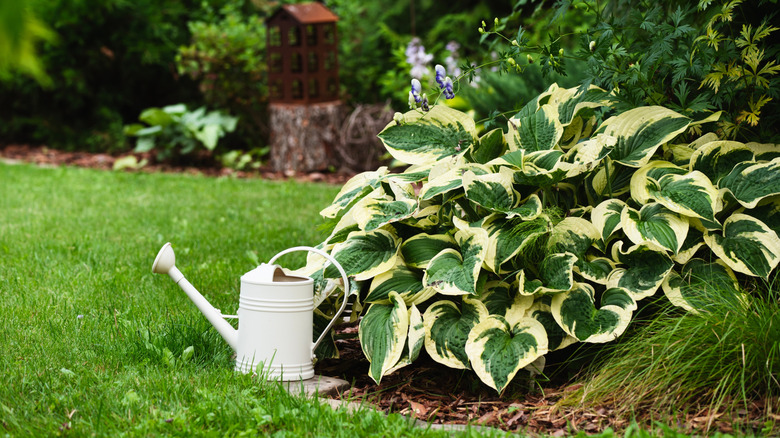
Two of the benefits of hostas (Hosta spp.) are their big leaves and their tolerance of partial shade or even deep shade. Those big leaves can cover lots of bare soil in areas where most plants don't do as well. Generally speaking, plants in the shade need less watering than plants sitting in full sun all day, but that's not necessarily the case with hostas. Plants lose water (or transpire) through the pores in their leaves, so the big leaves on hostas mean they have a large surface area where water evaporates. The bigger a hosta's leaves, the more frequently you will need to water it. How frequent? Incorrect watering is one of the top mistakes to avoid when growing hostas: As a rule of thumb, an inch of water per week will keep your hostas healthy and thriving. A deep weekly soak is better than a frequent sprinkle. Water more frequently during periods of drought or high heat, less frequently during cooler temperatures and rainy periods.
Where and when you water your hostas is also important for their health. As with most plants, it's best to water hostas in the morning. You'll lose more water to evaporation by watering in the middle of the day. Leaving plants wet overnight encourages the growth of bacteria, viruses, molds, and mildews, and hostas are notoriously susceptible to viruses and rot. For the same reasons, you should water hostas at their base rather than from overhead. It's their roots that need the water, not their leaves. Use drip irrigation or a soaker hose rather than a sprinkler to avoid getting the leaves wet.
Clues that your hostas need watering
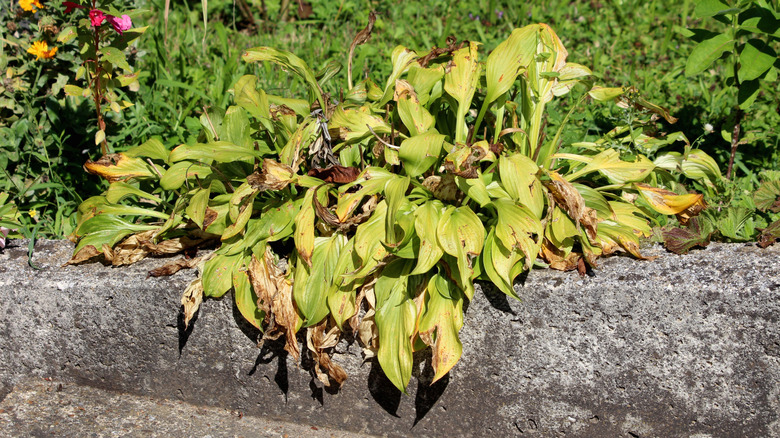
Examine your hosta's leaves to see whether it needs water. Hostas lacking proper watering will develop brown edges on their leaves. But examine closely: Hostas can also develop brown areas on their leaves due to nematodes, but in that case, brown areas are more likely to occur between the major veins of leaves rather than their edges. Yellowed or brown leaves may also be a sign that your plant has been scorched by overexposure to the sun.
Hostas prefer consistently moist soil. Poke a finger in the ground near the base of the plant. If the soil feels dry, it's time to water. Dry soil is more likely if you've planted your hostas underneath shallow-rooted trees such as maples or spruce, as these trees will suck up surface-level water more quickly than deep-rooted trees. Hosta plants grown in containers dry out more quickly than hostas grown in the ground. Mulch around the base of your plants to help preserve moisture. But don't add more than an inch of mulch: a thicker mulch creates an ideal home for slugs, another enemy of healthy hostas.
The final clue: the plant label. With more than 2,000 varieties of hostas – from dwarfs with leaves smaller than 4 inches to giants whose leaves are greater than 28 inches – the hostas you plant may have different watering needs. Some hostas are more tolerant of the sun. By contrast, hostas with leaves with blue coloring require more shade than hostas with yellow or gold leaves, and consequently blue-colored hostas are likely to require less water. Know your hostas and water accordingly.