

Why Using The Same Laundry Setting Doesn't Work Anymore
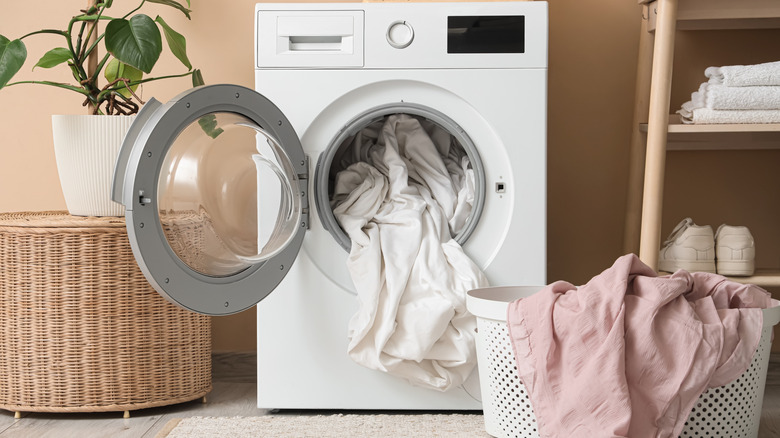
Whether it's out of convenience or habit, we've all, at some point, been guilty of piling a load of laundry into the washer or dryer and using the same setting for all our clothes. There was a time when most clothing was made from one or two common materials, like cotton, wool, or polyester. This made washing and drying fairly simple because a single laundry setting would usually work fine. But these days, it's more likely that your clothes were created using a blend of fabrics and materials. And certain styles, like athleisure, have risen in popularity and impacted the way clothing is manufactured across the board.
It's important to adapt your laundry settings to the items you're washing. Your linen shirt, for example, probably won't have the same care instructions as your high-performance athletic leggings, while there are some washing machine settings you shouldn't use for your comforter. Using the appropriate washer and dryer settings will extend the life of your clothes and help them keep their shape. While it requires more time and attention, it's important to sort your clothing by fabric and color and check the care instructions on each item's tag.
Your laundry settings should evolve with clothing trends

Even if your sense of style has remained the same for decades, your clothes' care instructions may have still changed. There are three main types of fabric we use for clothing: natural, synthetic, and blended. In the past, natural or synthetic fabrics were very common. A person might have a cotton shirt or polyester pants. These days, blended fabrics have become more popular in the manufacturing world. Common blends include cotton-polyester and wool-synthetic blends. Combining different blended fabrics in a single load of laundry can be tricky because some fabrics may have conflicting care instructions.
What's more, changing trends can affect how clothes are made. The rise in athleisure and comfort-focused styles has led to manufacturers using elastic in a wider range of clothes. Adding elastic can significantly change the proper care of an article of clothing. Putting elastic in the dryer, for example, can melt the material and significantly shorten its lifespan. There are other types of fabrics, such as bamboo, that have become more popular in clothing worldwide and have specific care instructions.
Laundry care for different types of clothes

Every article of clothing you own likely has care instructions on the tag or printed on the fabric. While it's admittedly much easier to toss everything into the washer or dryer and hit "start," you should sort your clothes according to the instructions on the label or tag. Understanding all your laundry machine settings and recognizing the symbols manufacturers use on tags can make doing your laundry easier.
Proper laundry care means using the appropriate water and dryer temperature. Your washer may have some underused machine settings that can help you clean your clothes. For drying, some clothing shouldn't go in the dryer at all, so it's a good idea to have a designated spot to hang or lay clothes flat on laundry day. Finally, if you do need to mix fabrics with different care instructions, use the lowest water temperature and gentlest drying cycle recommended between them.