

What's That Bushy, Purple Flower That Seems To Grow Out Of Nowhere?
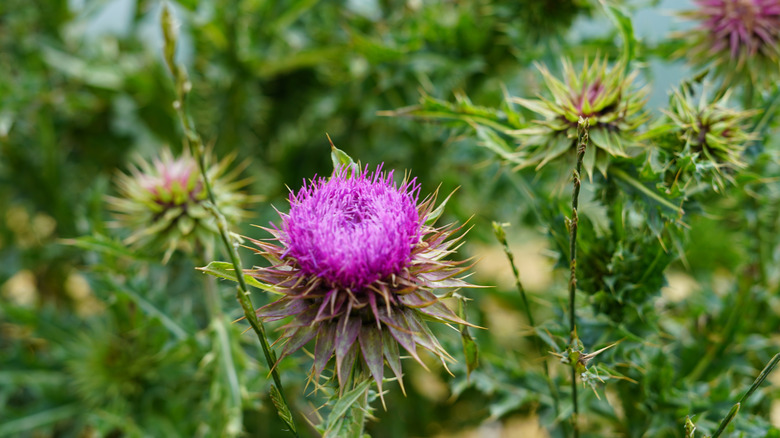
Aggressive spreaders, like the infamous purple musk thistle (Carduus nutans), sprout wherever there is bare soil. They'll turn from tiny seedlings into giant plants if they're left unbothered. They're just one of many beautiful flowering plants that are considered invasive species. The leaves have spines that hurt to the touch, and the plants are invasive from the West Coast to the East Coast. Their fast growth rate crowds out other plants, creating patches of thistles. If there are thistles native to your region, these weeds can hybridize with them, producing new species with uncontrollable habits. Yes, the blooms are pretty, but don't be fooled by these pretty purple flowers. The plants are noxious weeds that grow out of nowhere.
If you can identify the thistles, you can remove them. The plants look different when they're young than when they're mature — they're biennials with two different growth phases. Watch for ground-hugging clusters of spiky foliage the first year. The leaves form a rosette, with each one growing outward from the center in a circular fashion. Each leaf looks intricately designed, with triangular, geometric patterns that stand out. At the end of each triangle lie prickly points that can puncture your skin. In the secondary phase, stems shoot up from the center of the rosettes. At their tips, they sprout pink-purple nodding blooms that resemble those of artichokes and cardoons, two other members of the Carduus genus.
Keep musk thistle out of the garden for good
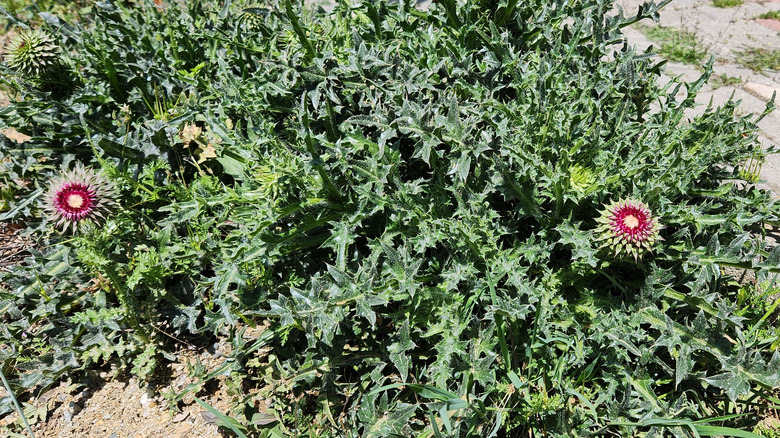
Once you identify these unruly plants, you'll want to banish thistle weeds from your yard. They'll spread thousands of seeds if left unchecked. Hand pulling works well if there are only a few plants in the garden; just be sure to wear protective gloves to keep your hands safe from the prickly points. Pull near the base of the plants to make sure you get all of the deep taproots out.
Let's say your yard is full of musk thistles, and hand pulling would be too time-consuming. Fear not, as repeated mowing can work to remove the unruly spreaders. Simply take a mower to the plants and cut them down to 2 inches or shorter. Do so every week or so, from spring through fall, until the plants die back. This removal method works best before the plants set seeds. If you wait until they're flowering, there's a chance they'll drop seeds where you mow and start the problem all over again.
When all else fails, consider using occultation or solarization to snuff out the spiky weeds. In spring or summer, lay a black or clear plastic tarp over the area. Weigh down the edges with stones or bricks, and leave the covering for a month or longer. The sheet will amplify heat and zap weeds, seeds, and grasses underneath. Once the thistles die, plant your favorite flowers in their place.