

11 Vintage Pottery Brands To Be On The Lookout For At The Thrift Store
We may receive a commission on purchases made from links.
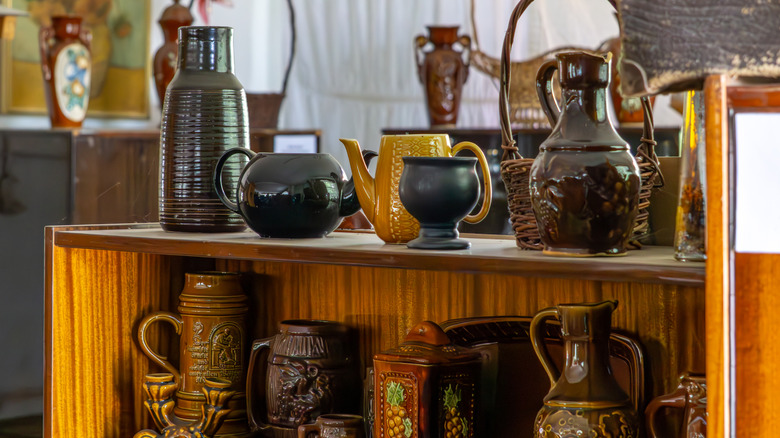
Browsing the housewares or ceramic aisles of the thrift store can seem like an overwhelming sea of chipped plates, promotional coffee cups, and clear glass. Because these store shelves are often picked over multiple times a day, it's easy to assume that everything of value has been snatched up the minute it's put out. Every so often, you might get lucky and run into a vintage piece that catches your eye. If you know what to look for when digging through those dusty bottom shelves, you can find many different treasures, including antique pottery. Whether you're hoping for a goldmine you can flip for a profit online, or you just want to add to your collection of mid-century pieces, knowing your makers is the difference between buying junk and finding something worth saving.
In the article below, we consulted directly with an expert to determine which pottery brands hold the most value and are worth seeking out when thrifting, as well as how to identify authentic vintage pottery from those brands. So, before you walk the aisles and pass by that weird textured pitcher, grab a shopping cart and take this list with you of 11 valuable brands of vintage pottery you should never leave behind.
McCoy is the king of American kitsch and cookie jars
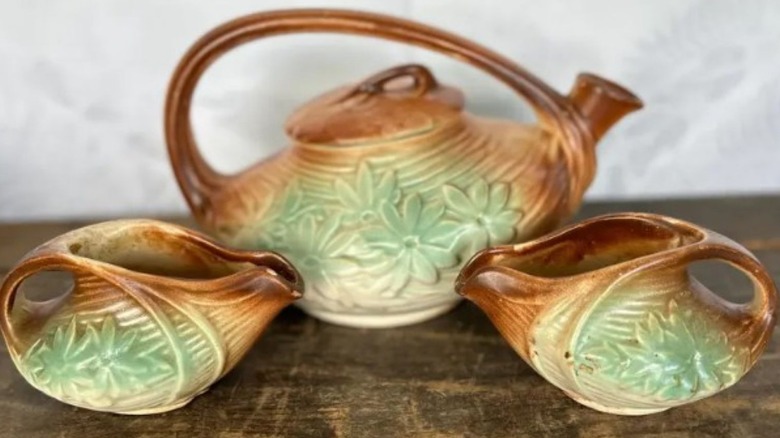
McCoy Pottery got its start in 1910 in Roseville, Ohio, where it was founded by Nelson McCoy Sr., his father, and five stockholders. Originally named the Nelson McCoy Sanitary and Stoneware Company, the brand began producing common everyday items, including jugs and jars. By the 1930s and 40s, McCoy Pottery had expanded their lines to include decorative pottery, which is what they are most known for today. Some of the most popular pieces are the iconic whimsical cookie jars shaped like fruit, clowns, and animals. The company also produced colorful and valuable flower vases and planters that look like wishing wells and spinning wheels.
Sarah Stafford Turner, resident architecture and design historian of House Digest, explains that McCoy's pieces from the 1930s to the 1960s are most valuable because there were fewer forgeries than in the 1970s and 1980s, so production was limited.
The company changed its marking system multiple times throughout the years, so identifying McCoy Pottery can be tricky. The most common mark is an overlapping "NM" or "McCoy" in raised print on the bottom. On these pieces, Stafford Turner also says to look for little inconsistencies, such as uneven glazing, which is one of the charms of the brand. The pottery eventually closed its doors for good in the 1990s.
Van Briggle brings art nouveau from the Rockies
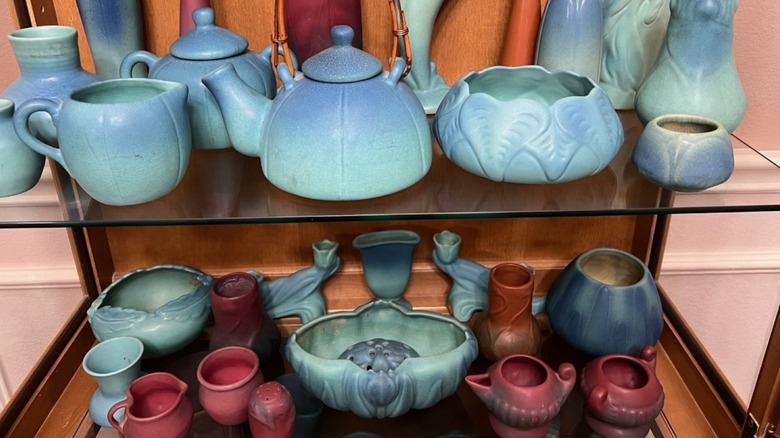
Van Briggle is one of the oldest American Art Potteries. The company began in 1899 when Artus Van Briggle traveled from Paris to Colorado Springs to seek a cure for his tuberculosis, an illness he contracted when he was a small child. He was an established painter, but wanted to see if he could apply his talent to create pieces of pottery. Most of his works feature a distinct matte turquoise or maroon glaze.
Stafford Turner explains, "The crème de la crème of this Colorado firm is their early art nouveau sculptural art pottery — but those pieces go for thousands and are rarely found outside museums and prized collections. But, you can still potentially take home a small, later (post-Art Nouveau) piece from this legendary pottery."
While rare, finding a piece of Van Briggle at a thrift store is a thrill for most vintage pottery brand collectors because even later pieces from 1950 and the 1960s are worth a lot of money. The bottom of Van Briggle pottery features a Double A logo, which often includes the Van Briggle name and Colo. Spgs.
Pacific Pottery captures the vibrant colors of the Golden Age
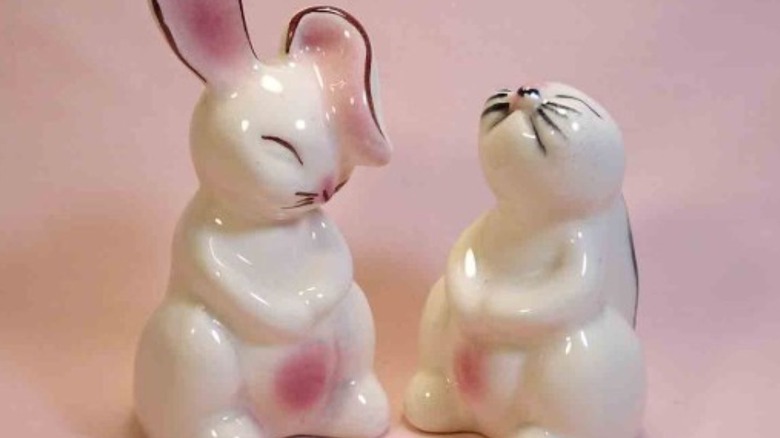
Pacific Pottery was formed in the early 1920s by Los Angeles industrial leader William Lacy. During that time, the economy had begun to decline. The pottery manufacturer decided that Americans needed a little color and cheer, so they started producing brightly colored pottery. The Hostess ware line was one of the most popular, featuring Art Deco shapes and mix-and-match dishes.
"For a long time, pottery was very hyperlocal, and Pacific Pottery is one of the few, later examples of that," says Stafford Turner. "This is a California brand, popular in that region in the midcentury period, but it never had mass appeal or national success. But their designs are fabulous echoes of a time gone by."
The markings on Pacific Pottery can vary, but the design is easy to spot. Stafford Turner notes, "They're known for experimental blotchy glazes...very abstractionist, very 'in' in the 1940s-1960s. It's one of those under-the-radar brands you'll likely only find around the West Coast, and it's really affordable." When you're out shopping, be on the lookout for bright, solid-color glazes that resemble Fiesta ware. These dishes are heavy with unique edges. If you flip it over, you might see a "Pacific" in-mold stamp with a number underneath. Other marks may include a "Made in the USA" mold.
Catalina Clay is the romantic souvenir of the stars
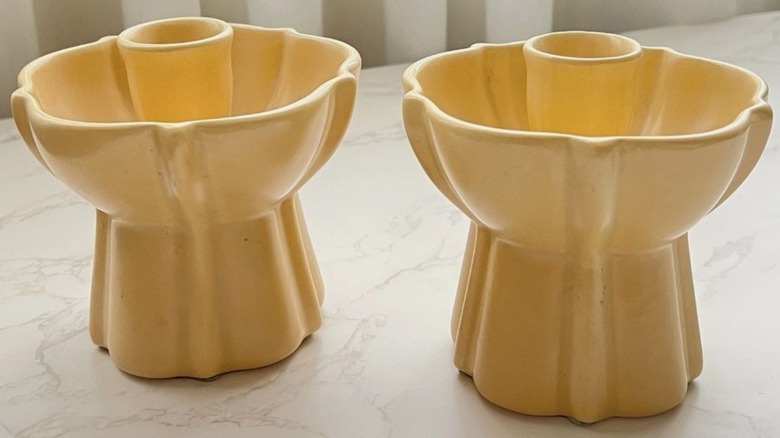
Catalina Clay Company started as a pipe and tile company in Southern California during the Golden Age of Hollywood in the 1920s. Because many of the pieces were made from Catalina Island's red clay, they were often sold as souvenirs to visitors. Like some of the first pieces, the red clay line is one of the most sought-after by collectors.
Owning a piece of Catalina Clay Pottery is like owning a piece of California history, because they contain images of the Catalina Casino and the steamships that would ferry visitors to the island. Stafford Turner highlights the aesthetic appeal: "Highly collectible among those who favor that primary color/Fiestaware-adjacent midcentury appeal. Also a California brand, Catalina thrived on thickly glazed, glossy wares in vibrant shades."
The red clay color is the first thing to look for when searching for Catalina Clay. You may also note a "Catalina Pottery" marking on the bottom. The very first pieces had a "Catalina Island Pottery" marking and may feature a number between 1 and 165, which indicates when the piece was made. In 1937, the company was sold to Gladding McBean, and they started making white clay pieces.
Hull is a prime definition of grandma chic and pastel florals
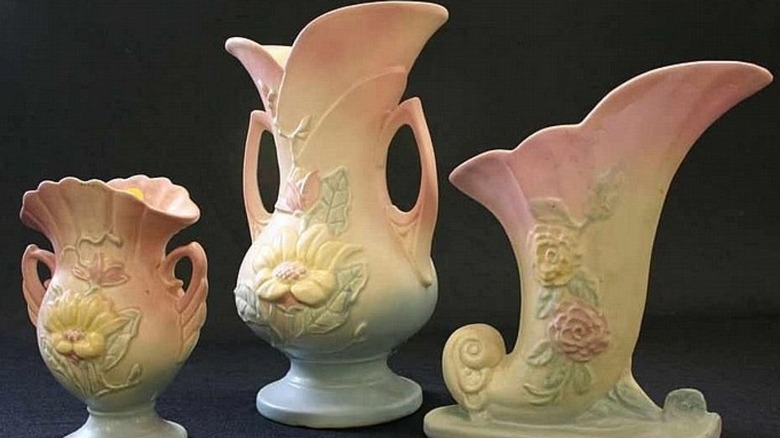
Hull Pottery was founded in 1905 in Crooksville, Ohio. The first pieces were stoneware, but in the 1940s, the company eventually moved on to art pottery. Today, Hull is best known for its "Grandma Chic" vibe. This design trend is a style that celebrates the nostalgic feelings you get as a child when visiting your grandmother's home. Whether you raid your grandma's house to score these finds or shop thrift store shelves, these pieces are prized for their matte pastel floral lines.
Stafford Turner explains, "Hull pottery was made in the prolific region of the 'pottery belt' in Ohio, throughout most of the 20th century. They're definitely known for their 'Grandma chic' — pastel and neutral palettes, low relief floral forms, and feminine styling."
Hull Pottery is known for its ombré effect. The bottom of the vase may start out pale pink and then finish with a soft blue at the top. Many pieces also feature raised flowers. Stafford Turner advises: "Unlike Pacific Pottery, Hull was produced in explosive quantities, so you're sure to find a good deal if you know what to look for. As with any pottery, examples that are free of cracks or chips are worth the most." Flip the pottery over and look for the "Hull U.S.A." mark or "Hull Art U.S.A."
Red Wing spans rustic stoneware to Mid-Century Modern
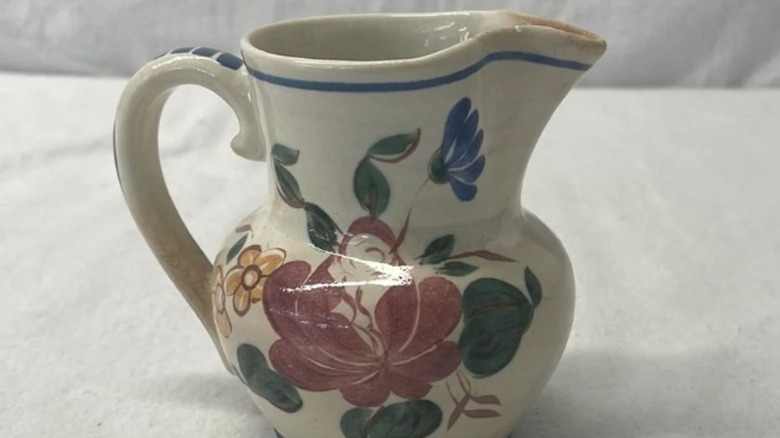
German immigrant John Paul arrived in Minnesota in 1861. He noted the amount of red clay in Red Wing and started Red Wing Pottery. The company began making essential items, like pickling crocks, water jugs, and coolers. "Red Wing is mostly known for their earthy stoneware crocks and jugs," says Stafford Turner. "But they actually made so much more — from plates to candleholders."
Early pieces also have a salt glaze with blue decorations. When you're out hunting for pottery, look for the Red Wing Prismatique line of the Smart Set designs. This pottery features flecked glazes or those with a satin-matte finish. Stafford Turner notes, "Among the most collectible Red Wing pieces are their colorful, floral form art vases designed by Charles Murphy." The Blind Pigs are also another centuries-old decor piece you should look for when thrifting.
To identify Red Wing Pottery, look for an embossed stamped logo that says "Red Wing Stoneware" without a wing drawing. Newer pieces have a circular ink stamp on the bottom, but these pieces aren't as sought after.
Zsolnay is the iridescent Hungarian Holy Grail
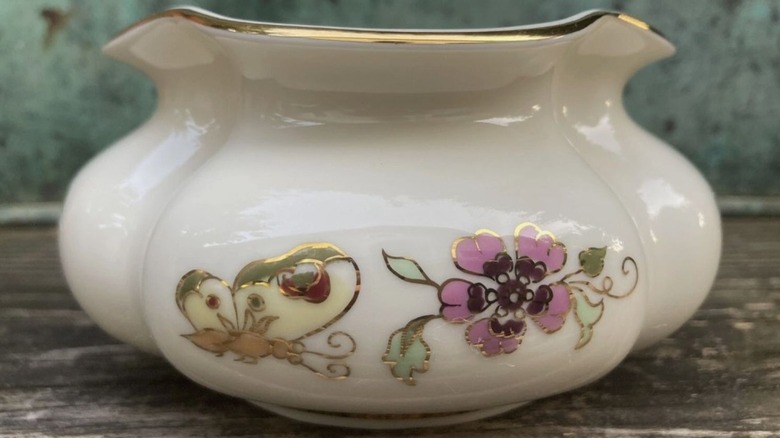
While the majority of the brands on this list are American, Zsolnay is the one Hungarian pottery brand. Established in Pecs in 1853, Zsolnay developed a secret glaze technique called eosin, which gave its pieces a metallic sheen that looks like oil on water. Unfortunately, finding a piece of Zsolnay in a thrift store can be extremely difficult, but it does happen, because some people often mistake the sheen for carnival glass. "Zsolnay is a rare prize at the thrift shop, but one of those brands you should always look for," advises Stafford Turner. "This Hungarian pottery firm is famous for its curvy, organic vases decorated with metallic-looking finishes."
Be on the lookout for pottery with a luster finish. As you turn the pottery in the light, the finish should shift colors. When you flip the piece over, you should see a mark with five churches. It looks like a cluster of towers or steeples. Some have a number indicating the year it was made. If you see a piece with the mark, grab it. Even a damaged Zsolnay has value.
Roseville remains the Heavyweight Champion of floral art pottery
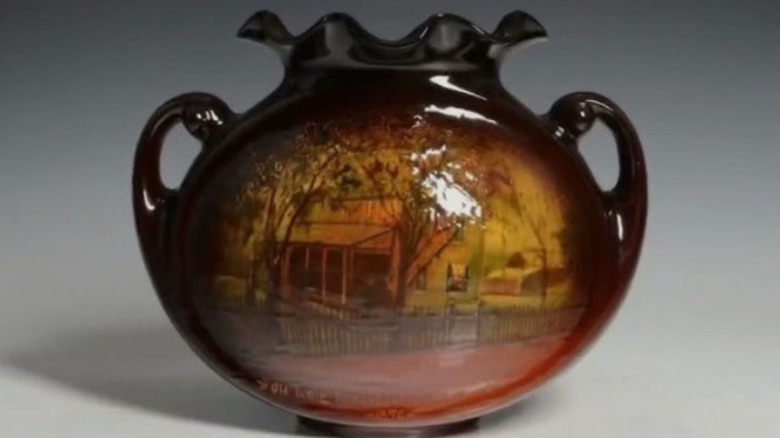
In the late 1800s, George F. Younge founded the Roseville Pottery Company, which was named for the town where it was located. Dominating the market from 1900 to 1954, Roseville was known for mass-producing its oxblood red ceramics and art pottery with deep red glazes. "A classic, widely known American art pottery firm that flourished in the arts & crafts era," says Stafford Turner. "They're well known for their naturalistic motifs, especially floral-decorated pots and vases."
Roseville pottery varies widely in worth. The White Pinecone line is one of the most valuable, featuring white and ivory pieces with soft blended shades of blue and green. When searching for this pottery, it's important to note that there are a lot of reproductions out there. Stafford Turner warns, "Large, original Roseville pieces can be highly collectible (and expensive), and they are widely reproduced, so be very careful when looking at stamps and marks. Authentic Roseville should feel heavy and high-quality."
Most Roseville patterns will have a raised or incised mark that says "Roseville" or "Roseville U.S.A." on the bottom with a three-digit shape number followed by a dash and a second number that indicates the size. This brand is one you'd be lucky to find at the thrift store.
Weller offers an affordable option for new collectors
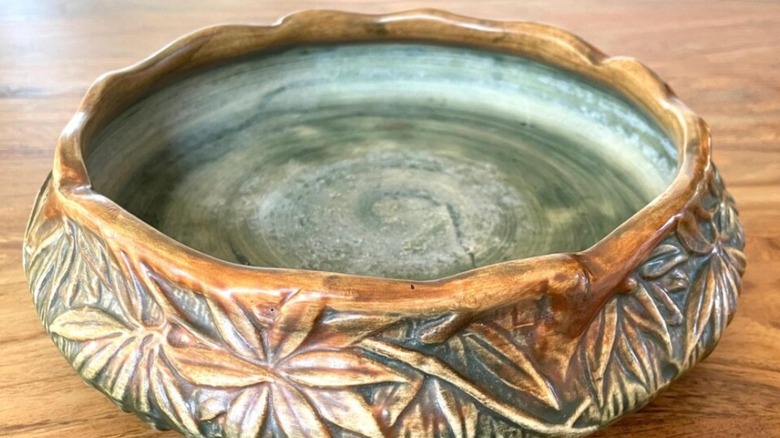
Weller Potter was founded in the late 1800s in Fultonham, Ohio, by Samuel Augustus Weller. The company produced a large number of styles, from high-gloss brown glazes to nature-inspired matte lines.
Weller Pottery is a popular thrift store find among collectors. "More on the affordable side of the American pottery spectrum, Weller made molded, floral-form vases and pots much in the same vein as McCoy," Stafford Turner notes. "The great thing about Weller is that it's not ridiculously priced — their more collectible wares (like the high art nouveau designs) go for hundreds, but select smaller designs are snaggable for under $50."
Weller produced many different lines, from floral-form cases to hand-painted art pottery, which can make it tricky to identify the brand. For example, the Woodcraft line resembles tree bark with woodland creatures attached to it. The Coppertone line has a green and copper mottled glaze with frogs. Markings on the bottom range from "WELLER" in block letters to a script signature.
Honorable mention: Clarice Cliff created bold art deco geometrics for the Jazz Age
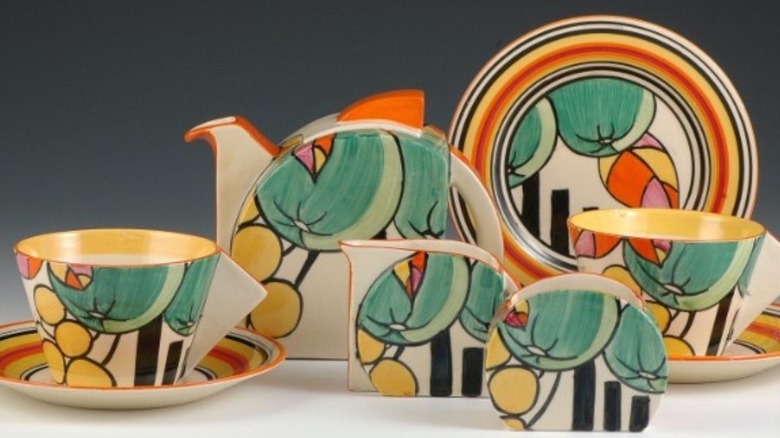
Clarice Cliff was interested in pottery when she was just a teen. She started designing as an apprentice and eventually rose to the role of art director at the A.J. Wilkinson factory in 1916, which was unheard of for a woman at the time. In the late 1920s, she eventually opened Newport Pottery, where she experimented with different techniques and glazes.
"Clarice Cliff made strides for women in ceramics in the 1930s and began her own firm making brightly colored painted wares," Stafford Turner explains. "Today, her pieces are highly collectible."
Clarice Cliff pieces are typically easy to spot once you know what you're looking for. The design features triangles, bright sunbursts, and floral cottages, and the painting technique is bold, leaving behind brush strokes. The bottom of the pottery is typically stamped with "Bizarre by Clarice Cliff." "Finding her pieces in a thrift shop is a rare treat, but if you do find them, they are considered a bit of a 'holy grail' for many ceramics collectors." If you see a plate that looks like a Picasso painting, flip it over.
Honorable mention: Wedgwood delivers the timeless appeal of matte Jasperware
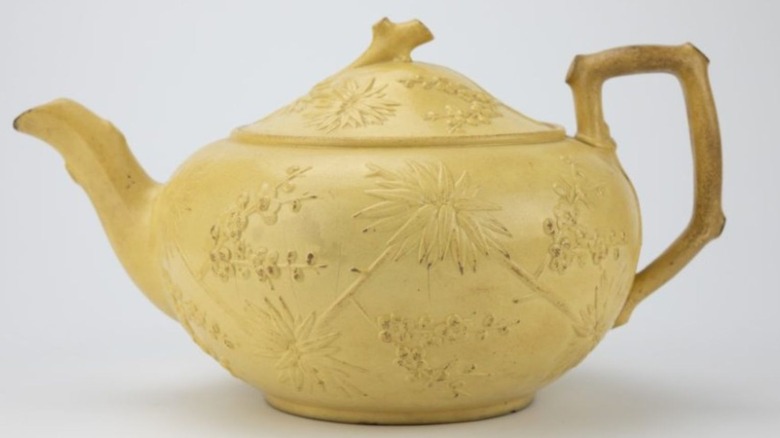
Josiah Wedgwood founded his company, Wedgwood Pottery, at Ivy House Works in Bursiem, England, in 1759. He gained notoriety in the industry for inventing Creamware and Jasperware, which were commonly used to create elegant dining sets, including the famous "Wedgwood Blue."
"The iconic British ceramics firm makes nearly everything, from plates to planters," says Stafford Turner. "But, if pottery is your thing, their jasperware is highly collectible and thriftable in abundance."
The pieces look like fine china, with a matte, unglazed finish that's usually in blue with white classical figures. "Lilac, yellow, and sage green are among the rarest jasperware colors, so if you find key pieces in these shades, they are worth grabbing!" Older pieces will have "WEDGWOOD" stamped on the bottom. These are the ones you want to rescue from thrift stores. Pieces after 1891 will say, "WEDGWOOD MADE IN ENGLAND." While they aren't as valuable, they still may be worth picking up if you're a collector.