

11 Butterfly Species That Don't Migrate (& How To Best Support Them In Winter)
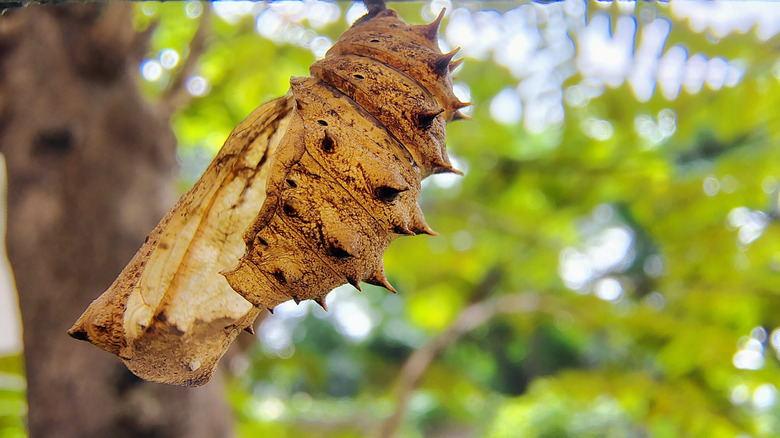
If you have ever talked to someone about butterflies, chances are, they have brought up monarchs. And honestly, these resilient creatures deserve the mention. Every year, these winged travelers take on a journey of about 3,000 miles to migrate south, chasing warmth just to stay alive. However, not all butterflies take on such daunting journeys. Instead, they wait out the winters right where they are by entering a state of dormancy known as diapause. Diapause is just like hibernation, but for insects. A few butterflies that don't migrate in winter include mourning cloak, eastern comma, eastern tiger swallowtail, and red-spotted purple butterflies. These species survive the cold by hiding in places like tree crevices, under bark, and leaf litter. And, if you want to support them through the winter, you will have to take on a "messy" approach to winter gardening.
For instance, instead of raking up fallen leaves and cutting down dried grasses and perennials, you can leave them as they are. These things serve as critical overwintering sites for many non-migrating butterfly species. Similarly, if you know butterflies overwinter in your yard or garden, avoid using insecticides. Also, if you can, plant early- and late-blooming plants. Such plants will not only help any lingering butterflies through the winter but also ensure that they have a fresh supply of nectar when they emerge again. Keep in mind that depending on the species, the life stage — egg, pupa, larva — in which these butterflies hibernate can be different.
Giant swallowtail
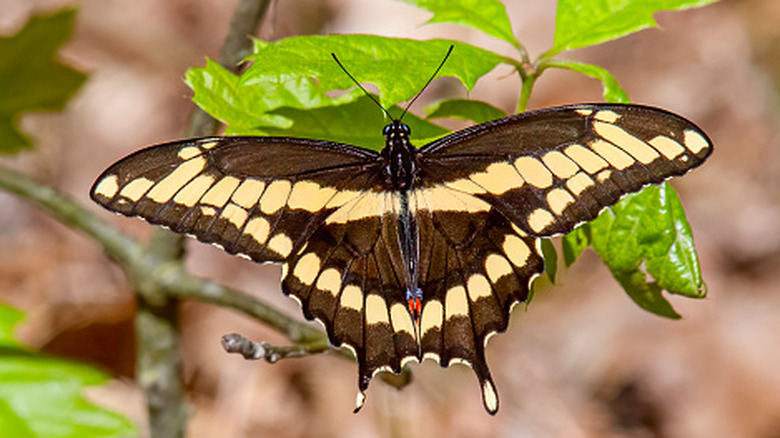
The giant swallowtail is the largest butterfly species in the United States. With wings that can span up to 6 inches across, the butterfly is hard to miss. However, size is not its most impressive feature. What makes it really unforgettable is its exotic, breathtaking colors that can have anyone staring. And since it is non-migratory, the giant swallowtail survives the winter as chrysalis attached to woody stems and dried or dead twigs. Therefore, if you want to help it survive the cold, avoid cutting down your plants in winter.
Mourning cloak
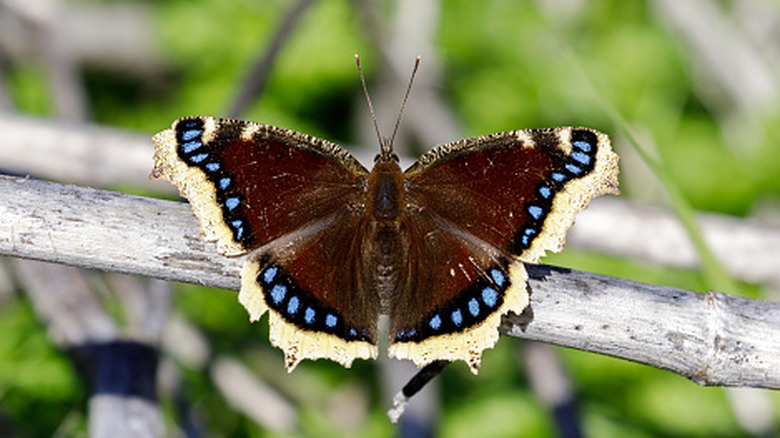
The mourning cloak is another large butterfly on this list. Its wings can span about 4 inches across and are velvety brown and red with creamy edges. These butterflies do not migrate and are widely present across the U.S., particularly in northern states. You can sometimes even see them in the snow. Also, they are often the first butterflies to emerge in spring. Regarding winter survival, the mourning cloak overwinters as an adult. They tuck themselves into tree cavities, loose bark, or sometimes under tree logs. So, the best way to help them is to leave your yard undisturbed till the spring.
Eastern tiger swallowtail
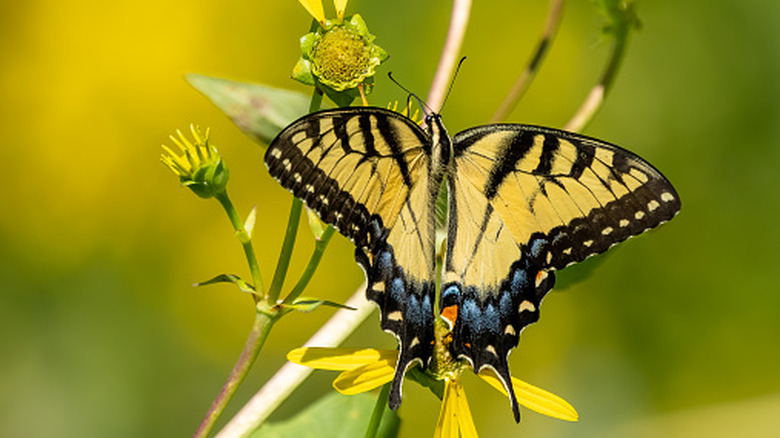
Loved by gardeners, the eastern tiger swallowtail is identifiable by its tail, which sort of looks like that of a swallow bird. You can often see them flying high across treetops in eastern North America from the Rocky Mountains to central Texas. Their wings are yellow with black bands and measure about 2 to 4 inches across. The eastern tiger swallowtail overwinters as a chrysalis, so to help them survive through the winter, leave the fallen leaves on the ground and twigs of plants undisturbed.
Red-spotted purple
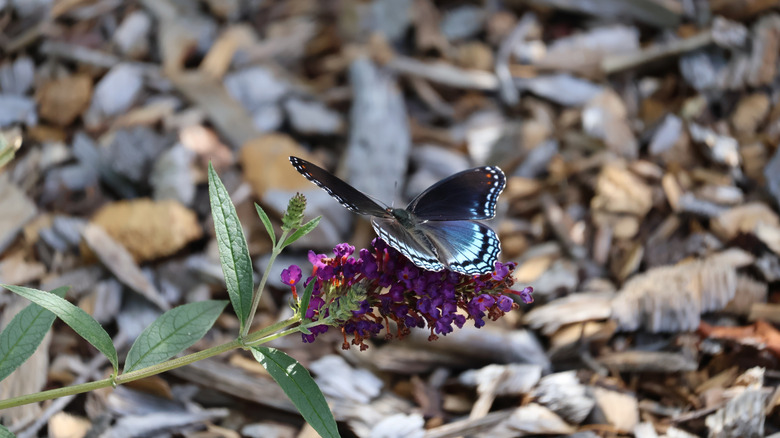
Another non-migratory butterfly on the list, the red-spotted purple can often be seen roaming through woody residential areas in its range. These butterflies are masters of mimicry. Their larvae look like bird droppings, and the adults closely resemble the poisonous pipe vine swallowtail butterflies, keeping hungry birds at bay. As for overwintering, the red-spotted purple butterfly uses a hibernaculum. It is a protective cone that looks like a leaf and is often attached to large shrubs like willows with silk threads. So, if you see any rolled leaves shaped like cones, leave them alone.
Spring azure
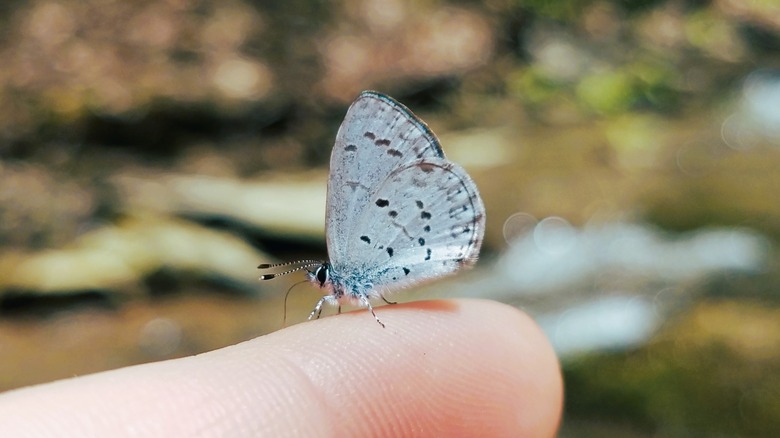
Present across much of the United States except parts of Texas, coastal Louisiana, and most of peninsular Florida, the spring azure could be easily one of the most breathtaking butterflies you might see flying around your yard and garden. Its wings are eye-catching, dusty, and silvery blue with pale undersides. However, it is still pretty easy to miss because of its small size. Being non-migratory, the Spring Azure also overwinters in place. It does so by hibernating in the chrysalis (pupa) stage. The chrysalis is light brown with some dark markings and often overwinters in a crack in the ground.
Eastern comma
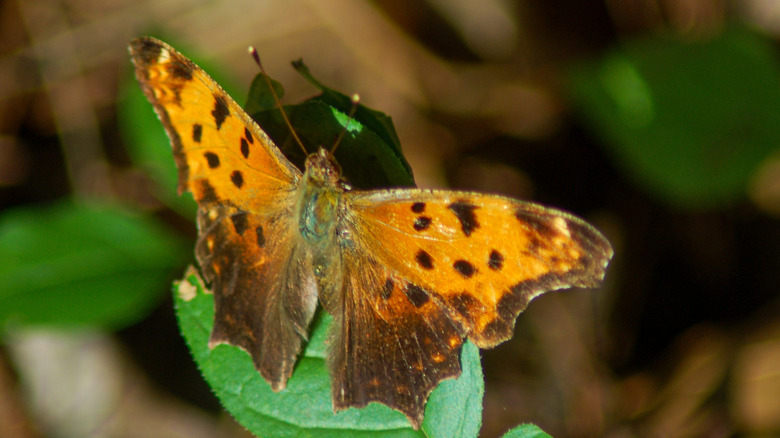
The eastern comma gets its name from a comma-shaped mark on the underside of its hindwings. It is extremely well camouflaged and looks like a dead leaf when it closes its wings. The wings have ragged edges and can span about 1½ to 2¼ inches across. Being non-migratory, it can be seen all year long in warm regions. As for overwintering, the eastern comma also overwinters as an adult under tree bark just like the mourning cloak. So, the best way to support them is to leave the trees undisturbed.
Gray comma
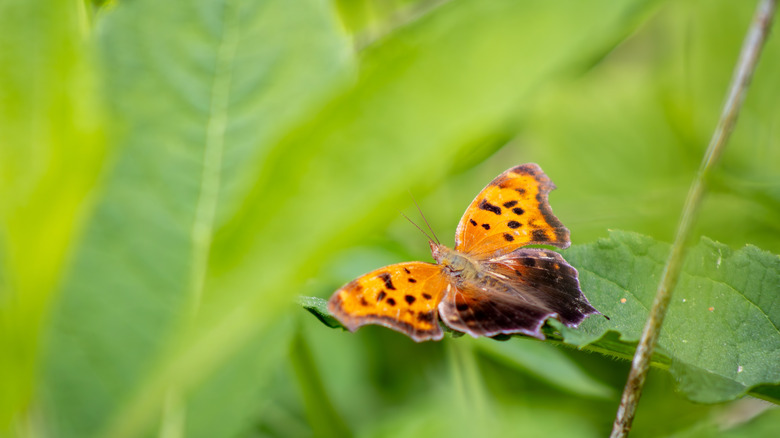
The gray comma butterfly is closely related to the eastern comma. The only two differences are that the comma-shaped mark on its wings is thicker and the wings are somewhat grayish with stronger striations. It occurs across the northern U.S., extending south to North Carolina and the central Plains. Nevertheless, just like many early emerging butterflies, it also rarely visits flowers. Instead, it relies on minerals from damp soil, plant sap, and juices of rotting fruit and dung. And since it is non-migratory, it overwinters in its native range by seeking sheltered places where it can hide from the cold.
Great spangled fritillary
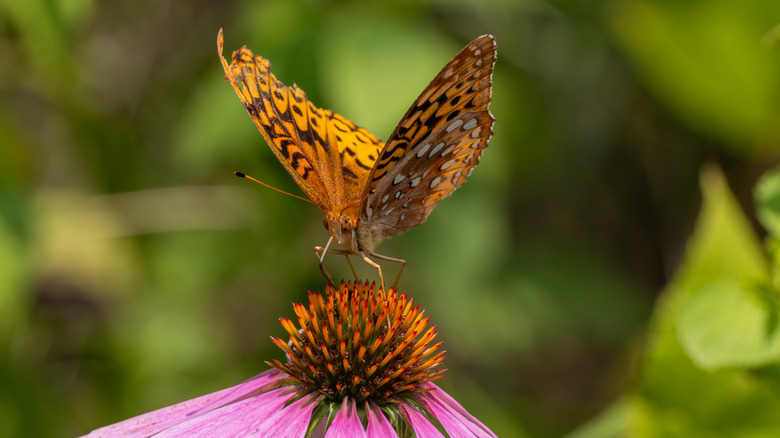
The great spangled fritillary is the most common fritillary butterfly — species with orange-brown wings and dark spots – present across most of the United States. They have large wings, measuring about three to 4 inches across. As for overwintering, their larvae often gather together and hide under cover in places like under rocks, fallen leaves, and other debris in the yard. And once winter is over, they tend to come out as soon as their host plants, wild violets, start to bloom. So, if you want to help them, leave the soil undisturbed and plant some violets in your yard.
Viceroy butterfly
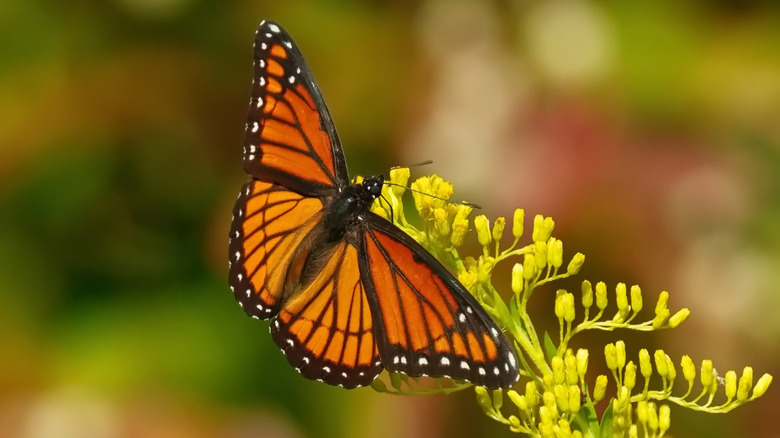
The viceroy butterfly can be found pretty much all over the United States. It is often confused with monarch butterflies in the garden due to the visual similarity between the species. The viceroy butterfly, however, is a little smaller and has a few white spots within the black of its wings. As for winter survival, just like many other species on the list, the viceroy butterfly enters diapause in its larval (caterpillar) stage. It does so by eating a large portion of the leaf and then using the rest to build a shelter made of silk, also known as a hibernaculum.
Bronze copper
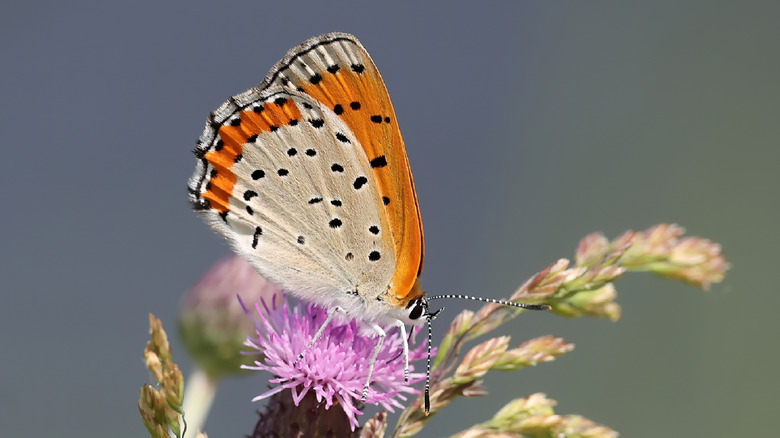
If you want to help butterflies in winter, don't overlook the bronze copper. It is declared endangered, which makes your support even more important. You can easily identify it with its coppery brown (somewhat yellowish in females) wings with smudgy dark spots. As for winter survival, the bronze copper is non-migratory and spends the winter in a dormant egg stage. The eggs are laid on the leaves, seeds, and petioles of the host plants, which include water dock (Rumex orbiculatus), sorrel (Rumex spp.), and curly dock (Rumex crispus).
Question mark
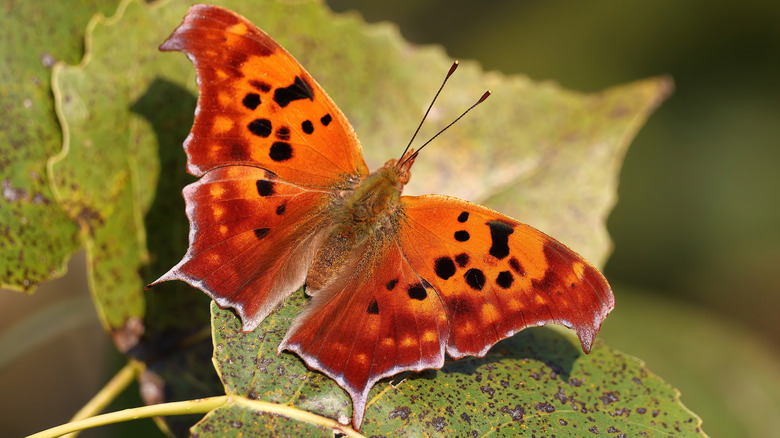
Following the eastern comma and gray comma comes the question mark — another butterfly on the list with a punctuation-inspired name. And just like the commas, it gets its name from a question mark-shaped marking on its wings. It is present across much of the eastern U.S., extending west to Arizona, Wyoming, and Colorado and can be seen flying from April into November. The butterfly is extremely cryptic, resembling dead leaves often found in moist places. When it comes to surviving winter, the question mark butterfly overwinters as an adult. Some adults, especially from a winter brood, do migrate.