

Is The Lake On Your Property Clean? Here's How To Determine
For many people, the appeal of having your very own lake can be a deciding factor when buying a home. However, while buying a house on a lake offers benefits such as visual appeal, the ability to see a wide variety of wildlife, and even potential recreational activities, it also comes with the responsibility of keeping it clean — and safe. As a result, there are several factors to monitor when assessing the cleanliness of your property's lake.
In most cases, a healthy lake is a clean lake, since visual appearance can often be closely linked to parameters like clarity, turbidity, and pH. As a result, the first step in determining whether or not the lake on your property is clean is to assess its overall health. This means testing the water itself as well as paying attention to your surroundings. After all, if local wildlife won't come near your lake, that may be a red flag you don't want to ignore.
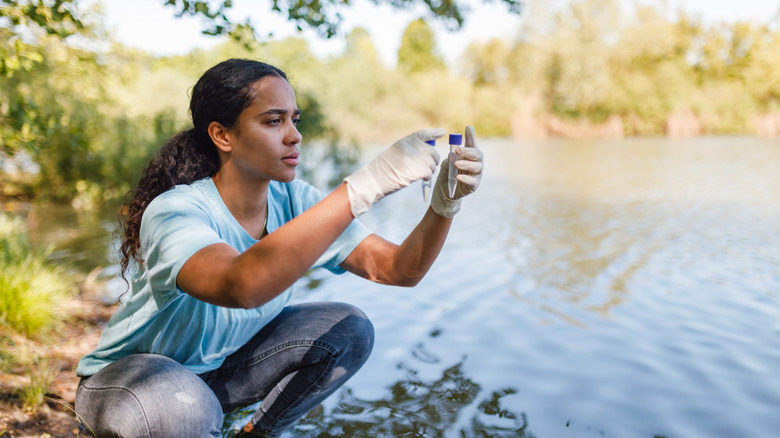
There are DIY kits available if you want to test your lake water yourself. However, these may only offer a limited perspective, and some may not be as accurate as professional testing. You may want to consult a local professional, especially if the lake will be used for swimming or other recreational activities.
Consult online government resources
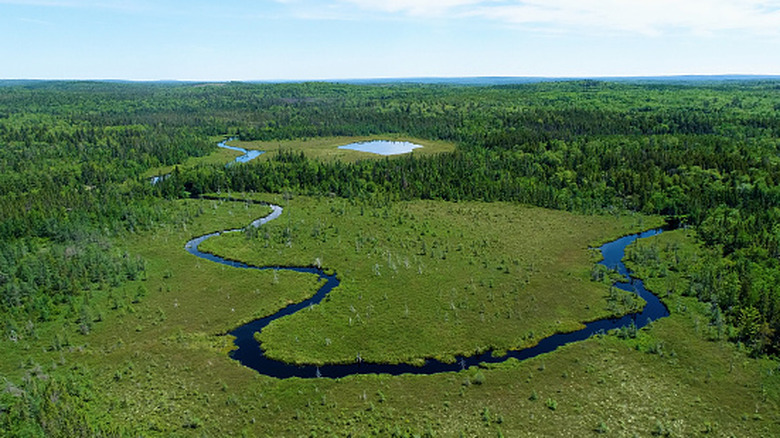
Did you know that you can gain a general understanding of your lake's health without ever leaving your home? While hands-on testing is still needed for specifics, the Environmental Protection Agency provides watershed information across the United States. This means that even if you can't look up your specific lake, you may be able to learn more about the nearby water sources feeding into it. Even common practices such as using chemicals when gardening or in lawncare can impact local watersheds.
Check clarity
Water clarity refers to how much light can penetrate the water in your lake. When light filters through the water column, plants can photosynthesize, and aquatic organisms can see and navigate. However, if water is heavy with debris or sediment, it can block light and negatively affect local wildlife. Poor water clarity can also affect your recreational activities. After all, it may not be appealing (or safe) to swim in dark water you can't see the depths of.
Pay attention to turbidity
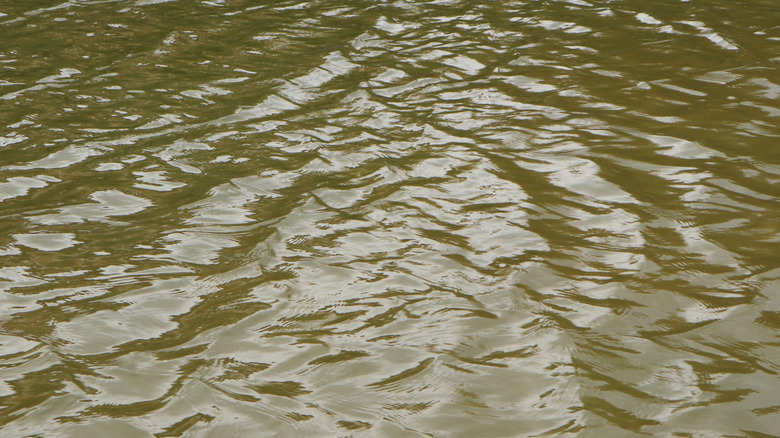
Turbidity measures how cloudy your water is. While it is related to clarity, these factors aren't the same, although both play a role in the cleanliness of your lake. Water often becomes cloudy when organic debris, such as decaying leaves or sediment, is present. As far as lake health goes, high turbidity can signal increased algae growth, reduced dissolved oxygen, and generally poor lake conditions.
Look at surrounding wildlife

The wildlife surrounding your lake — or rather, the lack thereof — can be an excellent indication of how clean your water is. Healthy water tends to attract a diverse variety of birds, fish, amphibians, and insects. Although you'll still want to analyze parameters, paying attention to any visiting critters can be a good place to start. Dead fish or a noticeable lack of wildlife is a red flag that your lake isn't in good shape.
Test water temperature
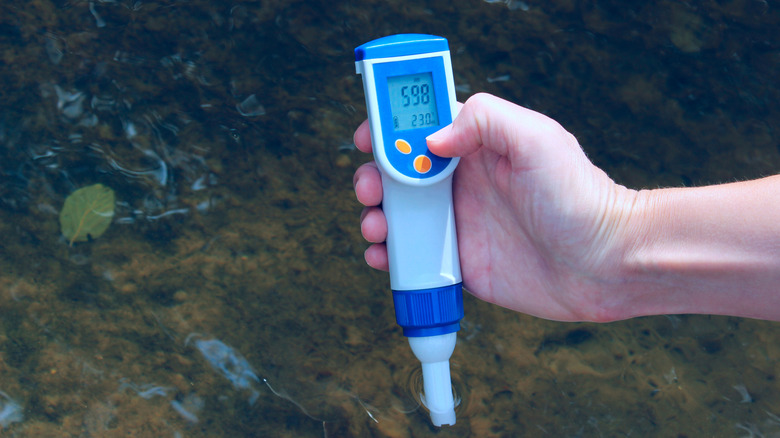
If your goal is to swim in your lake, keeping up with the temperature of the water may seem like a factor focused on comfort alone. However, temperature actually plays a role in how clean natural water sources are. When water temperatures are elevated, it can make it difficult for beneficial species, both plants and animals, to survive. On the other hand, warmer water can also encourage unwanted organisms, such as algae, that reduce water quality.
Make notes of any odors
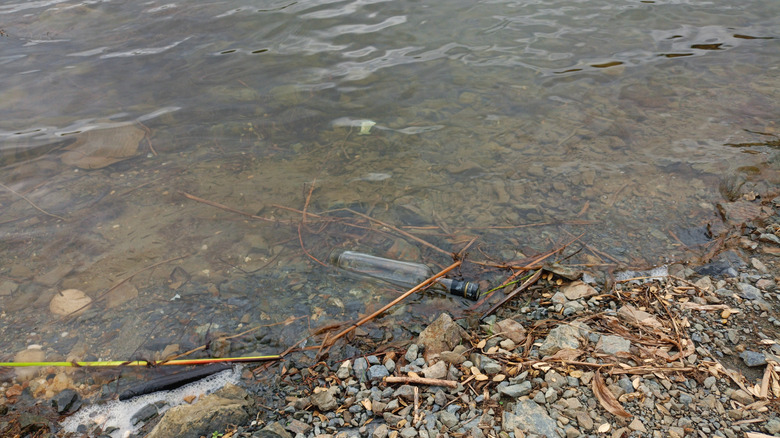
Few things are worse than walking up to the shore of your lake to enjoy the natural beauty, only to catch a whiff of a foul odor permeating from the water itself. Algae, pollution, litter, and an abundance of decaying organic material can all give the lake on your property a funky smell, while also indicating the water may not be as clean as it looks on the surface. Sometimes, the cause of the smell may be visible, such as a carcass or garbage. Other times, you may need to test the water parameters.
Test water pH

The pH of your lake's water impacts the health of its ecosystem. With the right pH, your lake can host a variety of plants and wildlife that help maintain balance, leading to cleaner water overall. However, when the pH becomes uninhabitable for wildlife, it can allow algae or other problems to fester. For water optimized for most fish, shellfish, and plants, aim for a pH between 6.5 and 9. Outside this range, you may need to identify the source of the imbalance and implement remedies for healthier, cleaner water.
Determine dissolved oxygen levels
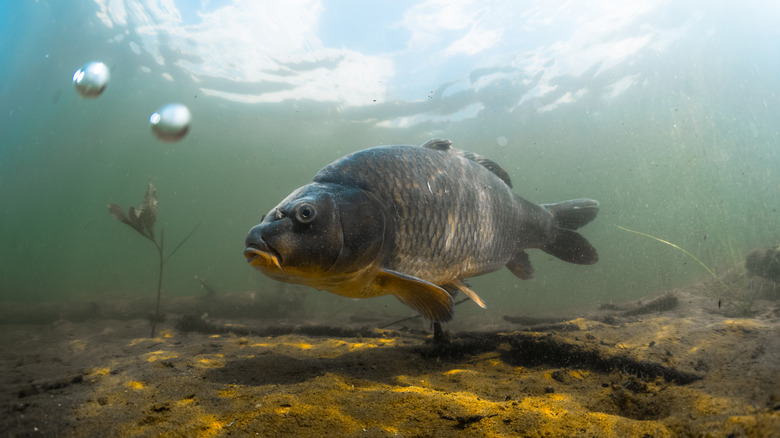
As noted above, turbidity can impact dissolved oxygen levels. But what does that have to do with the cleanliness of the lake on your property? Dissolved oxygen levels are closely tied to the overall health of your lake ecosystem, which plays a direct role in its cleanliness. In a lake with low levels of dissolved oxygen, many fish species die off, leading to an increase in organic matter, which you may not wish to swim with. Low dissolved oxygen can also lead to increased fly and worm populations in and around your lake.
Pay attention to the surface of the water
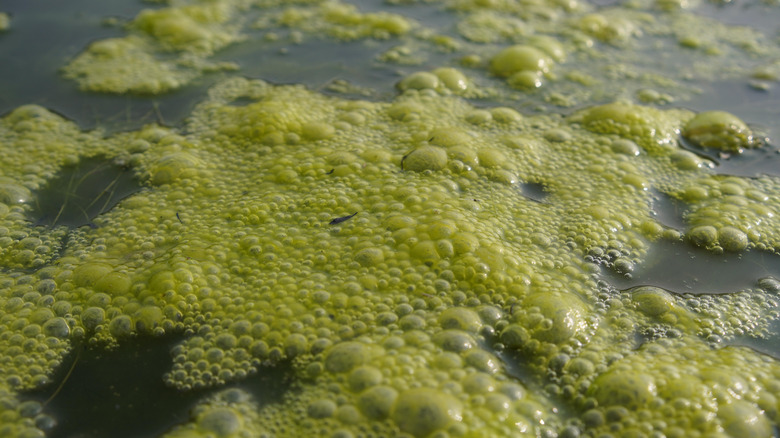
A quick glance can tell you a lot about the condition of your lake. For starters, you can spot any litter or even dead wildlife that may be an indication that your lake isn't as clean as you'd hoped. However, in some cases, you may also be able to see the signs of severe algae blooms from the surface. This includes seeing those pesky organisms themselves or other common symptoms like foam in the water. Taking the time to pay attention to your lake's appearance can help prevent you from interacting with unclean water without proper knowledge or personal protective equipment.
Test nutrient levels
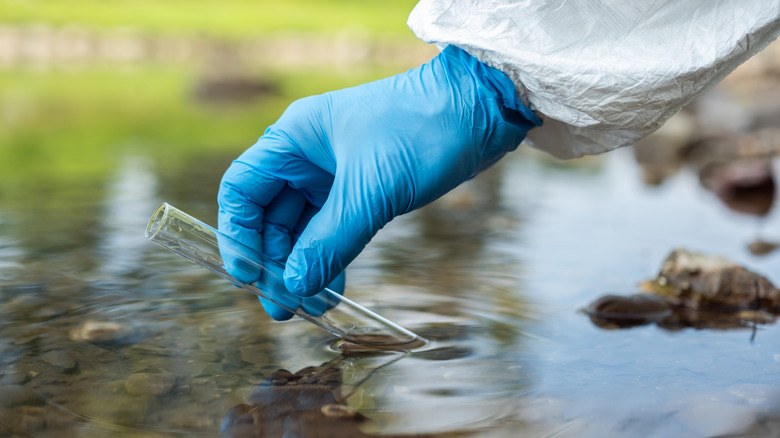
While it may seem like too much of a good thing is never a bad thing, if your lake develops too many nutrients, it could lead to (or even be caused by) unclean water. As a result, nutrients are one of the top parameters to check when determining how clean the lake on your property is. There are several reasons your lake may have excessive nutrients. As organisms decay, they release nutrients back into the ecosystem. Nutrients from lawn products that enter the water through runoff can also contribute to larger algae populations.
Look for plants (and plant lookalikes)
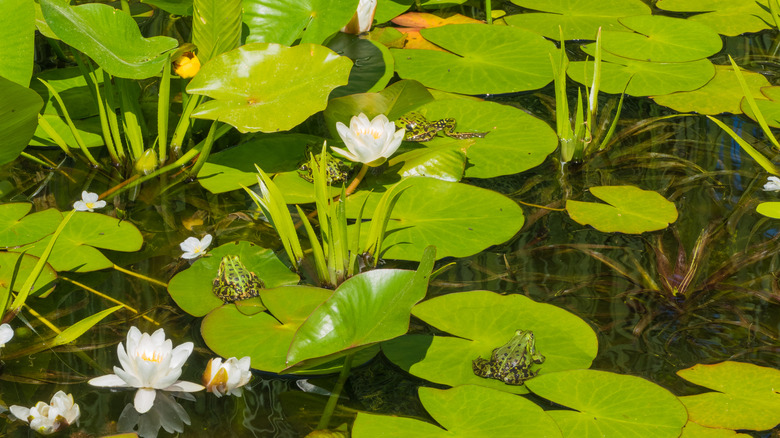
Plants play a large role in keeping our waters clean, and that extends to private water sources like your lake as well. As a result, to judge how clean your water is, look for a variety of native species in and around it. At the same time, you can look for unwanted plant lookalikes, specifically algae. Algae isn't a true plant, and while these species aren't all bad, overly large populations can take a toll on your lake's cleanliness.
Make note of any human interference
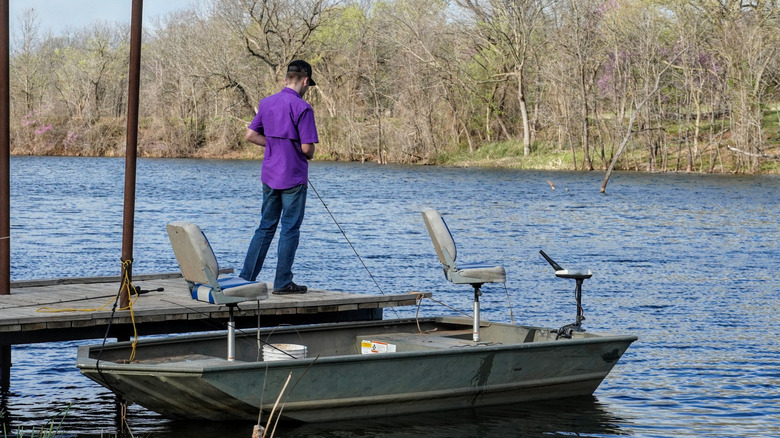
If you've just moved onto a property or share your lake with neighbors, this can be a bit more difficult to judge. However, how and how often people interact with your lake can impact its cleanliness, whether through fishing or swimming. One of the best ways to keep your lake clean without giving up your fun recreational activities is to strive to leave your lake better than you found it. This means cleaning up litter and hunting or fishing responsibly. Any signs of misuse may indicate less-than-clean water.