

Will Using Water Softener Salt To Melt Ice Ruin Your Driveway? Here's What To Know
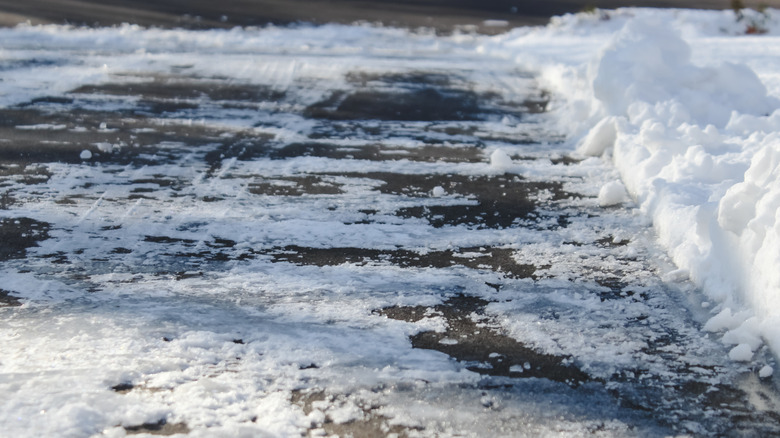
Hold up. Can you use water softener salt to keep your driveway ice-free, or will it completely ruin your concrete? This question caused a bit of a stir online recently. An unsuspecting TikToker's comment section erupted into debate over whether this was a genius budget hack or a recipe for disaster. Many commentators mentioned that water softener salt can not only cause concrete pitting but also damage grass and pose risks for pets, too. Well, this time, the TikTok commenters have it right: It's not a great idea to use water softener salt on your driveway.
While rock salt and water softener salt share the same chemical base, they also feature key differences that help them accomplish their respective purposes. Water softener salt is mostly made up of high-purity sodium chloride, while rock salt features a number of additives to aid in its efficiency. Rock salt is designed to melt ice faster and at a lower temperature. Meanwhile, the chemical composition and pellet size of water softener salt weakens concrete, damages nearby plants, and can cause discomfort for pets.
Using water softener salt on your driveway is a bad idea
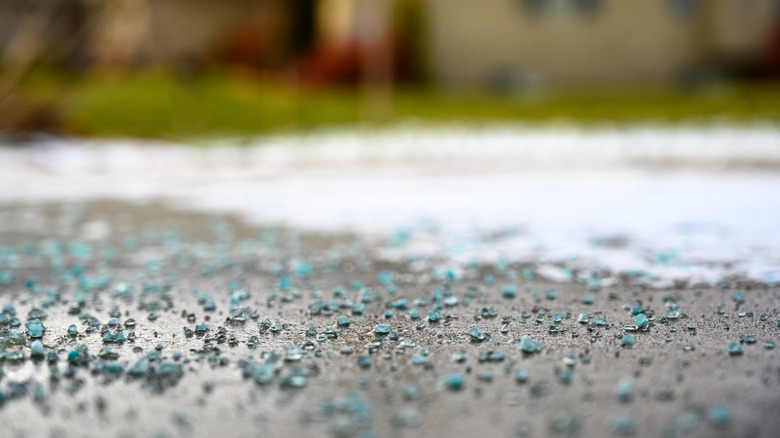
It's important to take proper precautions to prevent melting snow from wreaking havoc around your home. Part of that process is managing snow and ice on your driveway and sidewalks. While it's tempting to reach for a cheaper "alternative" to rock salt, water softener salt is simply not safe to use on your driveway. As it seeps into porous concrete, it exasperates freeze-thaw stress, leading to pitting, surface erosion, and cracks.
Rock salt is a safer bet for keeping your driveway ice-free. Sprinkle a light layer down before snow and another layer once snow falls for the best results. Keep in mind that there's still a chance rock salt can cause damage. To prevent your driveway from cracking or pitting, mix your rock salt with sand. This will also help your rock salt last longer, saving you money. Once temperatures rise, be sure to sweep up and discard any leftover salt.
If you're concerned about using rock salt, there are a few alternatives you can explore. For instance, combine Epsom salt and sugar in a 1-1 ratio for a safer alternative for plants. Calcium magnesium acetate (CMA) is another eco-friendly tool for keeping your driveway ice-free. However, these can be a bit pricey. For a cheaper alternative, use alfalfa meal, wood ashes, or coffee grounds to both improve traction and accelerate melting. Or, if you're willing to spare no expense, you could opt to install a heated driveway or use snow melting mats to clear away snow and ice.