

This Cactus Is A Unique-Looking Indoor Plant That'll Thrive In Your Humid Rooms
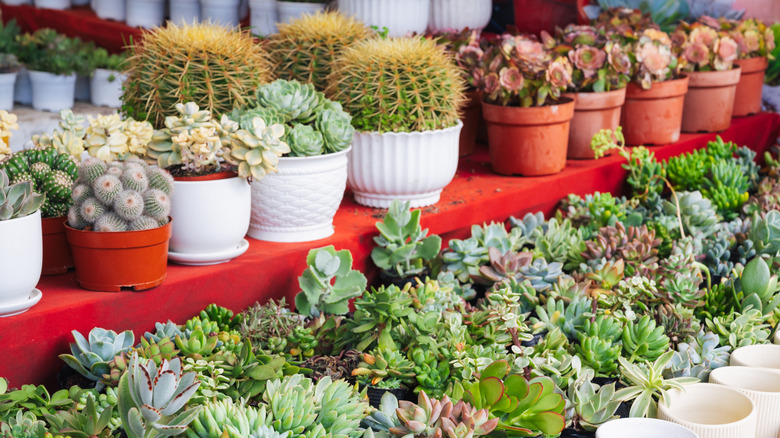
Houseplants offer an easy way to uplift the aesthetic of any room. Plus, unlike some other home decor, they are (usually) inexpensive and come in a wide range of sizes, colors, and shapes. No matter what interior style you've cultivated, you're sure to find a plant that fits. Cacti are a particularly popular choice. However, they're not without problems — namely, most species don't like humidity. This poses a challenge for cacti-obsessed homeowners trying to decorate laundry rooms, washrooms, and kitchens. Luckily, though, you don't have to settle for artificial plants. The Rhipsalis genus encompasses a range of unique-looking cactus species that thrive in moist indoor environments. Unlike most cacti, which hail from dry climates, Rhipsalis species are native to tropical and subtropical rainforests.
This adaptation to life in rainforests is exactly why they love the high humidity levels and are moisture-loving houseplants ideal for your bathroom. Identifying species in the Rhipsalis genus can get a bit confusing because the various common names — from mistletoe cactus and spaghetti cactus to coral cactus. At a glance, you can understand why these name fit. The various species all have long, slender, cylindrical, and many-branched green stems that lack the intimidating spikes common to most cacti. Plus, they have a cascading growth habit, with their tendrils reaching tens of feet long in some cases. This makes them excellent candidates for people looking for trailing plants perfect for hanging baskets in windows or dull corners.
Choosing a Rhipsalis cactus and helping it thrive indoors
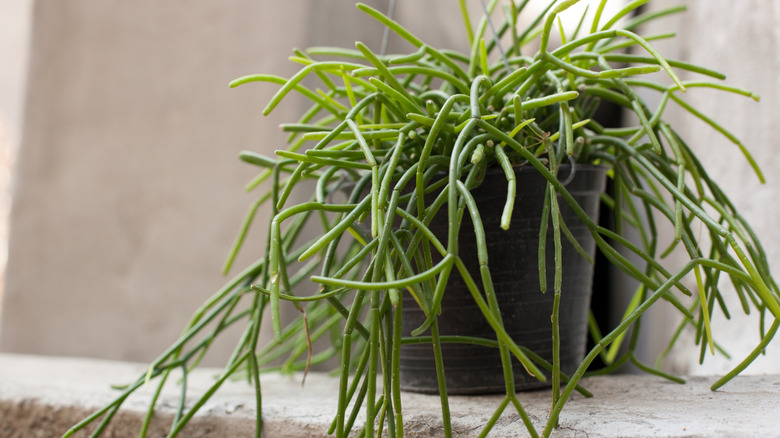
With about 45 species in the Rhipsalis genus, some being epiphytic, meaning they grow on other plants, and some being rare, it can be somewhat hard to decide which Rhipsalis they should bring home. Ideally, you want something that is easily available, grows well in soil or ground, and is easy to take care of. And luckily, there are many Rhipsalis cacti that meet these criteria. Take, for instance, the mistletoe cactus (Rhipsalis baccifera). It is one of the most iconic Rhipsalis cacti, known for its pencil-thin, deep-green stems. Even better? It produces translucent white and pink berries, too. However, if you want something bushier, there is the rice or coral cactus (Rhipsalis cereuscula). It has tiny, highly divided branches that look like grains of rice, hence the name.
The jungle cactus (Rhipsalis pilocarpa) is a great choice for people who want a bit of texture, thanks to its soft, hair-like bristles and bright pink fruits. However, no matter which species of Rhipsalis cacti you decide on, it will require indoor humidity levels of 60% or higher. Without dampness, the plant's leaf tips may turn brown and crisp, and it might grow slower. If your home is dry, you'll need to add moisture to the air, especially in winter — heating systems are bad news for Rhipsalis cacti. Thankfully, there are many ways to increase humidity for plants indoors, including using a humidifier, placing your potted Rhipsalis cactus on a pebble tray, or grouping it with other houseplants. Monitor the area carefully — too much moisture can lead to mold.