

Can You Use Epsom Salt In A Jetted Tub? Don't Say We Didn't Warn You
We may receive a commission on purchases made from links.
After a long day, soaking in a warm tub of water that relaxes your tired muscles is an incredible feeling, especially if your bathtub has jets. Those jets can help relieve muscle tension, pain, and stress, and many people add Epsom salt to their unwinding routine, which has long been touted as a bathtime addition for soothing pain and inflammation. While Epsom salt may seem appealing, it can actually damage your jetted bathtub and lead to potentially expensive repairs. Proper preparation and care after the bath can help prevent damage, but if you aren't willing to take these extra steps, it may be best to completely avoid using Epsom salt in a jetted bathtub.
Epsom salt is a natural compound that dissolves in water to release magnesium and sulfate. In the bathtub, it is thought to be absorbed by skin and inhaled through steam, though there isn't any evidence that Epsom salt can penetrate the body in these ways. Unfortunately, the Epsom salt may be more likely to get into your bathtub's jets and plumbing. Undissolved salt crystals can scratch the surface of your bath and cause corrosion or blockages in important parts of your tub, and while there are differences between a Jacuzzi bathtub and an indoor hot tub, the results from using Epsom salts are similar. So, if you want to avoid unintentionally adding more stress to your relaxing bath time, it is important to truly understand the risk, what repairs look like, and how to take a nice bath while avoiding damage.
Epsom salt can damage a jetted bathtub
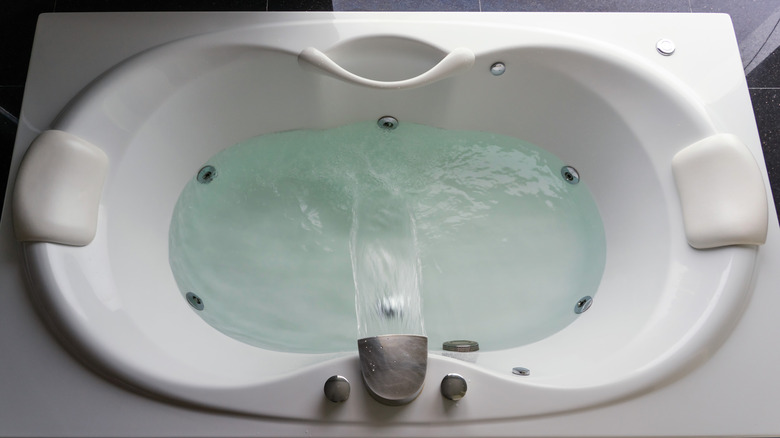
Most bathtubs are made from fiberglass or acrylic, and acrylic is the more popular choice for jetted bathtubs, specifically. Acrylic is a relatively soft material for a bathtub, compared with the likes of cast iron, and salt crystals can scratch the surface. While the damage may not be immediately obvious or severe, improper care of your tub and repeated use of Epsom salts can harm the tub's surface over time. Small scratches can affect the look of your tub and create spots for bacteria to hide. Additionally, if there are essential oils in your Epsom salt, your tub can become discolored.
Even worse, the salt can damage the internal components of a tub, which are more difficult to repair and can impact your tub's usability. At high levels, Epsom salt can be corrosive to metal parts in jets, pipes, and pumps that are important to keep your bathtub working properly. Epsom salt can also leave behind residue that clogs the jets and pumps, preventing the proper flow of water.
While repairing a scratched acrylic tub surface can be achieved by cleaning the tub, sanding the scratch while it is damp, polishing, and adding a sealant, the internal parts of your jetted tub are harder to access and fix. Deep cleaning can help remove buildup, but it is important to know how to clean a bathtub with jets properly. There are also some preventative measures you can take if you do decide to risk using Epsom salts in your jetted tub.
How to safely use Epsom salt in a jetted bathtub
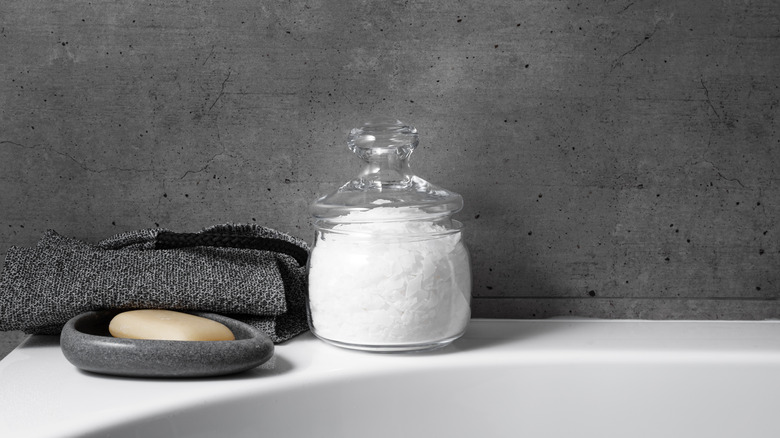
Epsom salt is not the best product to use in a jetted tub, but it can be a safe choice as long as you take additional care to help reduce the risk of damage. First, be sure not to use too much salt (no more than one or two cups per bath) and avoid taking Epsom salt baths too frequently to reduce the buildup of residue. Rather than pouring the Epsom salt directly into the tub, add it to a small container of warm water first and allow it to dissolve completely before pouring the salty water into the tub. This ensures that the salt crystals won't cause scratches and can help prevent clogs.
After your Epsom salt bath, run clean water through the jet system to push out any residue. To do this, first empty the tub and then refill it with cold water to the height required to run your jets. Allow the jets to go for up to 10 minutes, and then drain the water. Generally, you should deep-clean the tub and jets at least monthly. The best method for cleaning your bathtub jets utilizes white vinegar and baking soda, or you can purchase a jet-tub cleaning product, such as the Oh Yuk Jetted Tub Cleaner. If all of this preparation and cleaning seems like too much work for a relaxing bath, it may be best to let the jets and warm water relax you without any additives.