

15 Reasons Your Towels Are Getting Dingy (And What To Do Instead)
We may receive a commission on purchases made from links.
Is there anything better than the pat of a plush, hotel-quality towel on your face when you step out of the shower on a Wednesday morning? It's the sort of simple pleasure that makes getting out of bed in the middle of the week worth it. On the flip side, nothing matches the disappointment of stepping out of the steam and having to dry yourself with a sad, dingy towel that feels like sandpaper.
Not only is this frustrating, but, depending on how dingy your towels are, they can start to make your life downright uncomfortable. More than that, replacing towels can be expensive, and unless you know what's causing them to deteriorate in the first place, it's a cycle you can stay stuck in for years. But it needn't be — towels can get dingy due to simple laundry habits. It could be that you're using too much detergent, relying too much on fabric softener, or loading one too many towels into your machine. Fortunately, as you'll see in the sections below, there are also plenty of ways to remedy this common housekeeping conundrum.
Using too much detergent causes a build-up in your towels
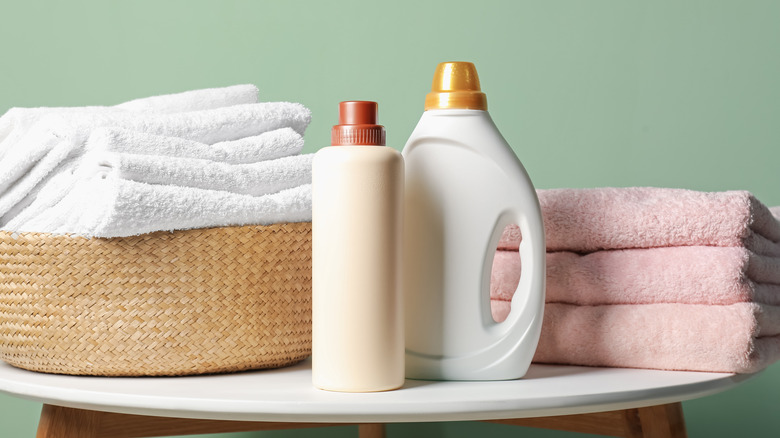
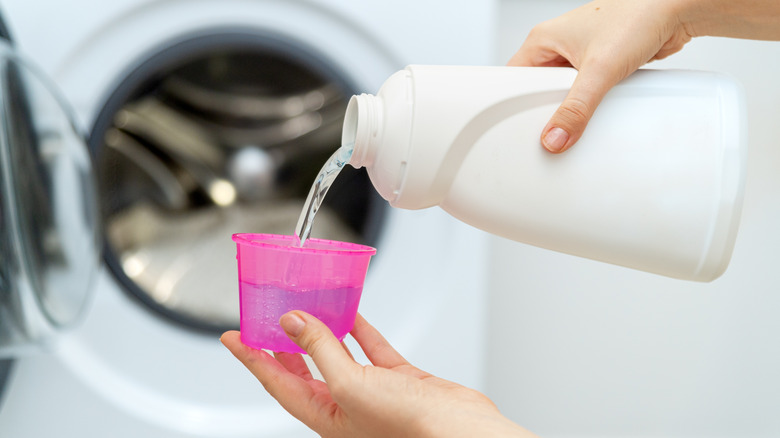
It's likely that we've all been guilty of this mistake at one time or another. After all, surely the more detergent you use, the cleaner your towels are likely to become? Unfortunately, it doesn't quite work that way, in fact, using too much laundry detergent causes more problems than it solves. If you use too much, the heavier concentration means that not all of the detergent gets rinsed out of the fabric, and this can cause the fibers to stiffen and your towels to look dingy.
Fortunately, it's an easy mistake to avoid. Firstly, if you've bundled a big load of laundry into your washer and you think you need to add lots of detergent to clean it all, ask yourself: Have you overloaded the drum? Secondly, assuming that you've not overloaded your washer, it's best to refer to your specific detergent's instructions and not exceed the manufacturer's recommended amount. If you're working with a high-efficiency machine, you might need a surprisingly small amount of detergent.
Overloading the machine prevents your towels from rinsing thoroughly
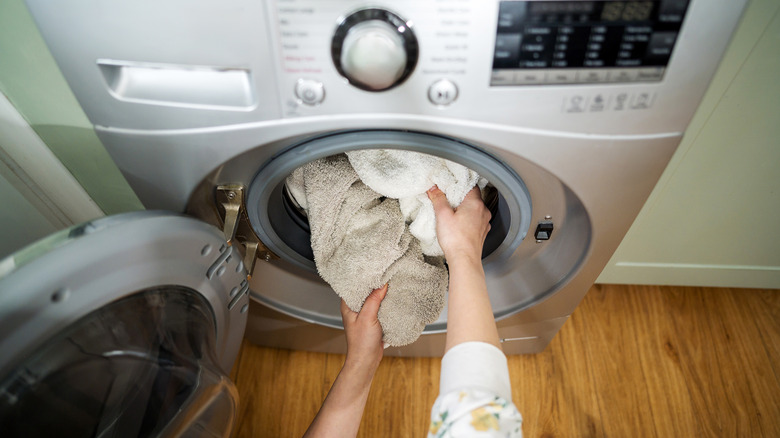
Regardless of what you're washing, it's important not to overload your washing machine. It's especially important with towels, which, being heavy and highly absorbent, need exposure to as much water as possible in order to work the dirt loose. They also need space inside the drum to be properly agitated and have that same dirt shaken free. If the drum is heavily packed, dirt can simply be redistributed back into the fabrics, and it's for this reason that overloading is one of the common culprits for dingy towels.
Fortunately, there are several easy ways to avoid overloading your washing machine. One is to split larger loads into two and wash them separately. Another is to simply review your machine's manufacturer instructions and load it according to those. Generally speaking, you want to avoid loading your machine to more than two-thirds full. When you've loaded it, try popping your hand inside. If it fits comfortably between the laundry and the top of the drum, then great! If not, there's a good chance you've overloaded it.
Using too much fabric softener leads to a reduction in towel absorbency
Despite their presence in laundry rooms around the developed world, fabric conditioners might actually be doing more harm to your clothes than good. Sure, they smell great, and it's tough to deny that they leave clothes feeling (at least temporarily) soft and fluffy. The problem with fabric softener is that it works by creating a coating over fabrics. For your towels, this not only leads to a drop in absorbency, but it could also cause dirt to become trapped inside the fabric.
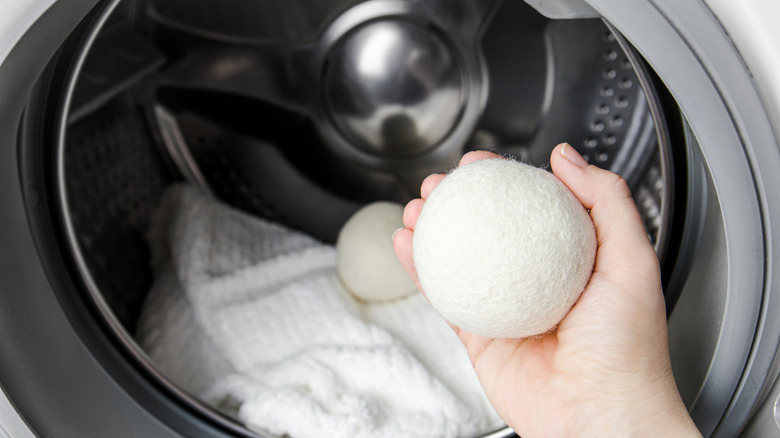
To get around this, the first thing to do is add fabric softener to your list of laundry products that are not worth buying. In its place, buy yourself some dryer balls, like these wool ones from Handy Laundry. Loaded into your dryer along with your towels, these balls physically bounce between the layers of fabric, agitating the fibers and leaving them feeling soft and fluffy without the need for chemicals. Admittedly, they don't yield the same scent as fabric softener, however, that's easily remedied by treating them with a few drops of essential oil.
Relying on chlorine bleach can lead to yellowing and graying
There are plenty of ways you can use chlorine bleach around your home, and yes, one of those is restoring dingy towels. But doing so comes with a word of warning. Over time, bleach can react with the proteins captured by your towels (for example, in your body's natural oils), and can eventually cause them to yellow or go gray. Continued use also tends to weaken the towels' fibers, and on towels that are whitened by the manufacturer with optical brightening agents, household bleach can strip those away and betray the fabrics' true, visually "dingier" color.
To get around this problem, it's easy: Don't use chlorine bleach. Oxygen-based bleach is generally much friendlier on fabrics than its chlorinated cousin. You can also buy specially-formulated laundry boosters, like OxiClean White Revive, which can help to brighten your towels and other dingy fabrics without causing unnecessary chemical damage.
Hard water can cause minerals to settle into your towels' fabric
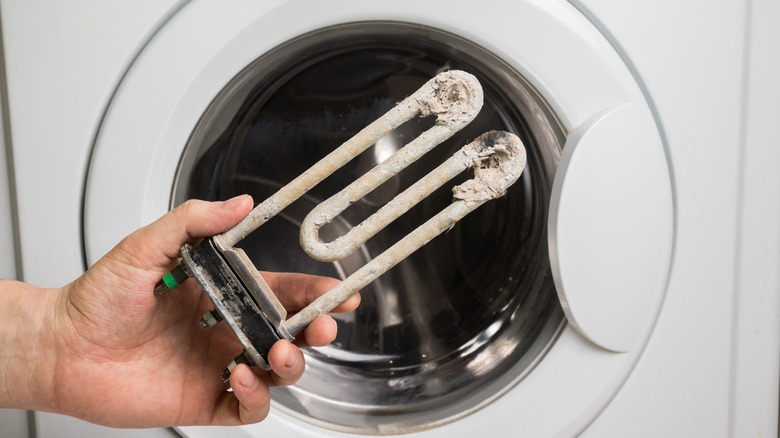
Hard water is caused by an abundance of minerals in the water supply, like calcium and magnesium. And while it sounds quite natural and harmless, knowing how hard your water is can actually make a big difference to the dinginess of your towels. If left untreated, those minerals can leave deposits on your laundry. These deposits can cause the fibers in your fabrics to stiffen and become discolored, leading to a general feeling of wear — even in relatively new towels.
If this sounds familiar, then don't worry — there are several simple ways to stop hard water from damaging your laundry. One is to use water softeners, like this liquid water softener from Calgon. These products are designed to remove the minerals in your water supply and ensure they don't end up leaving deposits on your clothes. You could also have a water softener system added to your home's water supply. This might sound like a costly solution in the short term; however, it could potentially save you a fortune in ruined fabrics in the long run, and even prolong the lifespan of appliances like your washing machine and dishwasher.
Always drying on high heat can set stains and degrade fibers in towels
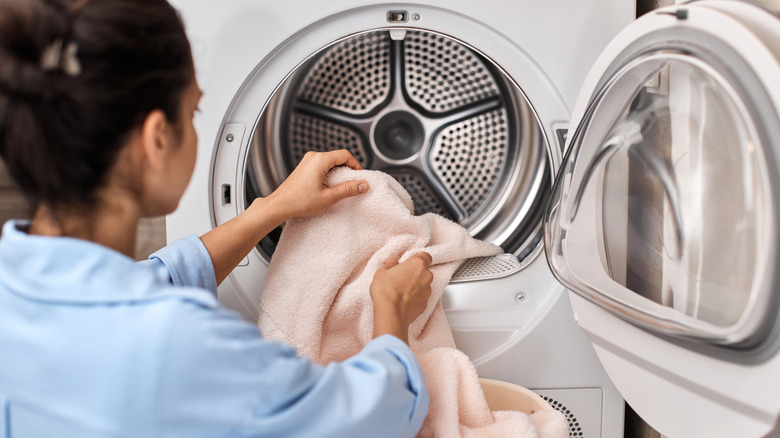
While it's generally advisable to wash your towels with hot water, you should try to dry them as gently as you can. That's not to say that you can't use a dryer. However, you should avoid repeatedly drying them on your dryer's hottest settings. If you don't, then over time, the excessive heat can "cook" any residual soap and oil proteins into the fibers of your towels. In turn, this can cause them to turn yellow. High heat settings can also wear out your towels quicker, resulting in a shabby, worn look and a less fluffy feel.
To avoid over-drying and potentially "baking" your towels to death, shoot for a lower-temperature cycle. Get to grips with your dryer's different settings and select one that will leave your towels "iron dry." This will mean your towels are still ever-so-slightly damp when the dryer finishes; you may need to hang them for a couple of hours to finish drying, but it'll at least help you to avoid cooking your towels to a crisp.
Dryer sheets can leave a waxy film on towels, similar to liquid softeners
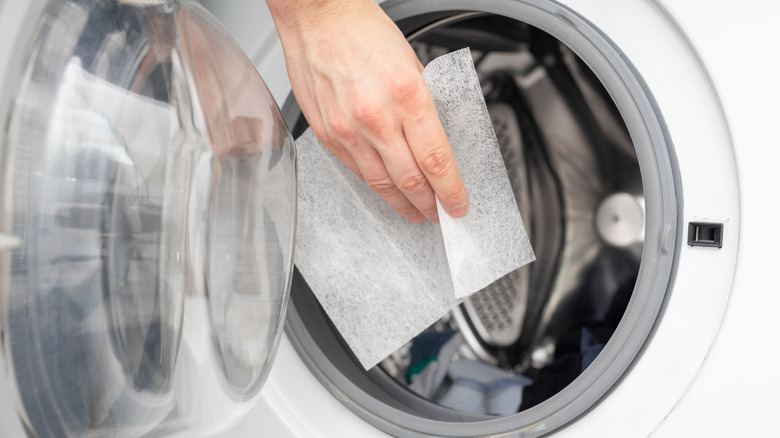
Like liquid fabric softeners, there are some very good reasons to consider ditching dryer sheets. Chief among them is the fact that they leave a waxy film behind which can coat the fibers of your towels. Over time, this can cause them to lose their absorbency. This buildup can also eventually leave towels feeling stiff and dingy — which defeats the entire purpose.
The fix? Just as you did with your bottle of liquid softener, remove dryer sheets from your towel laundering routine. Instead, try some dryer balls. Not only will these keep your towels nice and soft without the need for waxy chemicals, but by improving airflow in your dryer, they can actually help to reduce your energy costs by drying your laundry more efficiently.
Not cleaning the washing machine causes a buildup of biofilm that can contribute to dingy towels
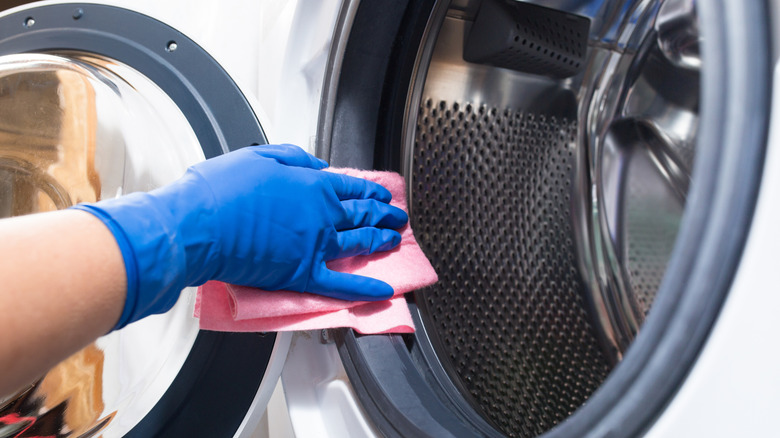
While you might think that a washing machine is self-cleaning, you'd be surprised by how quickly grime can build up inside the drum. In fact, if you don't wash it from time-to-time, it can develop what's known as "biofilm" — a buildup of mold, grease, and other nastiness that can leave the outer drum far from the embodiment of hygiene that you might imagine it to be. And once it's there, the buildup self-perpetuates. Your dirty clothes, detergent, and softeners, not to mention the machine's inherent dampness, continue to contribute to the film. If your washing machine is housing mold, bacteria, and lots of residue, this could transfer to towels, leaving them dingy and less-than-fresh, even after washing.
To prevent this from happening, aim to run a cleaning cycle at least once every three months, using a dedicated washing machine cleaner tab. If your washer doesn't have a cleaning cycle, then run an empty load on the hottest setting. This should kill off and clear any pathogens present in and around your drum. Be sure to check the rubber seals around your door, too, folding them back and ensuring they're clear of any buildup.
Using too much body butter or oil
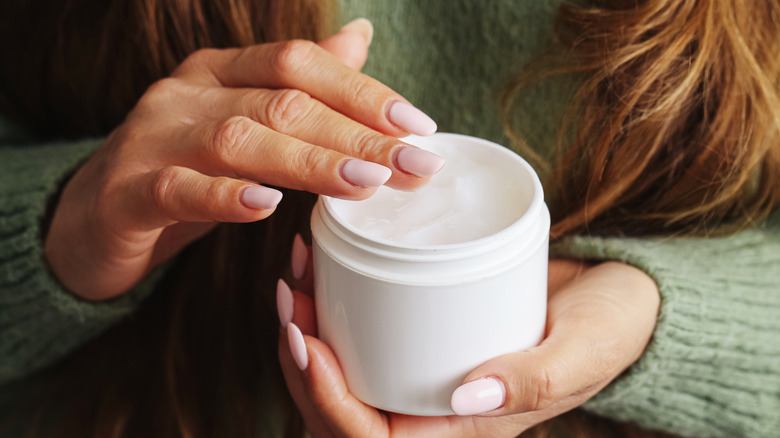
If you frequently coat yourself in body butter or other oils, then those could be contributing towards your cupboard of dingy towels. Even with the most thorough shower, it can be tough to remove all of these from your skin (especially if you use lots of them), which means that when you dry yourself, they can spread into the fibers of your towels. Once they're there, they're tricky for standard detergents and mid-temperature wash cycles to strip away. They can also cause your towels look dingy even more quickly with higher-temperature drying cycles, as the temperature can "cook" the proteins contained within the oils.
If you suspect your body butter regimen might be causing trouble with your towels, don't worry. You don't need to stop using occlusive body products altogether, although it might be a good idea to start applying them more thinly. One trick to try is adding a tablespoon of dish soap to your wash. With its degreasing properties, dish soap can help to break down oily buildup in your towels. Another method is to use an enzymatic stain remover containing lipase (such as the DadMode Laundry Stain Remover) to help break down the oil residue.
Letting damp towels sit in the hamper is a surefire recipe for mildew
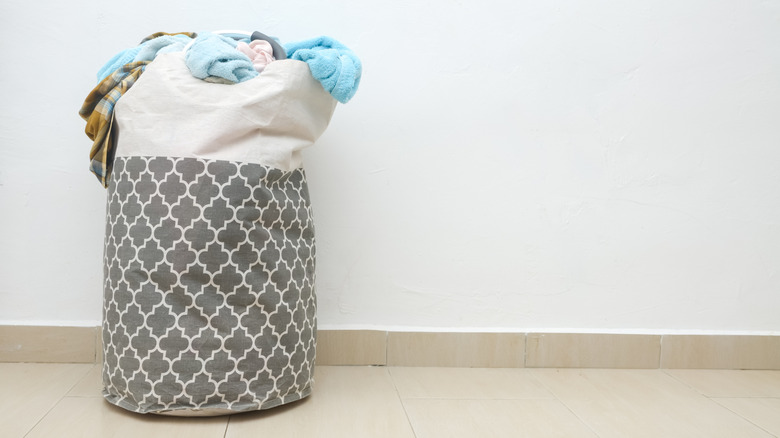
The simplest tip to prevent your towels from smelling musty and stale is to avoid letting them sit in your laundry hamper when they're damp. Mildew can start growing after just one day in the right conditions, and when it sets in, it can leave behind a permanent, grayish cast on your towels. It also leaves a nasty, sour smell that's unlikely to make you want to hop in the shower.
There are two things that you can do to prevent mildew from setting in. Firstly, when you use a fresh towel (or one that you're not yet ready to wash), hang it up to dry. Make sure there are no folds in the fabric that could trap moisture, and ensure that whichever room it's hung in is well ventilated. If your bathroom struggles to vent steam after a shower, then hang your towels elsewhere. The second tip, for wet towels that need a clean, is to put them on to wash immediately. Don't leave them piled in the hamper, and definitely don't leave them in a hamper with other clothes. The last thing you want is an outbreak of mildew in your wider wardrobe!
Washing your towels with other clothes can cause damage, fading, and dye transfer
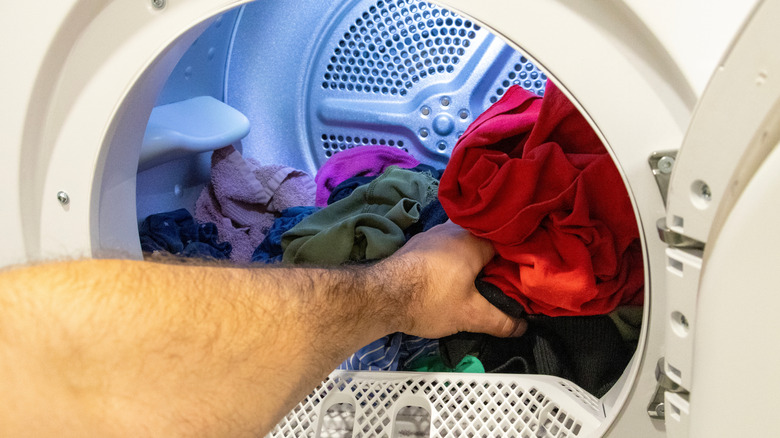
If you frequently wash your towels and clothes together, then it might be time to stop. It may seem like the economical thing to do, however, bundling it all in together is likely to cost you your towels' fluffiness. The issue with washing your towels and clothes together is that the metal hardware on jackets and jeans, like zippers, buttons, and poppers, can easily snag the delicate loops that make your towels fluffy. Over time, these small snags can build up, leading to a damaged, sad look. Washing clothes together also opens up the risk of dye transfer, and even a single red sock can taint the brightness of your crisp new white towels.
As you might imagine, the fix for this one is easy. Just wash your towels by themselves. At the very least, stick to similarly-colored items like bedsheets, and avoid loading them into the washer with anything that has metal hardware. If you absolutely must mix, then ensure any zippers and snaggy buttons are securely fastened before you start the washing cycle.
Not pre-treating towels for makeup and skincare residue

Face oils, makeup residue, sunscreen, and other skincare products can linger in the center of your towels where you dry your face or hands. These spots can partially remain after standard wash cycles, and over time, they can start to oxidize and turn your towel dingy. In the case of certain products, like acne-wash (which often contains benzoyl peroxide), these can leave bleach marks before you even have a chance to wash them.
Now, unless you're prepared to forgo using face oils, make-up, and acne wash products, then there's not a lot you can do to stop them getting on your towels. What you can do, however, is pre-treat any greasy spots on your towels with laundry detergent before you put them in to wash. You can also use diluted dish soap in the same way, or as mentioned above, an enzyme-based stain removal product. You don't have to do this every time that you wash your towels, but by giving them some extra TLC every few washes, you'll be able to help break down concentrated, oily build-ups and prevent them from causing lasting damage.
Storing towels in a humid bathroom causes them to absorb excess moisture
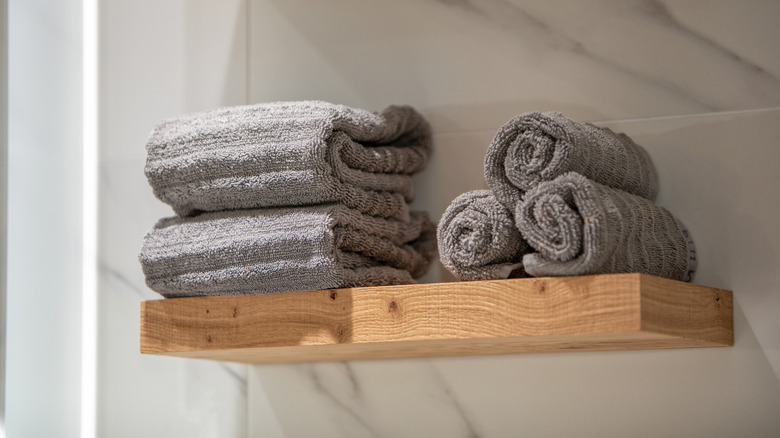
We've touched on this already when it comes to hanging your towels after a shower, but the same principle applies to storing freshly laundered ones, too. If you have towels either folded on your shelves, or hung over your towel rail, and you don't have decent ventilation, then they're bound to absorb some of the room's excess humidity. After all, they're towels — it's what they're supposed to do. The problem is that, over time, this can cause your towels to cling onto dust, and if they're folded up, mildew can also begin to form. Not only can this make them smell musty, but it can also lead to permanent mildew marks.
Once again, the solution here is quite simple: Instead of storing your towels in your bathroom, place them in your linen closet. Even without a linen closet there are still plenty of ways to store your bath towels, like keeping them in a hamper on your landing, or saving a spot for them in the drawers under the bed. The key is to keep them clear of excess humidity, and when you use them, to hang them somewhere they're likely to dry quickly.
High-efficiency wash cycles don't always use enough water to properly clean towels
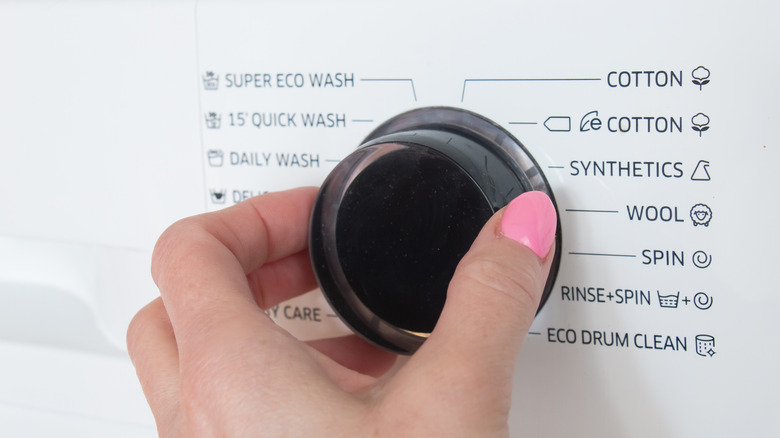
One of the differences between high-efficiency washers versus traditional washing machines is that they use considerably less water. While this is an excellent way to save water (and, in turn, money), it represents a unique challenge when it comes to laundering towels. Because they're highly absorbent, they can easily overwhelm a low-water cycle; instead of being suspended in the water, and having dirt shaken and lifted from them, they can end up "drinking" the water. When this happens, some dirt can remain trapped inside them, instead of being lifted and flushed away.
To get around this, consult your manufacturer's instructions for specific fabric settings. Most modern machines will have a "bulky," "deep-fill," or "towels" setting that you can use, which will ensure that it compensates for heavier fabrics with extra water. You should also consider splitting larger loads of towels into two. Again, while it might seem more economical to bundle them into a single load, you'll find that they clean much better if you give them plenty of room to move in the drum.
Not washing regularly enough can allow oils and mildew to settle into your towels
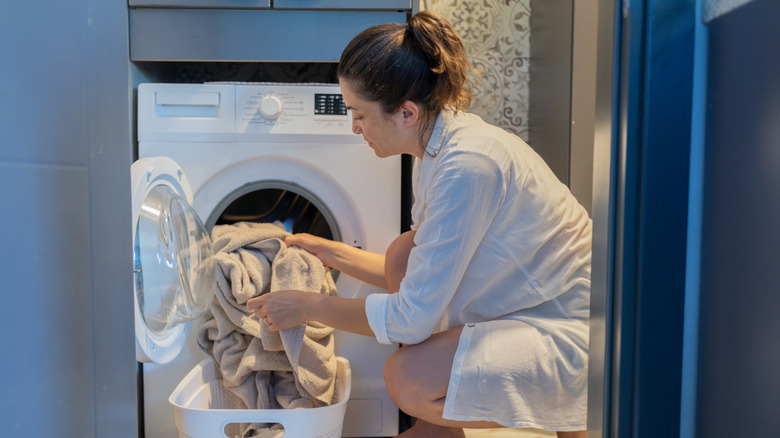
Keeping on top of your laundry is the key to extending the lifespan of your linens, and it's especially important with your towels. If you don't, and you allow your towels to remain dirty and damp, they can become a breeding ground for mildew, trapped body oils, and traces of beauty products, all of which, as we've covered, can lead to a stiff and dingy texture. If left untreated, these substances can become deeply embedded, to a point that no amount of washing can restore your towels' softness.
With this in mind, it's important to be proactive. Precisely how often you should clean your towels depends on how much you use them, as well as the oils, lotions, and other products that they're exposed to. Frequent, lighter wash cycles can help you keep the worst of your towel woes at bay. Use mid-temperature cycles for the majority of washes, reserving your machine's hottest settings for occasional deep cleans, or when your towels are especially dirty.