

The Best Way To Use Grow Lights For An Indoor Snake Plant That Truly Thrives
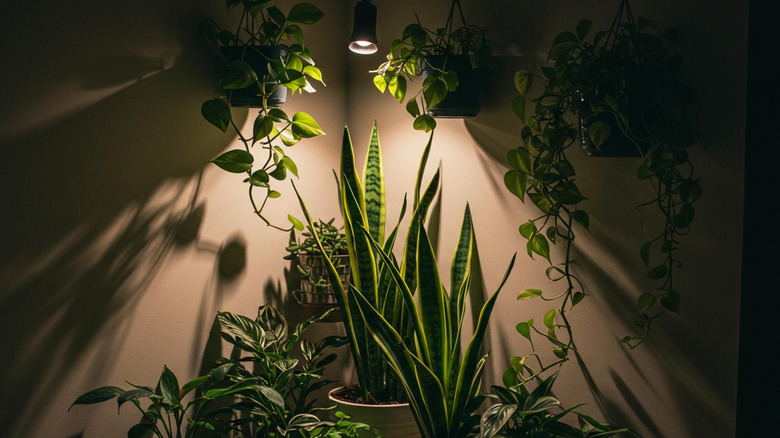
Not all snake plant lovers have bright, sunny windows full of natural light. What should you do if you want your specimens to thrive in a dark room? Grow lights help houseplants flourish, and using them correctly is key to cultivating healthy snake plants indoors. Don't let them flounder in the dark; they're tolerant of low light, but they do need some light to survive. Snake plants thrive in bright, indirect light and in low light. According to the University of Minnesota's extension office, low light is "bright enough to read a newspaper." It matches the light levels of a forest floor, where tree canopies filter sunlight before it hits the ground.
In your home, perhaps sunlight shines through a distant window, or it's filtered through tree leaves before it reaches the house. No matter the situation, artificial plant lighting is perfect for keeping your snake plant thriving. A plant needs more light if it's leggy, limp, or extremely slow-growing. Watch for thin leaves that look stretched, especially ones that reach for the sunlight. If you have a light-colored snake plant, watch for greening and darkening of the leaves. When it's too dark, the leaves develop additional chlorophyll. This turns them dark green as they try to photosynthesize more in the shade. Consider adding artificial lighting if you notice any of these symptoms on your otherwise healthy houseplant.
How to use grow lights with your indoor snake plant
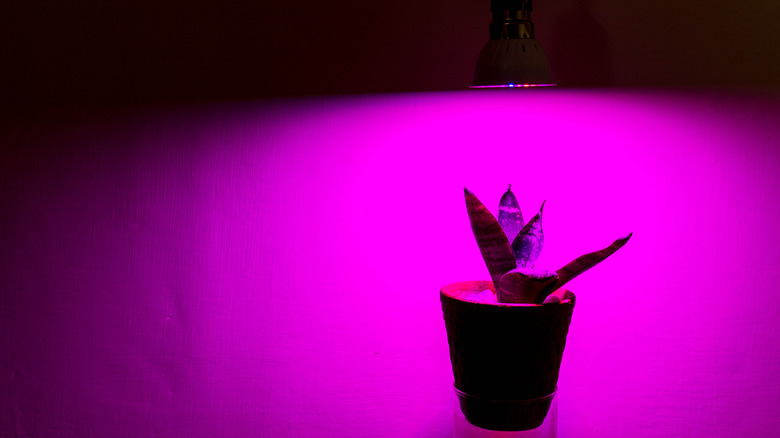
You need lighting to start, and there are a few different kinds to choose from. LED options are some of the best grow lights for indoor plants, as they're bright, cost-effective, and energy-efficient. You can use an LED bar light for multiple snake plants, or a small ring-shaped one for a single specimen. Fluorescent lighting is another option, though it will require more frequent replacements and its bulbs are less energy-efficient than LED bulbs.
How to set the bulbs up depends on the type you have. For hanging bulbs, you'll need hanging hooks, zip ties or chains, and a drill or screwdriver. Drill the hooks into the wall or ceiling above the plants, then hang the LED bar on the hooks using the attachment of your choice. Some lights have stands with stakes they sit on — simply stab the stakes into the pot of soil and attach the lights on top. In all systems, arrange the lights so they sit 12 to 24 inches above the foliage to encourage even growth throughout.
Most importantly, ensure the lights turn on and off regularly for optimal snake plant performance. You can do this manually, though it'll be a huge chore. Instead, set the lights on mechanical or digital timers. Have them on for 12 to 14 hours a day, then watch as your houseplants sprout bunches of fresh, healthy leaves.