

The Silent Culprit That Could Be Damaging Your Home's Water Heater
We may receive a commission on purchases made from links.
As one of the most important functions of your home, your water heater requires proper care to successfully heat the cold water coming in from your main water supply. Too often, we tend to take this modern luxury of heated water for granted until we experience an unfortunate lack of hot water. In order to avoid that undesirable situation, we can stay on top of our water heaters' health and keep an eye out for any issues that may arise. If you've started to notice a few worrying symptoms, such as reduced water pressure, chalky residue on your faucets, or popping noises from the heater itself, you may be dealing with a buildup of hard water inside your water heater. This silent culprit can start to accumulate inside the heater, causing buildup and decreased water flow.
Water is considered "hard" when it contains large amounts of dissolved minerals like calcium and magnesium. When this type of water is heated, it can create deposits of calcium carbonate, also known as limescale. While hard water isn't a health concern, it can harm your plumbing, pipes, and appliances, like your water heater, as the sediment piles up at the bottom. This makes it even harder for your heater to actually do its job, leading to longer heating times, potentially raising your utility bills, and decreasing the heater's overall lifespan.
Hence, you have to be on the lookout for signs that your water heater is experiencing too much hard water buildup. For example, if you notice discolored water, lower water pressure, leaks, or popping sounds, it's best to contact a professional immediately. You can also tell exactly how hard the water is in your home with affordable kits online.
How to protect your water heater from hard water
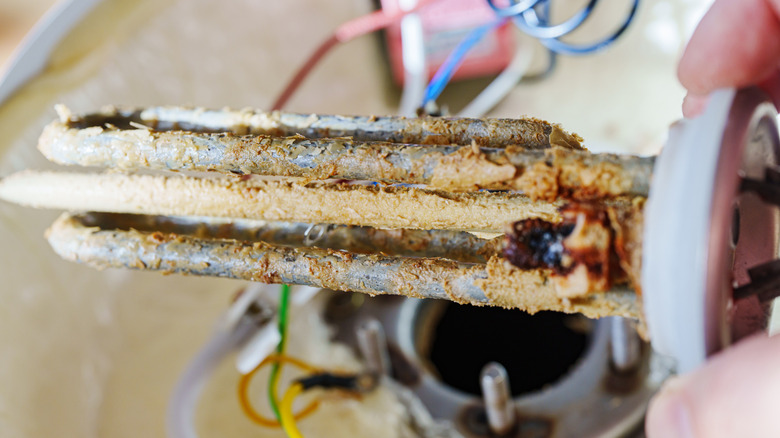
There are a few ways to protect your water heater from this pesky buildup and keep your plumbing system working seamlessly. First, always ensure that your water heater receives regular care from a professional. This involves getting the heater flushed consistently, which most experts recommend at least once every six months to a year. If they notice that the drained water, as well as your empty tank, has calcium buildup, they may give your tank a descaling treatment, which takes a few hours to complete. While flushing your water heater is technically a process you can try and complete on your own, it's recommended to allow a professional to take care of it. The process involves turning off the heat valve as well as the water supply valve, and draining the tank entirely before filling it up once more.
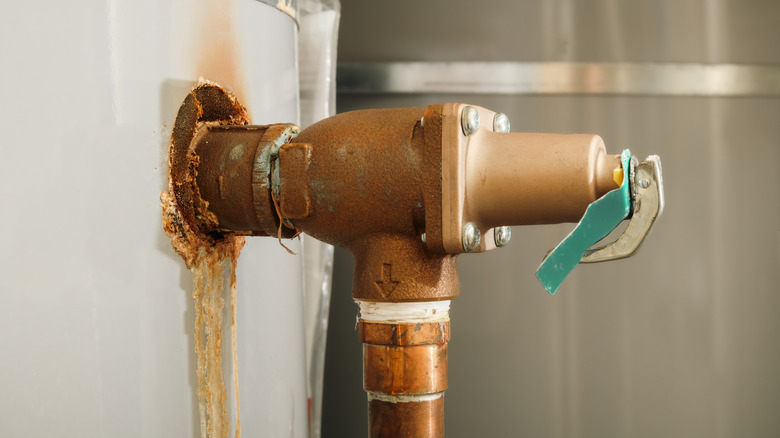
Another reason you may be dealing with hard water in your water heater is that your anode rod may need to be replaced. Minerals like calcium and magnesium cling to your anode rod, keeping your water supply as fresh as possible. However, after a while, your anode rod can become corroded from the buildup and need replacing. (If you spot rust on your water heater, this could be a sign of a damaged anode rod.) You can call a plumber to check and potentially replace your anode rod if it is too corroded to work properly. Remember that it's always cheaper to pay for regular maintenance than to replace an entire water heater.