

The Simple Vintage Thrift Find Whose Value May Surprise You (If You Can Find One!)
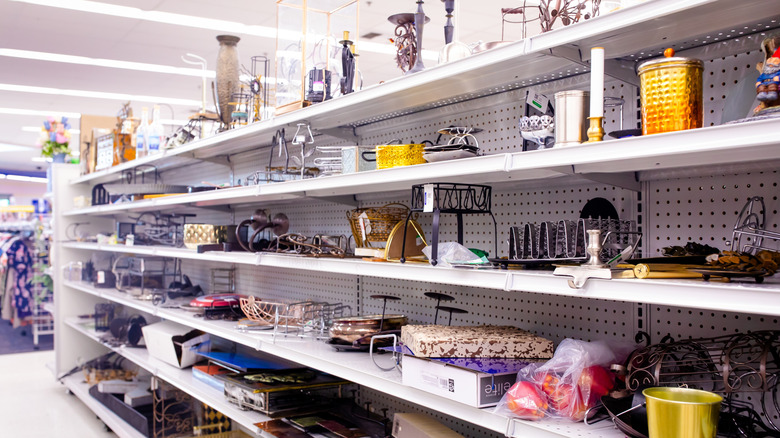
Happening upon a secondhand item with unusually high worth is every thrifter's dream, and there's an unexpectedly valuable piece that every thrifter should be on the lookout for: vintage stoneware crocks. Whether you're at the flea market or your local Goodwill, keep an eye out for these stoneware pieces. While Target's stoneware dish is giving major designer brand vibes for way less, you could be lucky and snag the real deal at your local charity shop. If you find the right one, it could be worth anywhere from $500 to a whopping $400,000 — or even more.
While antique stoneware is trending in home decor — Ina Garten loves showcasing vintage pottery in her kitchen — the high potential resale value of stoneware crocks in particular might be enough to keep it off your kitchen shelf and list it online for collectors to find. However, you can't pick up just any old piece of pottery and expect it to bring in the big bucks.
First of all, stoneware is made from a particular kind of clay, one that has a waterproof rating of less than 2%. When you're thrifting, you'll want to look out for signs of valuable antique stoneware, including a shiny, glazed texture. Another telltale sign of a vintage stoneware crock can be a variety of cobalt blue designs and markings on the outside of the crock.
The history of stoneware crocks
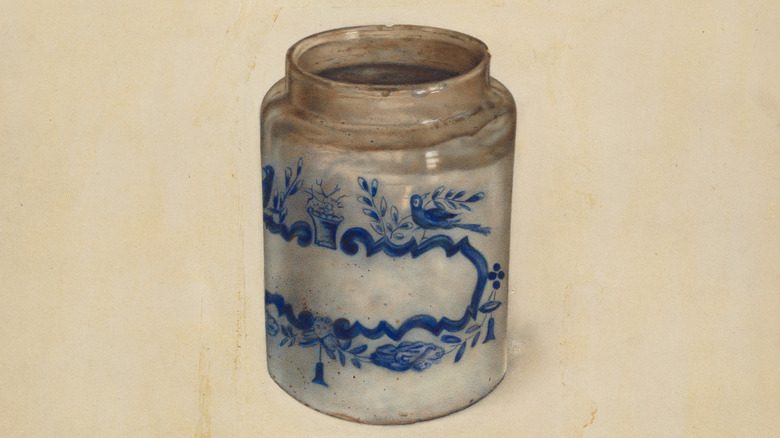
The use of ceramic storage containers in North America dates back thousands of years, with archaeologists having discovered ceramic (clay) pots made in the year 2890 BCE in what is now the Savannah River Valley.
A crock, simply put, is a cylindrical, waterproof vessel with a flat bottom and an open top made from clay. In colonial America, sturdy crocks, or crock pots, were used in daily life for cooking and storing food. When immigrants brought the salt glazing technique to the United States colonies in the 1700s, it changed the world of American pottery, allowing potters to make vessels sturdier and more waterproof.
Salt glazing technique involved pouring salt into a kiln, the heat of which would vaporize the salt into a gas, which would then settle on the pottery. The salt glaze, combined with the discovery of unique, natural stoneware clay in what is now New York and New Jersey, produced what is now known as American salt glazed stoneware, which dominated the pottery market in the United States from 1780 to 1890. Today, these salt-glazed stoneware pieces can bring in a pretty penny — anywhere from a few hundred dollars to several thousand.
Identifying valuable antique crocks
There are several ways to identify valuable antique crocks when you're scouring the shelves of a thrift store or hunting treasure at an estate sale. Using these techniques can help you differentiate an original, vintage crock from a good reproduction.
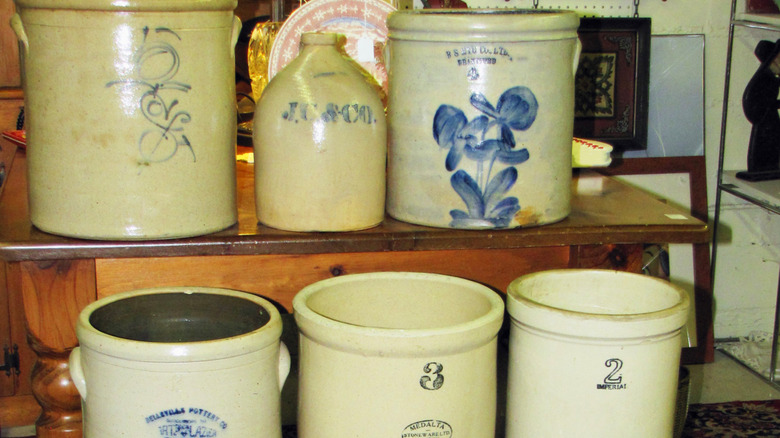
First, use visual and tactile clues. Vintage stoneware crocks are quite heavy, with thick walls. A shiny surface with a variety of small bumps can indicate an original salt glaze, and cobalt blue markings and decorations that look to have been done by hand can indicate that you're looking at a true vintage stoneware crock. Common designs include flowers, trees, and birds.
Another sign of an antique crock is a maker's mark. Many stoneware crocks carry the artist's signatures, while others are numbered. Keep an eye out for unique stamped logos, as those can also be an indicator of a vintage crock. If you're less interested in a crock's resale value — maybe you just love the cobalt blue look! — and want to update a secondhand crock to display in your home, try repainting it for a modern twist on a classic kitchen staple.